
Last updated November 2, 2026
 Wrought iron
 Wood & steel frame
 Farm & ranch
 Sliding driveway gates
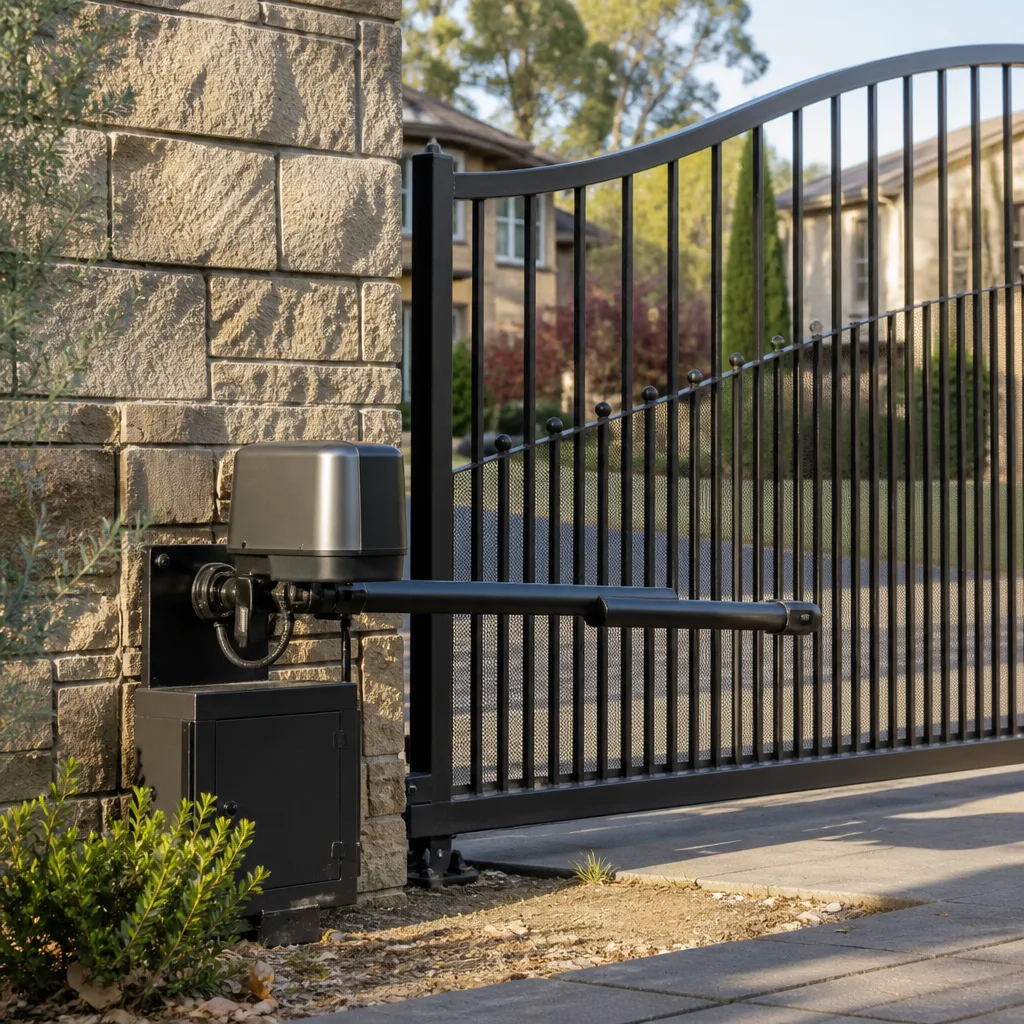 LiftMaster operators
Free on-site gate assessment - hinges, posts, and your LiftMaster or Nice gate operator checked before anything is quoted
The assessment is free and the quote is the invoice.
Get your free estimateGate Repair Warning Signs: A Pocket Homeowner’s Reference Guide
A gate that hesitates for two seconds before moving isn’t “just being slow.” It’s a motor drawing excess current, and in our experience across Pocket, you have roughly three weeks before it quits entirely. Most gate failures announce themselves weeks or even months in advance through a sequence of small, observable changes that homeowners dismiss as quirks. This guide decodes those symptoms into the specific component failure they predict, so you can call for the right Gate Repair before a stuck gate strands your car in the driveway or leaves your property unsecured overnight. We wrote this specifically for Pocket homeowners because the combination of Delta breezes, valley heat, and older subdivision gates creates failure patterns we see repeated constantly.
Styles & brands we work with
- Wrought iron
- Wood & steel frame
- Farm & ranch
- Sliding driveway gates
- LiftMaster operators
Quick Answer
Automatic gate failures almost always preview themselves through six observable symptoms: hesitation before movement, grinding or scraping sounds, unexpected reversals, remote lag beyond two seconds, visible sagging, and intermittent access control response. Each symptom maps to a specific component, from a dying capacitor in the operator motor to fatigued hinge welds. Learning to read these signs lets you schedule a repair during business hours instead of discovering the failure at 7 a.m. when the gate won’t open. For more guides & resources, see our blog.
Table of Contents
- The Symptom-to-Component Translation Table
- Dying Motor vs. Mechanical Obstruction: Two Symptoms That Look Identical
- Hinge Fatigue vs. Post Movement: The $80 Fix vs. the $800 Fix
- The Four Sounds Your Gate Makes Before It Fails
- Access Control Warning Signs Pocket Homeowners Miss
- Triage Framework: Urgent Today vs. Schedulable This Month
- Common Mistakes to Avoid
- When to Call a Professional
- Frequently Asked Questions
- The Bottom Line
The Symptom-to-Component Translation Table
Every gate symptom you observe maps to a specific mechanical or electrical component. Here is the translation key we use on service calls in Pocket, where the flat terrain means swing gates dominate but slide gates appear on many newer Greenhaven and South Land Park Hills properties.
Hesitation before movement (1-3 second delay after the remote or keypad triggers) almost always points to the operator motor’s start capacitor losing its ability to hold a charge. In LiftMaster and Linear residential operators, this is the single most common failure we replace. The capacitor is a $30 part, but if you let it fail completely, it drags the motor windings down with it and turns an electric gate repair in Pocket into a full operator replacement.
Grinding or metallic scraping during travel usually indicates a chain or belt tension issue, or a drive gear that has worn teeth. Ghost Controls and Mighty Mule swing-arm operators use a linear actuator with a plastic gear set that is specifically prone to this. When you hear grinding, the gear teeth are already breaking off, and continued operation spreads plastic shavings throughout the actuator housing.
Unexpected reversing (the gate starts to close, then reverses without anyone in the path) is the leading indicator of a failing safety sensor or a misaligned photo-eye. In Pocket’s older subdivisions, we also see this when the gate’s limit switches drift out of adjustment due to thermal expansion cycles from summer heat to winter fog.
Remote lag beyond two seconds is not a battery problem if you have already replaced the remote battery. It is the receiver board in the operator degrading. DoorKing and Viking receivers are modular and replaceable; some entry-level Linear boards are not, which means the lag is your warning to plan a receiver replacement before the board fails outright.
Visible sagging at the latch end is a mechanical problem, never an electrical one. It maps to hinge fatigue, post movement, or both. We cover this in detail below because it is the most misdiagnosed symptom in all of gate repair in Pocket.
Intermittent keypad or loop detector response maps to access control failure. This is the symptom Pocket homeowners ignore longest because it is intermittent by nature, and humans are bad at interpreting intermittent signals as warnings rather than flukes.
Key Takeaways
- Hesitation = start capacitor. Fix now, $150-$250 repair. Ignore it, $800-$1,200 operator replacement.
- Grinding = worn gear or loose chain. Stop using the gate immediately.
- Unexpected reversing = sensor misalignment or limit switch drift. Often a same-day adjustment.
- Remote lag = receiver board degradation. Schedule this month.
- Sagging = mechanical failure. Diagnose the root cause before replacing anything.
Dying Motor vs. Mechanical Obstruction: Two Symptoms That Look Identical
A gate that moves slowly and laboriously can mean one of two completely different things: the operator motor is dying, or a physical obstruction is creating drag. The repair for one costs a few hundred dollars. The repair for the other might be as simple as greasing a hinge. But if you guess wrong, you either spend money you did not need to spend or you let a motor burn itself out against resistance it was never designed to overcome.
Here is how to tell them apart without opening the operator housing:
- Listen to the motor itself. A dying motor labors with a low growl or hum that changes pitch under load. An obstructed gate moves slowly but the motor sounds normal, just working harder. The difference is subtle, but a motor that is failing electrically sounds “strained” even when disconnected from the gate and run with no load.
- Test the gate manually. This is the diagnostic step most homeowners skip. Disconnect the operator (every residential operator has a manual release, usually a pull handle or keyed release) and push the gate by hand. If the gate swings freely and easily, the obstruction is not mechanical, and the problem is in the motor or its power supply. If the gate is hard to move even by hand, the motor is fighting a physical problem: a failing hinge, a dragging wheel, debris in the track, or a post that has shifted.
- Check the symptom over time. Motor failure is progressive and consistent. The gate gets a little slower each week. Mechanical obstruction tends to be more stable, or it changes with weather. In Pocket, we see gates that drag after rain when the ground softens and the post shifts, then return to normal when things dry out. That weather-linked pattern is mechanical, not electrical.
The reason this distinction matters financially is straightforward: a motor that fails completely because it fought a mechanical obstruction for months is not repairable. The windings overheat, the insulation breaks down, and you are buying a new operator. Diagnosing the obstruction early costs less than $200 in most cases. We work on your brand, but more importantly, we diagnose first and replace only when repair won’t last.
Hinge Fatigue vs. Post Movement: The $80 Fix vs. the $800 Fix
A sagging gate is the most visible warning sign in this entire guide, and it is also the one where guessing wrong about the root cause costs you the most money. In Pocket, where many homes date to the 1960s and 1970s with original gate posts set in soil that expands and contracts with the valley’s seasonal moisture cycle, we see both hinge fatigue and post movement constantly. They present identically: the gate drops at the latch end, the gap at the top widens, and eventually the latch stops lining up.
Hinge fatigue is the cheap fix. Over a decade or two, the hinge barrels wear, the pins elongate, and the weld points crack microscopically. The gate sags because the hinge itself is no longer holding the gate’s full weight in its original position. The repair is typically $80 to $250 depending on the hinge type and whether replacement hinges need to be welded or bolted. This is straightforward, same-day work.
Post movement is the expensive fix. The hinge is fine; the post it is mounted to has shifted. Pocket’s clay-heavy soil expands when wet and contracts when dry, and over enough cycles, a post that was set in concrete can actually walk several degrees out of plumb. The gate sags not because the hardware failed, but because the vertical reference point moved. Fixing this means digging out the post, resetting it in new concrete with proper drainage, and re-hanging the gate. Expect $600 to $1,500 depending on post size and access.
How to tell which one you have before you call anyone:
- Put a level on the post, not the gate. If the post is plumb but the gate sags, the hinges are the problem. If the post is out of plumb, the post is the problem, regardless of what the hinges look like.
- Check the hinge attachment points. If the sag is at the hinge barrels or the hinge-to-gate welds, it is hinge fatigue. If the hinges are intact but the entire assembly leans, it is post movement.
- Look for soil signs. Cracks in the concrete collar around the post, a visible gap between the post base and the surrounding concrete, or heaving in the soil within a foot of the post all point to post movement.
The reason this distinction matters is repair scope. A fencing company that does not specialize in gates often replaces the hinges without checking the post, and the gate sags again within a year. Gate specialists, not generalists, is not just a slogan for us; it is the difference between fixing the symptom and fixing the system.
The Four Sounds Your Gate Makes Before It Fails
Gates are mechanical systems, and mechanical systems talk. Most homeowners hear the sounds but do not attach meaning to them. Here are the four sounds we ask about on every service call in Pocket, and what each one means.
1. The “thunk” before movement. A single sharp thunk or clunk right as the gate starts to move usually means the operator’s drive mechanism is taking up slack. In chain-driven slide gates, it is a loose chain. In swing-arm actuators, it is a worn bushing at the actuator attachment point. Neither is an emergency, but both are progressive. The thunk is the mechanical equivalent of a check engine light.
2. The continuous grind. Covered above, but worth repeating: a continuous grinding noise during travel is the sound of gear teeth disintegrating. Ghost Controls and Mighty Mule actuators are particularly vulnerable because they use plastic gears inside the actuator housing. Every grinding cycle makes the eventual repair more extensive. Stop using the gate.
3. The high-pitched whine. A whine that rises in pitch as the gate moves is usually a bearing going dry or a pulley wearing. In some Linear and DoorKing operators, it can also be the sound of the internal transformer laminations vibrating when the capacitor is failing and the motor is drawing current inefficiently. If the whine is coming from a bearing, it is a mechanical fix. If it is coming from the operator cabinet, it is electrical.
4. The silence that used to be a sound. This is the one nobody notices. If your gate used to make a soft, consistent mechanical sound while moving and now it is almost silent, that often means the operator’s internal overload is tripping and resetting, or the motor has lost torque and is free-spinning instead of engaging the drive mechanism. Silence is not always golden. A gate that moves quietly but slowly is a gate that is about to stop moving altogether.
None of these sounds require you to open the operator cabinet. In fact, please do not. Operator cabinets contain capacitors that hold a charge even when the power is off, and they contain high-tension springs and unguarded moving parts. Identify the sound, note when it happens in the gate’s travel cycle, and give that information to whoever you call. It shaves time off the diagnosis.
Access Control Warning Signs Pocket Homeowners Miss
Electric gates fail in two broad categories: the mechanical/electrical system that moves the gate, and the access control system that tells it when to move. Pocket homeowners tend to notice the first category. They almost universally miss the second.
The most common missed warning sign is intermittent keypad response. You key in your code, nothing happens, you key it in again, and the gate opens. Most people assume they mistyped the code the first time. One keypad failure every month is probably a fluke. Two or three per week is a failing membrane keypad or a corroding control board connection, and both are progressive. The membrane keypads used on most residential gate systems in Pocket degrade with UV exposure, and the valley sun is unforgiving. Once the membrane starts failing, the keypad will eventually stop responding entirely.
The second missed sign is slow loop detector reaction time. Loop detectors are the sensors buried in the driveway that tell the gate to open when a car pulls up or to stay open while a car is passing through. A healthy loop detector triggers in under a second. A failing one takes three to five seconds, which means the gate starts closing before you drive through it, or fails to open when you pull up and you sit there waiting. In our experience across Pocket, homeowners attribute this to “the gate being moody” instead of recognizing it as a component failure with a predictable trajectory.
The third missed sign is receiver range shrinkage. If you used to be able to open the gate from the end of the block and now you need to be within twenty feet, your remote batteries might be low, or the receiver antenna might be damaged, or the receiver board might be degrading. Viking and DoorKing receivers are modular on many models, which means the fix is a board swap, not a full operator replacement. But you only get that cheap fix if you catch the degradation early enough.
Access control is the one area where our dual-track expertise matters most. A generalist fence company can replace a hinge. Diagnosing a failing loop detector or a degrading receiver board requires low-voltage and electronics knowledge that only comes from working on these systems every day.
Triage Framework: Urgent Today vs. Schedulable This Month
Not every warning sign demands an immediate service call. Here is our triage framework, based on what we see across Pocket’s neighborhoods from Greenhaven to Pocket-Greenhaven to the older homes along Riverside Boulevard.
Call today if you notice any of these:
- Grinding or metallic scraping during travel. This is active mechanical destruction. Every cycle makes the repair more expensive.
- The gate reverses without anything in the path. This is a safety feature failing, which means the gate is now an injury risk. It can also mean the gate will not stay closed, which defeats the security purpose.
- The gate stops mid-travel and refuses to move. This is an overload or a complete component failure, and the next step is usually a total refusal to operate.
- Visible sparks, burning smell, or smoke from the operator cabinet. This should be obvious, but you would be surprised how many homeowners in Pocket call us about a “weird smell” three days after the operator actually caught fire.
Schedule within the month if you notice these:
- Hesitation before movement (1-3 second delay). The capacitor is degrading, and you have weeks, not days. But you do not have months.
- Remote lag beyond two seconds. The receiver is degrading. Schedule it before it becomes a no-response situation.
- Visible sagging at the latch end. Unless the sag is severe enough that the latch no longer engages, this is a this-month fix, not a today fix.
- Intermittent keypad response. If the keypad still works on the second or third try, you have time. But the failure mode is sudden and complete, so do not wait indefinitely.
The risk of waiting on the “schedulable” list is that these are all progressive failures. A capacitor that causes hesitation today causes motor failure in three weeks. A sagging gate that is merely annoying today becomes a gate that will not latch at all, which is a security problem. The gate is always telling you something. The only question is whether you are listening early enough to catch the cheap fix.
Common Mistakes to Avoid
- Replacing the remote batteries and calling it fixed. If the gate still lags or the range is still short after fresh batteries, the problem is the receiver, not the remote. Every week you spend on this theory is a week of receiver degradation you did not have to tolerate.
- Treating a reversing gate as a minor annoyance. A gate that reverses unexpectedly is a gate that has lost its safety logic. It can close on a child, a pet, or a car. This is the one symptom on this list where the urgency is not about the gate; it is about the people around it.
- Greasing everything that squeaks without checking whether the squeak is a worn component. Grease quiets a dry bearing temporarily, but if the bearing is already pitted or the gate is sagging, the grease just masks the symptom while the underlying wear continues. In Pocket’s dry, dusty summers, grease also attracts grit that accelerates wear on slide gate tracks.
- Assuming a sagging gate is always a hinge problem. As covered above, post movement masquerades as hinge fatigue constantly in Pocket’s clay soil. Replacing hinges on a moving post is money spent on a repair that will not last.
- Ignoring slow loop detector reaction and blaming “the gate being moody.” Loop detectors do not have moods. They have failure modes. Slow triggering is a failing detector or a shifted loop, and it is cheaper to fix before it fails completely.
- Waiting until the gate will not open at all before calling anyone. At that point, the repair is an emergency, the diagnosis is more complicated because the system is now in a failed state, and the overall repair bill is usually two to three times what it would have been if you had called when the first warning sign appeared.
- Using a generalist contractor for gate work because they are already on site for something else. We understand the instinct, but gate systems mix mechanical, electrical, and access control components that generalists do not see every day. From the motor to the hinge, the whole system connects, and partial knowledge produces partial repairs.
When to Call a Professional
You should call a gate specialist the moment you notice any of the urgent symptoms above, and ideally within a week or two of noticing any of the schedulable ones. The pattern we want to break is the homeowner who waits until the gate fails completely and then needs a same-day emergency call. See How to Hire a Gate Repair Contractor in Pocket: A Step-by-Step Guide to choose the right specialist. That call is always more expensive, always more stressful, and often ends in a replacement that could have been a repair.
Call if your gate grinds, reverses unexpectedly, hesitates beyond two seconds on a consistent basis, sags visibly, or responds intermittently to your keypad or remote. Call if the gate makes a sound it did not make a month ago. Call if you are not sure whether what you are hearing is normal. A diagnostic visit is cheap insurance against a three-week wait for a replacement operator when the old one finally dies. Gatehouse Gate Repair offers free estimates in Pocket. Call (833) 620-5971 and describe what you are seeing and hearing. We will tell you over the phone whether it sounds urgent or schedulable, and we will show up when we say we will.
Frequently Asked Questions
A failing gate motor shows itself through hesitation before movement, reduced speed over time, a strained or growling sound under load, and sometimes a burning smell from the operator cabinet. If your gate moves noticeably slower than it did six months ago, the motor is already degrading. Call (833) 620-5971 for a diagnosis before the motor fails completely.
Unexpected reversing is almost always a failing safety sensor, a misaligned photo-eye, or drifted limit switches. In Pocket’s climate, thermal expansion between summer and winter shifts limit switch calibration over time. This is a safety issue as much as a functional one, so treat it as urgent.
A sagging gate costs between $80 and $1,500 to fix depending on whether the cause is hinge fatigue or post movement. Hinge replacement runs $80-$250. Post resetting runs $600-$1,500. The way to avoid the expensive fix is to diagnose the root cause before scheduling the repair.
Emergency gate failures are our priority, and we do everything we can to get to Pocket homeowners the same day when a gate is stuck preventing vehicle access. Call (833) 620-5971 and describe the symptom. We will tell you honestly whether it is a same-day situation or something we can schedule for the next available appointment.
Residential gate operators in Pocket typically last eight to twelve years, though the valley heat shortens the lifespan of capacitors and plastic gear sets. Operators that are exercised multiple times daily wear faster than those that cycle a few times a week. The single biggest factor in operator lifespan is whether warning signs like hesitation and grinding are addressed early. Our Seasonal Gate Repair Care for Pocket: Year-Round Homeowner’s Guide explains when to inspect for these issues.
Gatehouse Gate Repair services equipment from nine major gate automation brands, including LiftMaster, FAAC, BFT, Linear, Viking, Ghost Controls, DoorKing, Elite, and Mighty Mule. We are brand-agnostic, which means we diagnose based on what your system actually needs rather than steering you toward a brand we prefer to sell. If you have a less common brand, call us and we will tell you honestly whether we can help.
The most common repair we perform in Pocket is start capacitor replacement on residential swing gate operators. The capacitor failure pattern is consistent: the gate hesitates for one to three seconds after triggering, then gradually gets worse until the motor will not start at all. It is a $150-$250 repair if caught early, and an $800-$1,200 operator replacement if ignored.
The Bottom Line
Gate failure is not a random event. It is the endpoint of a sequence of observable warnings that almost every one of our service calls in Pocket could have caught weeks earlier. The gate that hesitates is dying electrically. The gate that grinds is destroying itself mechanically. The gate that reverses is a safety failure in progress. The gate that sags is either an $80 hinge problem or an $800 post problem, and the only way to know which one is to look at the post, not just the gate. Learning these signals costs you nothing. Acting on them early keeps a $150 repair from becoming a $1,200 replacement. We work on your brand, we diagnose first, and we replace only when repair won’t last. When your gate starts talking, call (833) 620-5971 and we will translate.
Written by the team at Gatehouse Gate Repair, serving Pocket since 2018.
See the difference
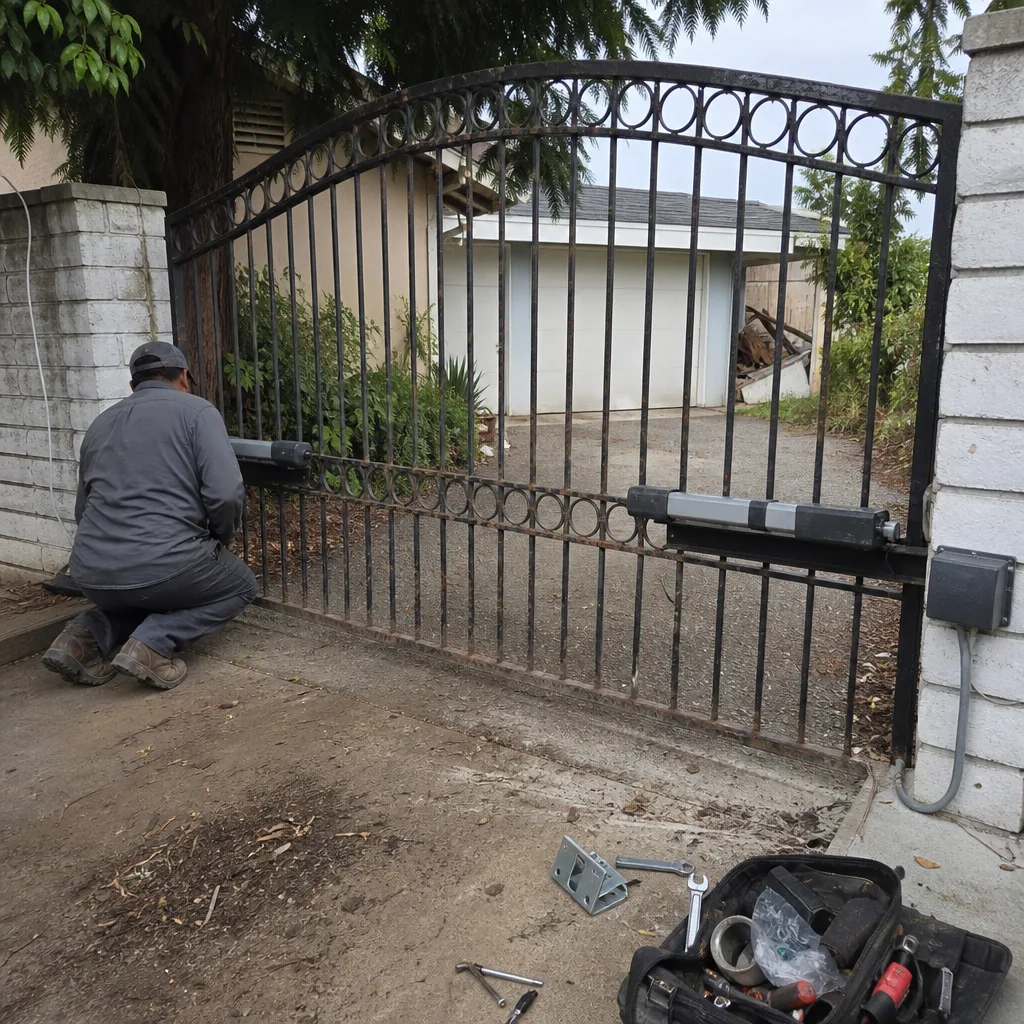 Before
 After
 Before
 After
 Before
 After