
Last updated November 2, 2026
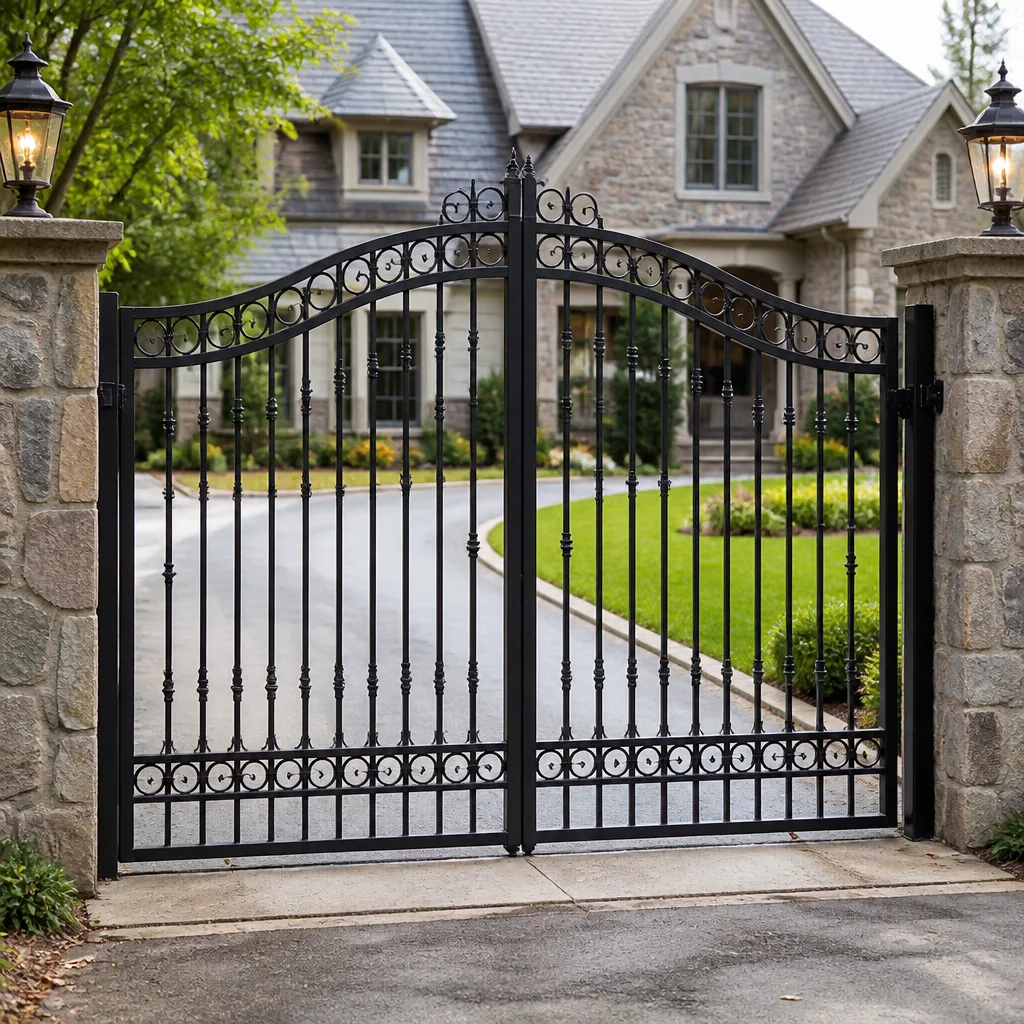 Wrought iron
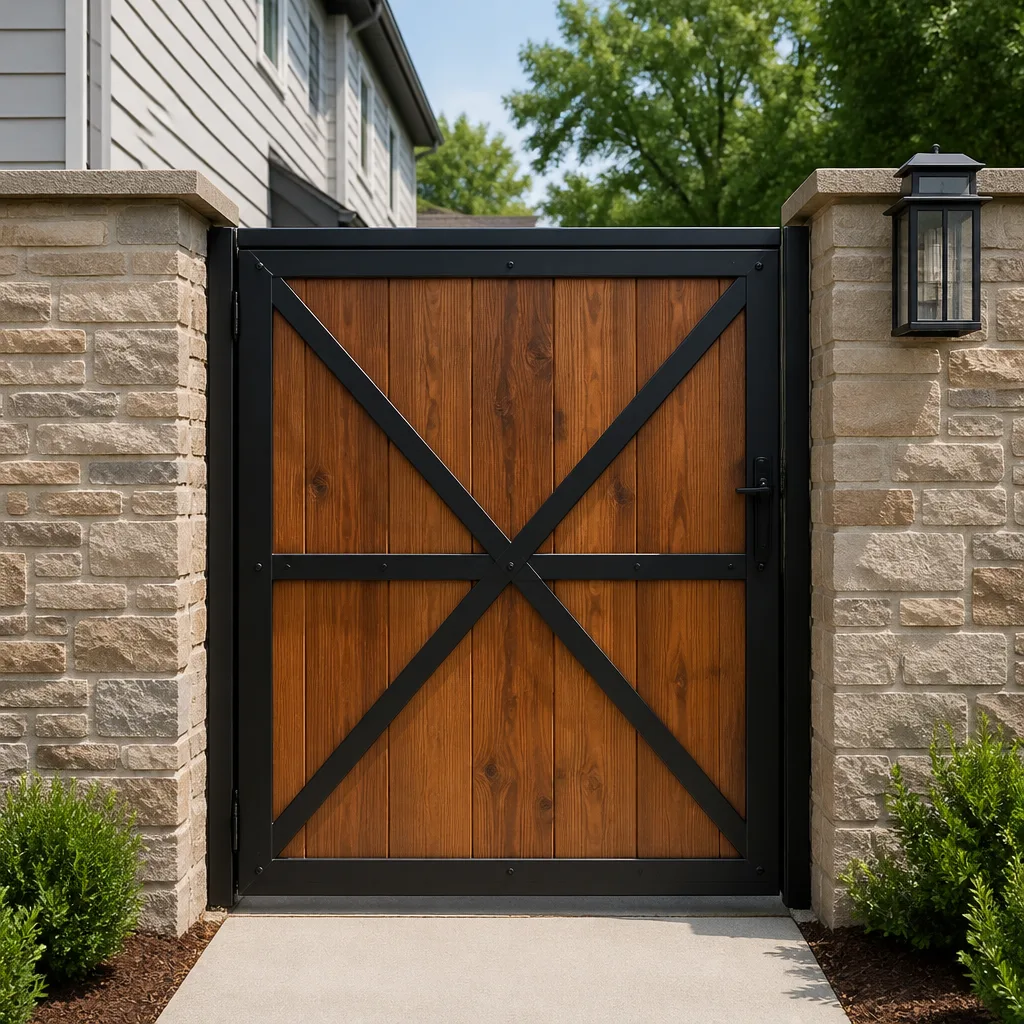 Wood & steel frame
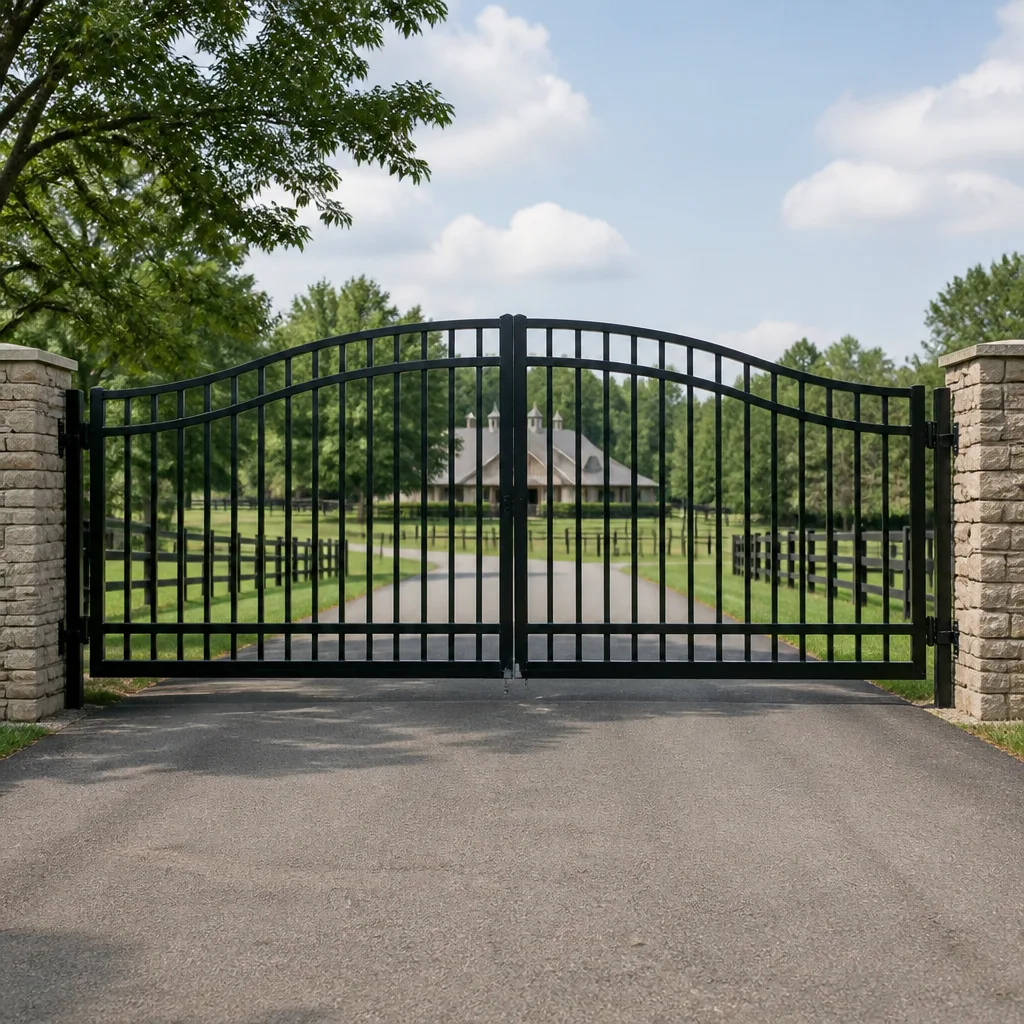 Farm & ranch
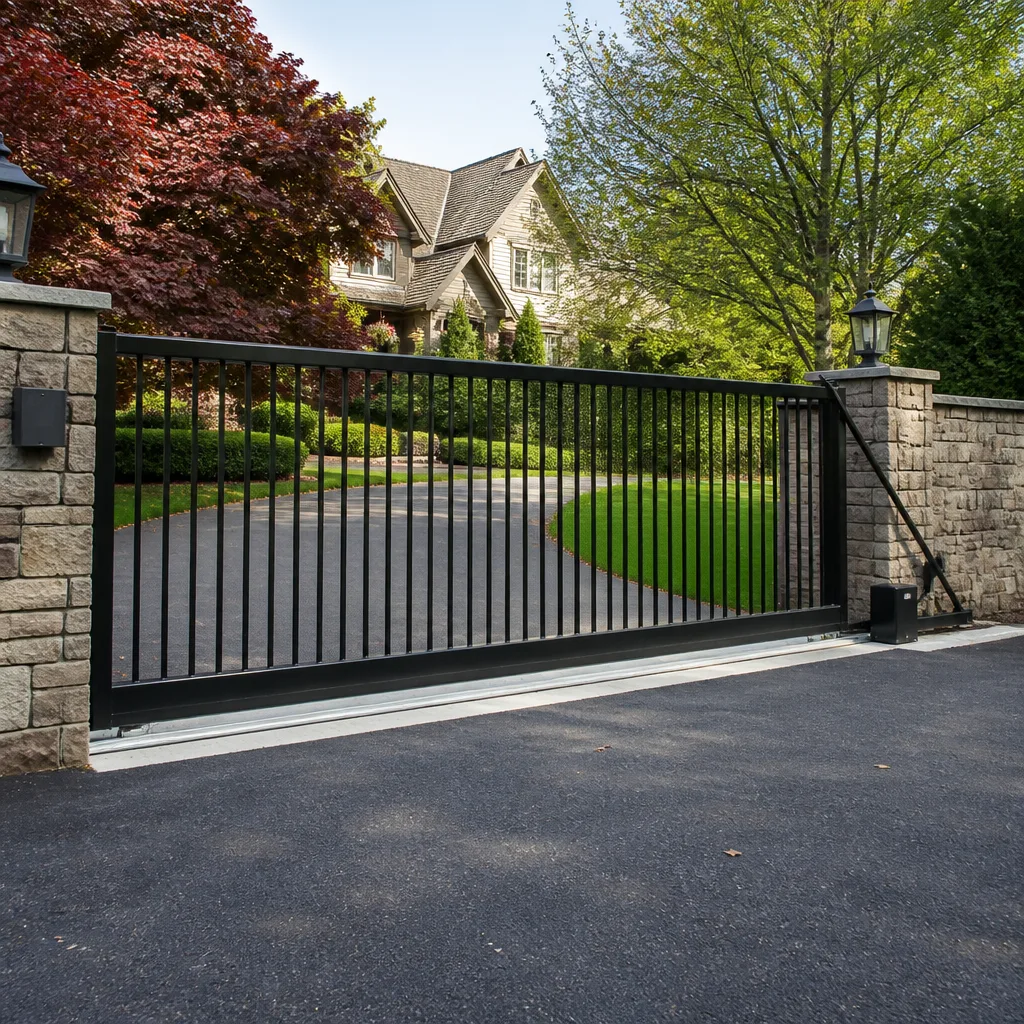 Sliding driveway gates
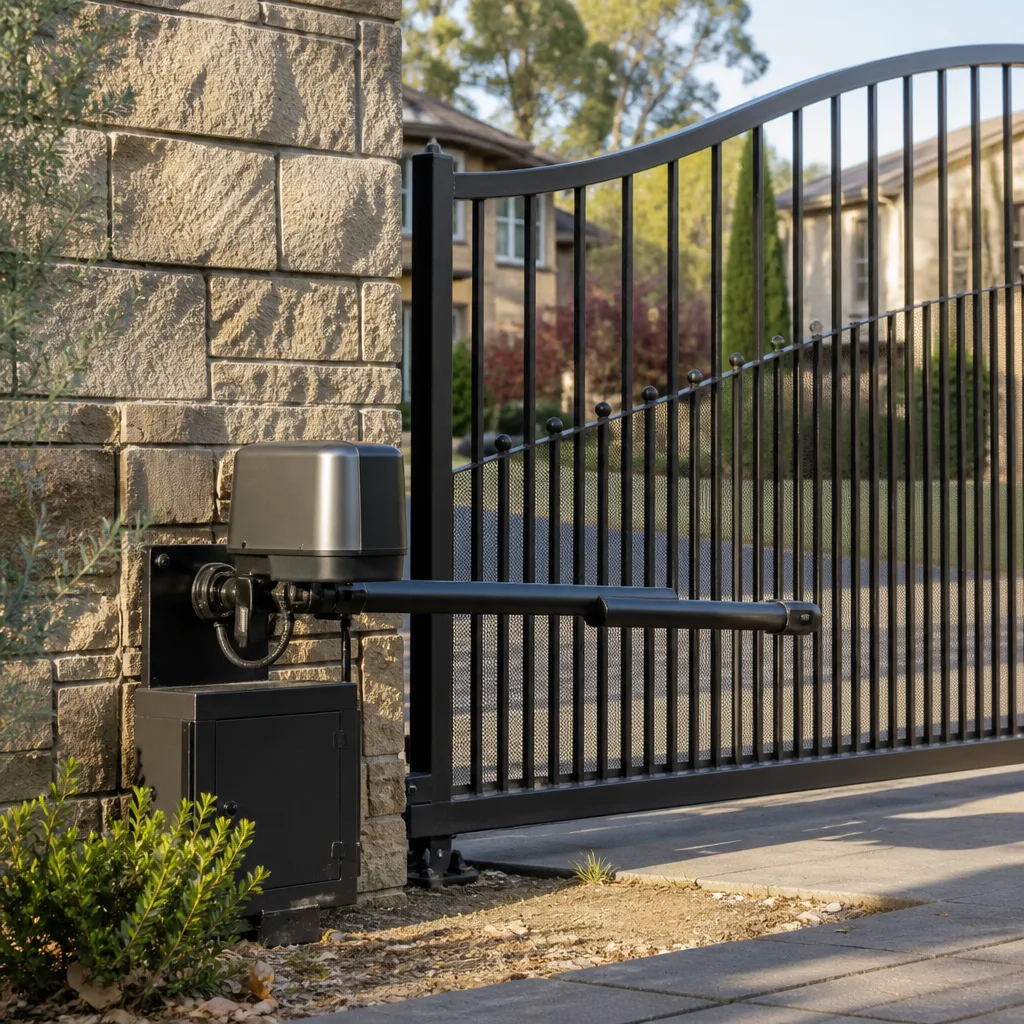 LiftMaster operators
Free on-site gate assessment - hinges, posts, and your LiftMaster or Nice gate operator checked before anything is quoted
The assessment is free and the quote is the invoice.
Get your free estimateGate Repair Cost Breakdown: The Pocket Homeowner’s Reference for 2026
Two quotes land on a Pocket homeowner’s kitchen counter for the same swing gate repair. One says $1,200. The other says $400. Both contractors inspected the same gate, on the same Tuesday afternoon, and both promise the repair will hold. The difference is not markup, it’s method. The $400 quote replaces a hinge and ignores why the gate dropped in the first place. The $1,200 quote addresses the failing weld, the misaligned operator bracket, and the stress it already put on the other hinge. One is a patch. One is a repair. This guide breaks down what actually drives gate repair cost in Pocket in 2026, component by component, so you can read a quote the way a specialist reads one: by what is included, what is excluded, and what the number tells you about the contractor’s approach. For hands-on help, see our Gate Repair services.
Quick Answer
Gate repair in Pocket, CA in 2026 typically costs $230 to $760 for common mechanical or electrical fixes, with most jobs landing in the $300 to $500 range. Full operator replacement, access control upgrades, or structural gate repair can push a project to $1,500 to $4,000 or higher depending on brand, gate type, and site conditions. Any quote you receive should break down into parts, labor, and any specialty fees such as travel to Pocket’s river neighborhoods or disposal of old hardware.
Styles & brands we work with
- Wrought iron
- Wood & steel frame
- Farm & ranch
- Sliding driveway gates
- LiftMaster operators
Table of Contents
- What Your Repair Invoice Actually Buys: Line-Item Labor
- Component-Level Price Benchmarks for Pocket, 2026
- The Brand Variable: Why Operator Choice Drives Cost More than Labor
- Specialist Labor Rates vs. Generalist Labor Rates in Sacramento County
- Hidden Costs Low Quotes Exclude in Pocket
- How to Audit a Gate Repair Quote Like a Specialist
- When Repair Makes Sense and When Replacement is Cheaper Long-Term
- Pocket-Specific Conditions That Affect Gate Repair Cost
What Your Repair Invoice Actually Buys: Line-Item Labor
A gate repair invoice in Pocket breaks into three layers, and every legitimate quote should show all three. The first is diagnostic time. This is the 30 to 60 minutes a technician spends finding the actual failure point, not just the symptom. The second is parts. The third is the installation labor to put those parts in correctly and verify the gate operates safely under load.
Diagnostic time gets a bad reputation because some contractors fold it into a flat “trip charge” without explaining what it covers. A specialist treats diagnosis as the most valuable 20 minutes of the visit. A stuck gate is rarely one broken thing. More often, it’s two or three things failing in sequence: a hinge wearing out shifts the gate’s weight, which makes the operator motor work harder, which burns out a capacitor, which triggers the gate to stop mid-cycle. If the first quote doesn’t include a diagnostic line, the contractor is probably not diagnosing. They’re quoting the visible symptom.
In our experience, Pocket gate repairs split roughly this way: 45% of the final invoice is parts, 35% is on-site labor, and 20% is diagnostic, travel, and vehicle costs. These percentages shift on electrical and access control work, where the component cost is higher relative to labor.
Component-Level Price Benchmarks for Pocket, 2026
These are the numbers we work with on the river side of Sacramento. They reflect market prices for mid-grade and OEM-grade components in early 2026, not the cheapest listing you’ll find online or the inflated number a sales-driven company might quote. Use them as a sanity check, not a contract. For ongoing maintenance tips, see our Gate Repair Maintenance Checklist for Pocket Homeowners.
- Hinge replacement (single hinge, standard steel gate): $85 – $150 for the hinge, plus 1 – 2 hours of labor. Total job: $180 – $320.
- Hinge replacement (decorative or heavy wrought-iron gate, Pocket Greenhaven area): $140 – $230 per hinge. Bigger gate post, more careful welding or fastening, longer install time.
- Operator replacement (entry-level residential, Mighty Mule or Ghost Controls tier): $350 – $650 for the unit, plus 2 – 4 hours of install. Total job: $650 – $1,050.
- Operator replacement (mid-grade residential, LiftMaster LA400 tier): $900 – $1,400 for the unit, plus 2 – 4 hours of install. Total job: $1,300 – $1,950.
- Operator replacement (commercial-grade, BFT or FAAC slide gate unit): $2,200 – $4,500 for the unit. Total job: $3,000 – $6,000 with labor and programming.
- Loop detector replacement: $200 – $400 for the detector module, plus $150 – $300 for installation if the existing loop wire is good. If the loop has to be cut into the driveway, the concrete work adds $450 – $900.
- Intercom or keypad replacement (residential): $250 – $600 for the hardware, plus 1 – 2 hours of low-voltage wiring and programming.
- Access control panel (commercial multi-tenant system): $800 – $2,500 for the panel and programming, not including the cost of re-issuing credentials.
- Photo-eye or safety edge replacement: $120 – $300 for the component, plus 1 hour of alignment and testing.
- Capacitor or control board repair on an existing operator: $150 – $400 depending on the board. This is the repair that most often saves a full operator replacement.
These numbers cover parts and labor for standard conditions. Pocket properties with long driveways, old gate posts, or gates hanging over drainage swales near the river will run higher because the physical work takes longer.
For a full picture of what a specialist looks at on a service call, our Gate Repair in Pocket page walks through the diagnostic sequence we use on every residential gate we touch.
The Brand Variable: Why Operator Choice Drives Cost More than Labor
The single biggest cost variable in any electric gate repair is the operator brand on the gate. Not the gate material. Not the gate size. The operator.
Here’s why. A Mighty Mule operator is a consumer-grade unit. Parts are everywhere, the control board is designed to be swapped, and the hardware is priced for a homeowner who might install it themselves on a Saturday. A LiftMaster operator sits a tier up. It’s still residential but built for heavier use, and the parts pricing reflects that. A BFT or FAAC operator is a different animal entirely. Those are hydraulic and electromechanical units built for commercial cycle counts. Replacement control boards run hundreds of dollars. New gear motors run into four figures.
Sacramento has stronger local parts availability for LiftMaster than for most European brands. That availability matters. If a contractor has to order a BFT control board and wait a week, that’s a week your gate is stuck open or shut. A specialist who carries inventory for the brand already on your gate can complete the repair in one visit. A generalist who has to special-order everything pays more in freight and time, and that cost gets passed to you.
This is why “we work on your brand” matters in Pocket. A contractor who knows LiftMaster, FAAC, and Mighty Mule systems well can diagnose across brands and quote the fix that works for what you already have. A contractor who repeatedly steers you toward one brand they sell is optimizing his margin, not your gate.
For homeowners on the river side of Pocket dealing with a failed operator or a gate that won’t open, our electric gate repair service page explains how we approach operator-level failures across all nine brands we carry parts for.
Specialist Labor Rates vs. Generalist Labor Rates in Sacramento County
A gate specialist in the Sacramento area charges $95 to $140 per hour for on-site repair work as of 2026. A general handyman or fencing company that picks up gate work may quote $60 to $85 per hour.
The specialist’s higher rate usually produces a lower total invoice. Here’s the math. A specialist sees the same failure patterns every week and carries the components to fix them. A two-hour specialist visit at $120 per hour is $240 in labor, done. A generalist who has to research the problem, leave to buy a part, and return the next day might spend six hours between travel and trial-and-error. At $75 per hour, that’s $450 before the part even goes on the gate. The specialist solved it in two hours at a higher rate and you paid less money and lost less time.
The other difference is tooling. Gate automation repair requires low-voltage diagnostics, torque testing, safety sensor alignment, and often programming. A fencing contractor with a truck full of post-hole diggers and a multimeter from the glove box is not that contractor. The person who works on gates every day has the tools and the pattern-recognition built in.
From the motor to the hinge, gate systems fail as systems. That’s why a focused technician costs more per hour and less per repair.
Hidden Costs Low Quotes Exclude in Pocket
The low quote is a strategy, not a savings. Contractors who bid low and make it up with “unforeseen conditions” are a known pattern in the Sacramento repair market. Here’s what the $400 quote usually omits:
- Disposal fees. An old operator, a bent gate leaf, a pile of rusted hinge hardware. Someone has to take it to the county facility and pay the drop fee. Cheap quotes often leave this as a surprise line item on the final invoice.
- Permit fees. Pocket sits inside the City of Sacramento. If a gate post is being replaced or a new operator installed on a driveway gate, a permit may be required. The low quote rarely includes it.
- After-hours rates. A gate failure at 9 PM or on a Sunday is a different job than one quoted on a Tuesday. Emergency dispatch in Sacramento County is quoted before we start. A quote that doesn’t mention the time-of-service rate structure is setting you up for a price you didn’t agree to.
- Travel to Pocket’s river neighborhoods. Contracts quoted from Rocklin or Elk Grove often quietly add a $75 to $150 travel or fuel surcharge for the drive into the Pocket peninsula. A quote from a nearby shop won’t.
- Second trip charges. If the contractor doesn’t carry the part and has to return on another day, the second trip should be priced into the original quote. It often isn’t, and then it appears as a “service call” line item later.
The pattern: a low quote that looks clean is often a quote for less work, not the same work at a better price. The line items tell the story.
How to Audit a Gate Repair Quote Like a Specialist
You don’t need to understand actuator geometry to read a quote. You need to look for structure. A legitimate contractor’s quote will always survive this test:
- Find the diagnostic line. There should be a specific charge for the initial assessment, and the technician should be able to tell you what he found. If the quote jumps straight to a part with no mention of what was diagnosed, it’s a guess, not a diagnosis.
- Check that every part has a line item. Hinges, sensors, control boards, brackets, fasteners. “Miscellaneous materials” with no breakdown is a red flag. It’s a vague charge that signals the contractor either doesn’t know what he’s doing or doesn’t want you to know what he’s charging for.
- Question any line called “service call” beyond the first visit. The first visit has a trip cost. That’s fair. A second and third “service call” charge means the contractor is charging you for his own lack of parts inventory.
- Ask which brand the replacement parts are. OEM or aftermarket. The answer matters. Aftermarket control boards for LiftMaster units exist and they fail more often. OEM parts cost more and last longer. A specialist will tell you which one he quoted and why.
- Verify what “repair” includes. Does the labor line include testing under load after the repair? Does it include adjusting safety sensors and verifying the auto-reverse function? If the quote doesn’t mention testing, the contractor doesn’t plan to do it. And a gate that hasn’t been tested is a gate that hasn’t been repaired.
Stuck gate? We diagnose first, replace only when repair won’t last. That’s the standard to hold any contractor to.
When Repair Makes Sense and When Replacement is Cheaper Long-Term
There’s a threshold on every gate where repair stops making financial sense and replacement becomes the honest recommendation. Here’s how to think about it.
Repair is the right call when the gate structure is sound and the failure is a wear item. Hinges, capacitors, photo eyes, safety edges, a failing control board. These are consumable components. Replacing a $180 hinge on a gate with another 15 years of life in the frame is always the right move. Fixing a $350 capacitor on a LiftMaster operator that’s only five years old is a bargain compared to a $1,400 operator.
Replacement is the right call when the failure is structural or the operator is beyond its design life. A rusted gate frame that has already failed at one weld will fail at another. A 18-year-old swing gate operator that needs a control board and a new gear set and new limit switches is a money pit. You’re putting $900 into a unit that belongs in the scrap bin. At that point, the conversation has to become a replacement conversation.
The reputable way to approach this decision is to ask the contractor to explain the remaining service life of the component being repaired. A hinge repair on a sound gate will last 8 to 12 years. A control board replacement on a 20-year-old operator might buy you two. If the contractor can’t or won’t explain the durability horizon of the fix, walk.
For Pocket homeowners weighing a repair against a full replacement, our Gate Installation in Pocket page outlines what a new system costs and what the installation process looks like when the time comes.
Pocket-Specific Conditions That Affect Gate Repair Cost
Pocket’s location shapes gate wear in ways that a contractor from Roseville won’t naturally account for. The Sacramento River is a hundred yards from some of these properties. The soil in the peninsula is sandy loam with a high water table near the river, which means gate posts shift more than they do on higher ground a few miles east. A post that has tilted out of plumb puts uneven load on the hinges, which accelerates hinge wear and eventually stresses the operator.
The climate is the second factor. Pocket gets Delta breeze humidity in the summer and enough winter rain to keep hardware wet for weeks at a time. Steel gates on the river side of Greenhaven rust faster than steel gates in Land Park. Powder coating fails sooner. Weld joints develop surface rust that creeps into the hinge barrels. A technician who works on Pocket gates regularly sees these patterns and prices for them. A technician who doesn’t will quote the hinge and miss the post movement that caused it.
Then there’s access. Many Pocket homes have longer driveways, some with narrow side gates and shrub lines that limit work space. If you can’t get a truck and a welder within 30 feet of the gate, the labor time goes up. That’s not a surcharge. It’s the reality of the site.
Homeowners who want a local specialist’s read on their gate should start with the Gatehouse Gate Repair home page, where our service area and scope of work are described in full.
Common Mistakes to Avoid
- Accepting a quote with no diagnostic line. A repair that wasn’t diagnosed is a guess, and you’re paying for the contractor’s guesswork in the markup.
- Choosing an operator brand before the gate is assessed. The cheapest operator on a heavy gate fails within two years. Match the operator to the gate weight and cycle frequency, not to the price tag.
- Ignoring hinge health during an operator replacement. A new operator cannot fix a sagging gate. If the hinges are worn and the technician doesn’t mention them, the new operator will eat itself inside 18 months.
- Signing a quote with vague “miscellaneous” fees. Every part and every fee should be named. Soft language hides margin.
- Calling a generalist for an electrical gate fault. Low-voltage diagnosis is a specific skill set. Wrong wiring on a gate operator can damage the control board and turn a $300 fix into a $1,200 replacement.
- Waiting on a noisy hinge or a slow gate. A gate that cycles slower than it did last spring is telling you something. Catching a failing capacitor or a binding hinge early costs a fraction of what the cascade failure costs.
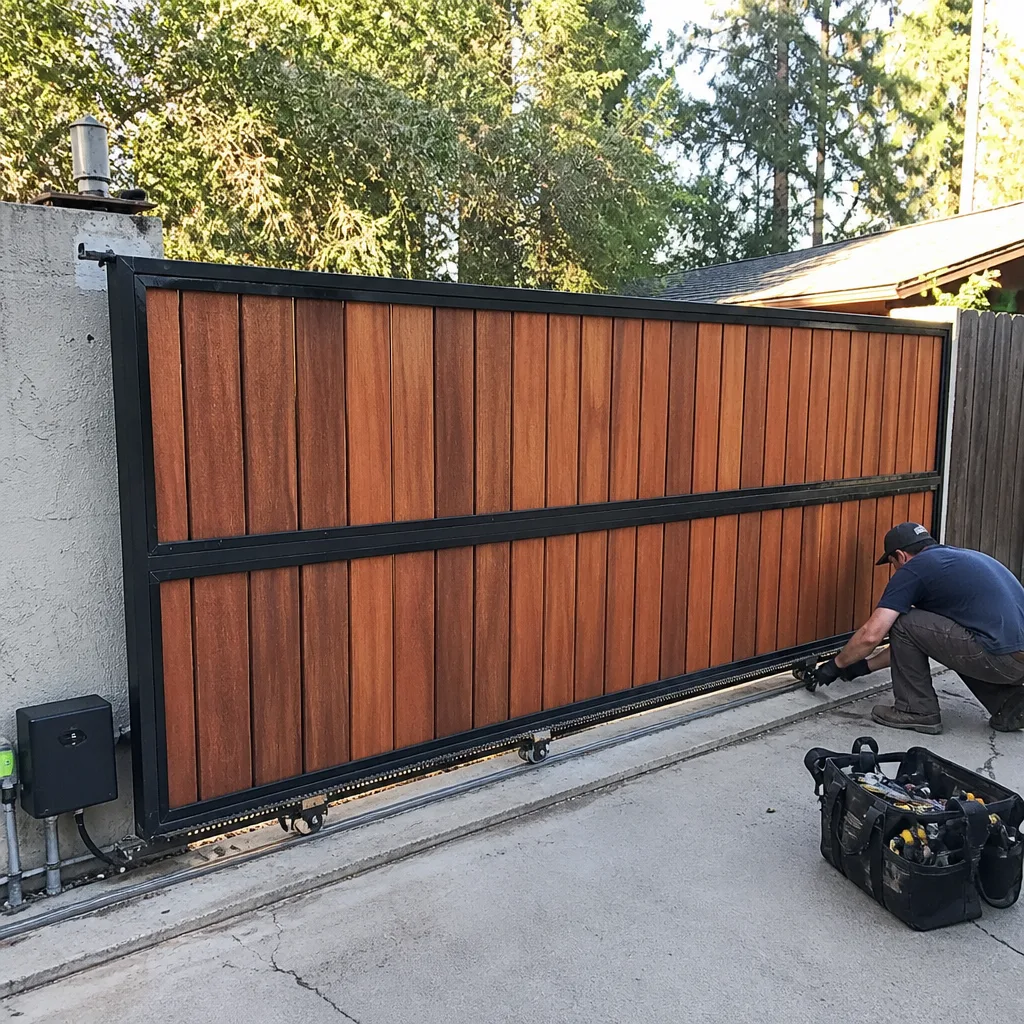
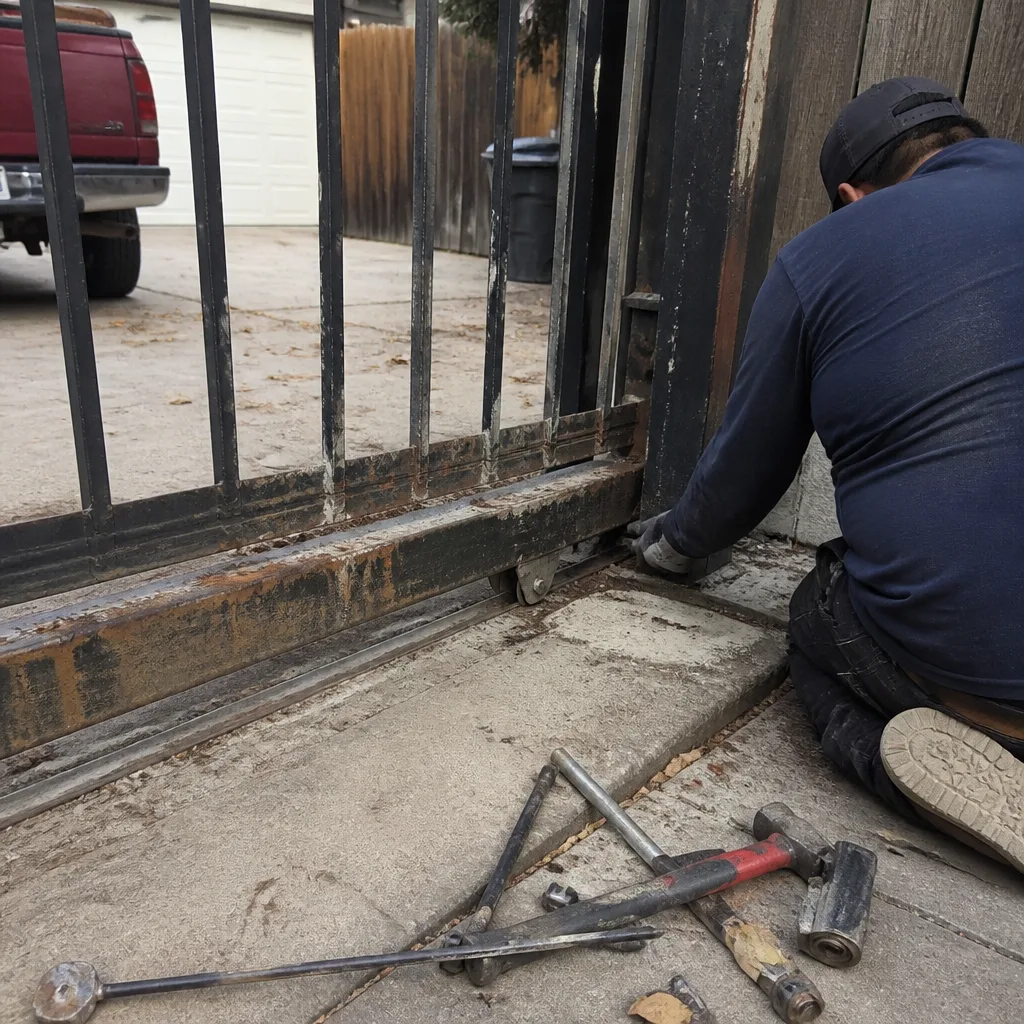
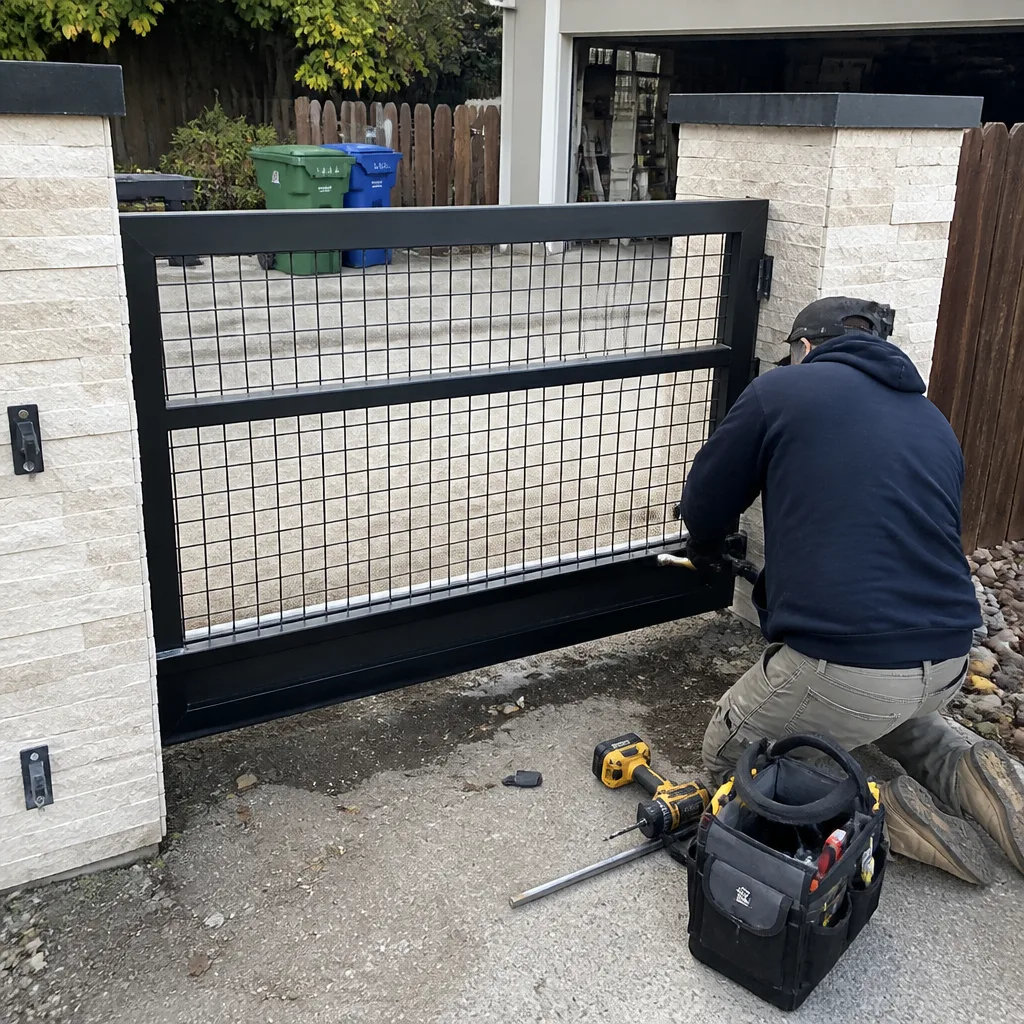
See the difference
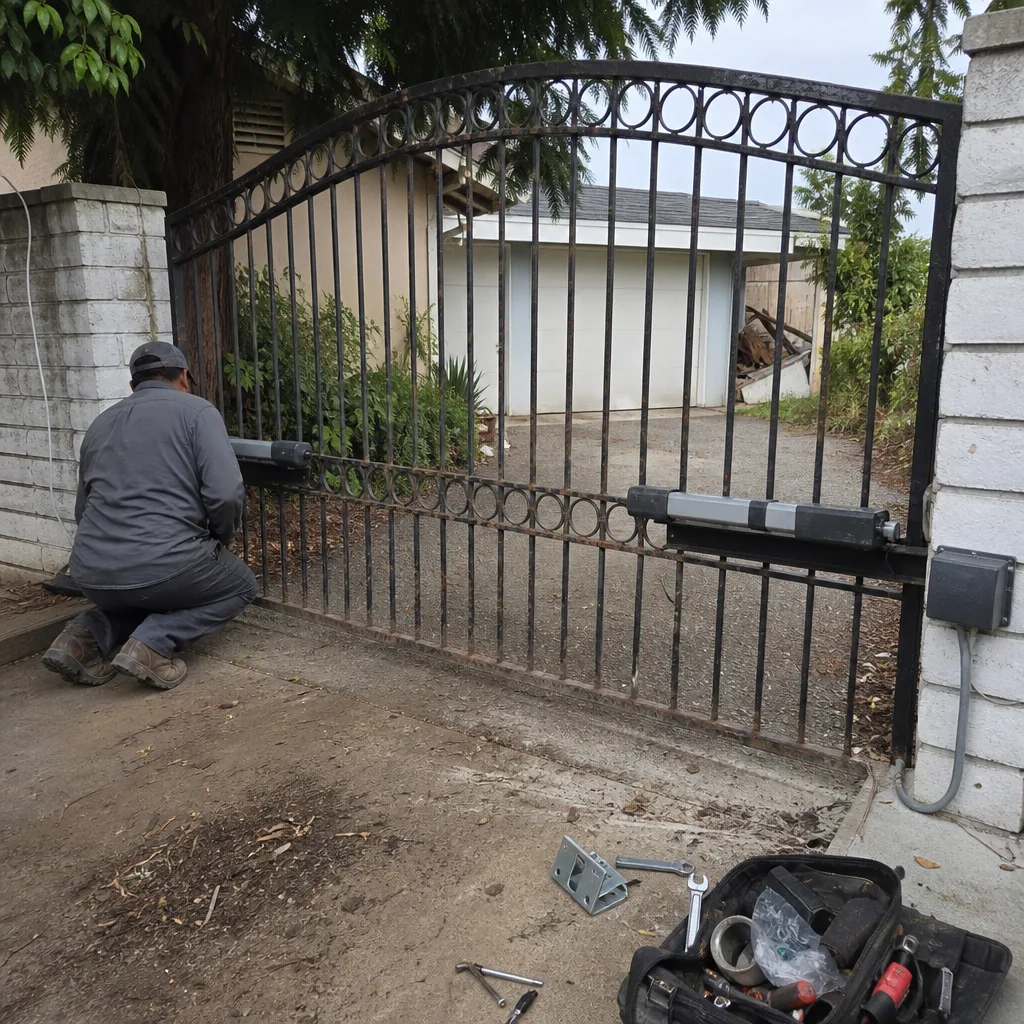 Before
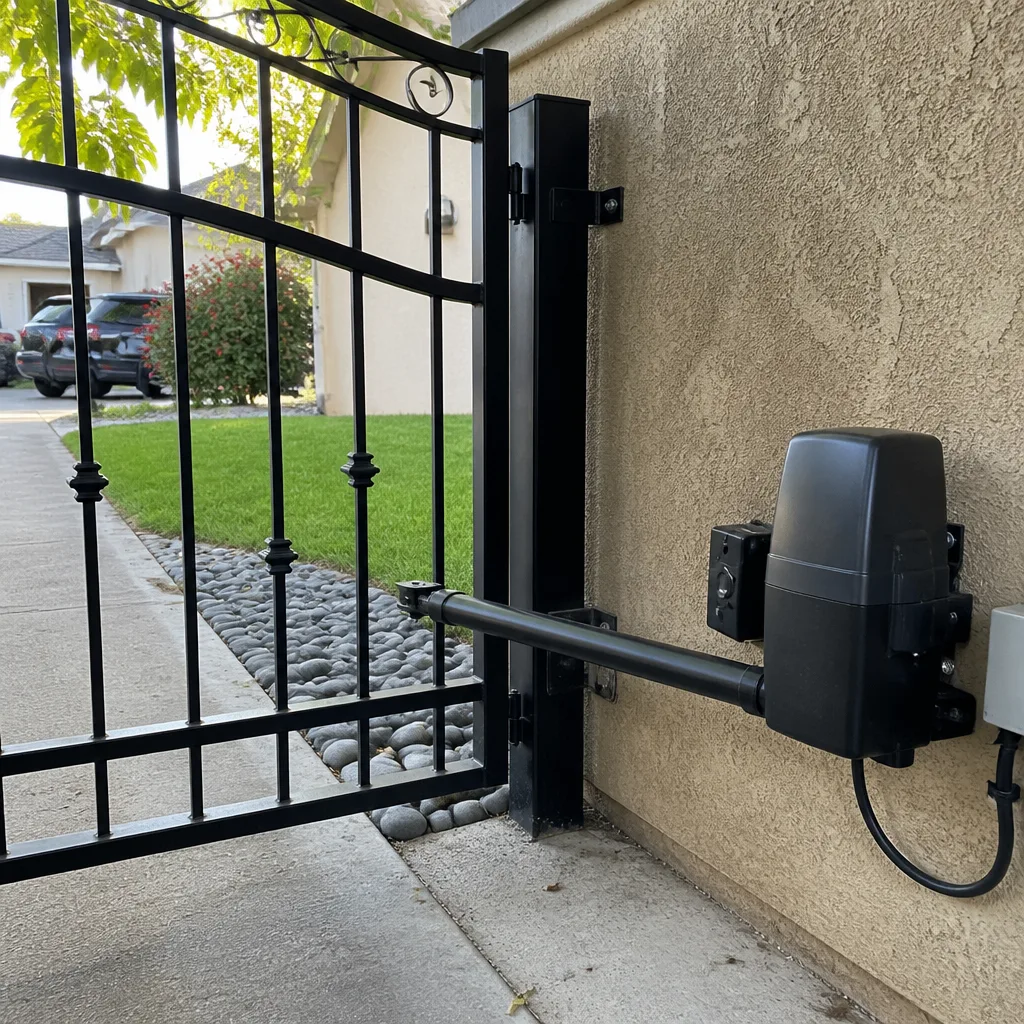 After
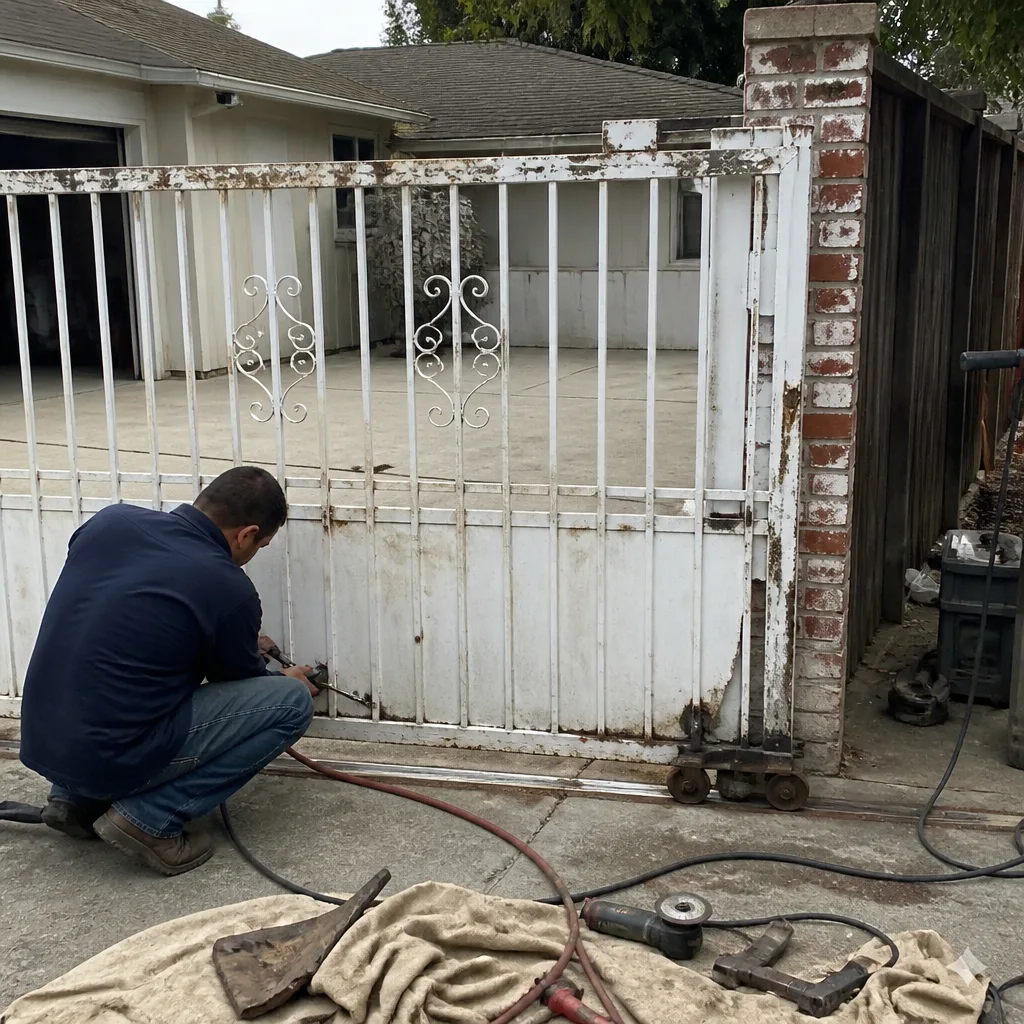 Before
 After
 Before
 After
When to Call a Professional
Call a professional when the gate stops mid-cycle, grinds, reverses unpredictably, or when you find fresh rust weeping out of a weld joint. Call when the gate moves slower than it did last season, when the operator hums but won’t move the gate, or when a hinge has visible slop. These are not maintenance issues to defer. A gate that fails in the open position is an invitation. A gate that fails closed traps vehicles and sometimes people. Electrical gate work carries real risk: high-tension components, pinch points, and the weight of a moving barrier that can injure if safety sensors are not functioning. This is not a place for guesswork. For emergency planning, see our Gate Repair Emergency Preparedness Guide for Pocket Homes.
Gatehouse Gate Repair offers free estimates in Pocket. Call (833) 620-5971 for a diagnostic visit, or check our Pocket gate repair page before the gate actually fails.
Frequently Asked Questions
Most gate repairs in Pocket cost between $230 and $760 in 2026, with common jobs like hinge replacement running $180 to $320 and operator repairs running $350 to $1,000 depending on the brand. Call (833) 620-5971 for an exact quote on your gate, free.
Operator failure, typically a burned capacitor, a failed control board, or a stripped gear in the actuator, is the most common electric gate repair in Pocket. The failure is compounded by gate weight issues or moisture. If your gate cycles partway and stops, that’s usually the operator, not the gate itself.
Same-day dispatch for emergency gate failures is available for many Pocket repair jobs, though a gate that is fully inoperable requires diagnosis before a timeline can be confirmed. Call (833) 620-5971 and describe what the gate is doing, and we’ll give you a straight answer on scheduling.
Repair is cheaper when the operator is under 10 years old and the failure is a wear item like a capacitor or a limit switch, typically costing $150 to $400. Replacement is the honest call when a unit is over 15 years old and needs multiple components at once. Any specialist should be able to show you the math.
Yes. We service and repair Mighty Mule, LiftMaster, FAAC, BFT, and five other major gate operator brands, which means we diagnose the system you have rather than steering you toward a brand we’d rather sell.
A fair quote includes a diagnostic line, a line item for every part, labor hours, and any disposal or permit fees. If the quote shows one lump sum with no breakdown, or vague categories like “miscellaneous,” ask for the structure. Legitimate contractors will provide it without hesitation.
The Bottom Line
Gate repair cost in Pocket in 2026 is a function of three things: what component failed, which brand system sits on your gate, and who you call to fix it. A hinge is a $250 fix. A commercial operator is a $4,000 fix. The same failure can be quoted at $400 or $1,200 depending on whether the contractor is fixing the symptom or the cause. Read the line items. Ask what was diagnosed. Ask how long the fix will last. The contractor who answers those questions clearly is the contractor whose number you can trust, and the contractor whose number you can trust is the one whose invoice won’t surprise you.
Written by the team at Gatehouse Gate Repair, serving Pocket since 2018. For more guides & resources, visit our blog.