
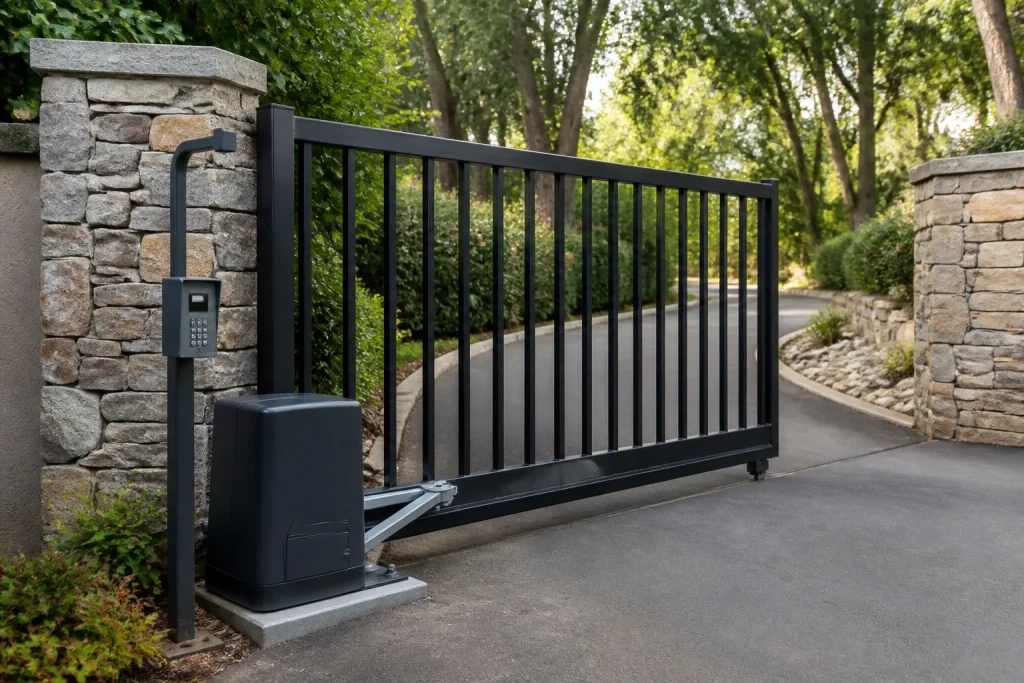
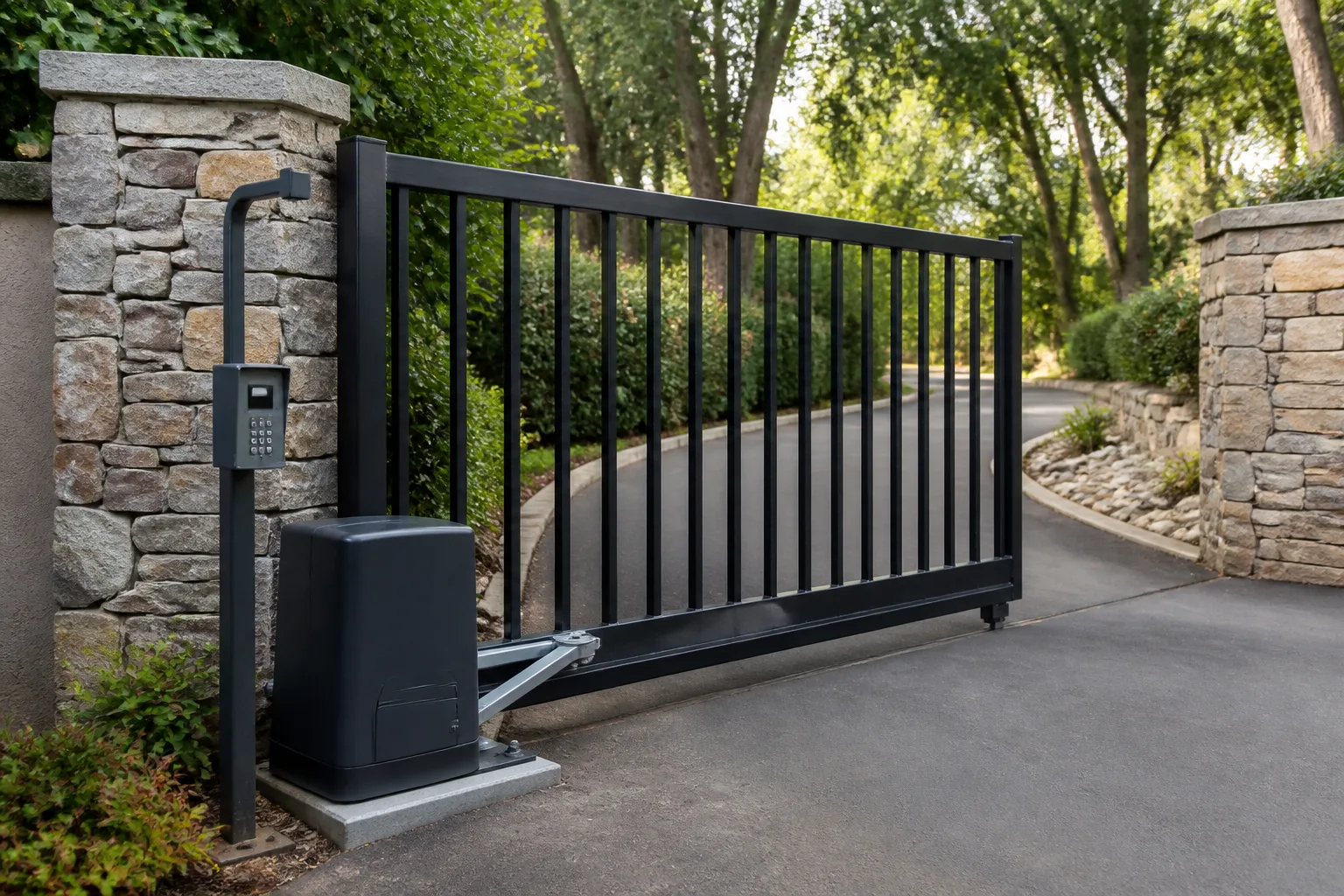
Ghost Controls Gate Repair in Pocket: A Homeowner’s Guide
Ghost Controls gate openers are built for farm and ranch gates that cycle a handful of times per day. Put one on a Pocket driveway where the gate opens 20, 30, even 40 times daily between morning commutes, school runs, deliveries, and guests, and you’re asking a low-duty-cycle system to do a job it wasn’t engineered for. The result is a predictable pattern: the same three or four components wear out every 12 to 24 months, and homeowners end up replacing parts repeatedly instead of addressing the root cause. That’s the reality we deal with in Pocket regularly, and understanding it is the first step toward a repair that actually lasts. If you’d rather not spend your weekend troubleshooting a control board, call us at (833) 620-5971 and we’ll sort it out.
Key Takeaways
- Ghost Controls systems are designed for low-traffic use, typically 10 to 15 cycles per day, while most Pocket driveway gates see double or triple that.
- The three components that fail first under high-cycle use are the battery charging circuit, the actuator rod seal, and the control board relay.
- Sacramento Valley UV exposure shortens the lifespan of Ghost Controls batteries and wiring harnesses faster than coastal or shaded installations.
- Reading the LED indicator sequence is the fastest way to narrow down a Ghost Controls fault before touching any hardware.
- Sometimes the honest recommendation is to repair the Ghost Controls unit. Other times, a higher-duty-cycle operator like a LiftMaster or Viking makes more sense for the property.
What “Low Traffic” Actually Means for a Ghost Controls Gate
Ghost Controls publishes duty cycle ratings for its operators, but the numbers are easy to misread. Most of the brand’s residential swing gate kits are rated for roughly 10 to 15 full open-close cycles per day, with a maximum continuous run time measured in minutes, not hours. That’s perfectly adequate for a pasture gate that opens twice a day when the tractor goes through. It’s a different story on a Pocket street where the same gate serves a household with two working adults, a teenager with a car, a weekly landscaping crew, and regular package deliveries.
Here’s the math nobody tells you: a “20 cycles per day” gate actually runs its motor, actuator, and control board through 40 direction changes. Every reversal is a point of mechanical and electrical stress. When a Ghost Controls actuator rated for 15 cycles gets pushed to 25 or 30, the arm seal wears oblong, the relay contacts arc more than they should, and the battery charge circuit can’t keep up with the drain. In our experience, the systems that fail in Pocket aren’t lemons. They’re simply running outside their design envelope, and no amount of limit-switch fiddling changes that.
If this sounds like your situation, the first question to ask isn’t “what broke” but “how many times does this gate actually cycle on a normal day.” That number defines the repair path. For a deeper look at how Pocket’s climate and usage patterns affect gate systems across all brands, see our Gate Repair in Pocket overview.
The Three Components That Fail First
When a Ghost Controls gate in Pocket stops working, the culprit is almost always one of three components. Knowing which one to check first saves time and usually money, because you’re not throwing parts at the problem.
1. The Battery and Solar Charging Circuit
Ghost Controls systems typically run on a 12V battery charged either by a solar panel or a low-voltage transformer. In Pocket’s summer heat, that battery lives in an environment routinely above 100°F. Heat accelerates the chemical degradation inside lead-acid and AGM batteries, which means a battery that might last four years in a shaded Oregon driveway may be marginal after two Sacramento summers. The charging circuit is also vulnerable: solar charge controllers on Ghost Controls units are not known for aggressive thermal management, and the charge current drops off sharply as the panel and controller heat up. The symptom is a gate that works fine in the morning and struggles or stalls by late afternoon.
2. The Actuator Rod Seal
The linear actuator on a Ghost Controls swing gate is a threaded rod inside a sealed tube. The seal at the rod end is designed to keep dust and moisture out, but under frequent cycling it wears and lets fine Sacramento Valley dust in. Once grit reaches the acme screw, the actuator starts drawing more current, moving slower, and eventually binding. You’ll hear it as a grinding or humming sound, sometimes accompanied by the gate stopping mid-travel and reversing.
3. The Control Board Relay
Every open or close command fires a relay on the control board. Relays have a finite number of arcs before the contacts pit and the resistance climbs. On a low-cycle ranch system, that relay might last the life of the operator. On a Pocket driveway gate doing 25 cycles daily, that’s over 9,000 relay actuations a year. We’ve pulled control boards out of Pocket gates where the relay contacts were visibly blackened and pitted, causing intermittent operation or complete failure to respond to remotes. The frustrating part is that the rest of the board tests fine, but a single worn relay renders the whole unit useless.
We pulled a Ghost Controls actuator out of a garage over in the Greenhaven/Pocket border area last month where the rod seal had failed so completely that the threaded shaft looked like it had been sandblasted. The homeowner had replaced two batteries and a solar panel before calling us. The fix was a new actuator and a conversation about duty cycle, not more parts thrown at the old one.
Ghost Controls-Specific Diagnostics: Reading the LEDs
Ghost Controls control boards are refreshingly simple compared to some of the networked operators we service. The main diagnostic tool is the LED indicator on the board itself. Understanding the blink pattern gets you to the root cause faster than any trial-and-error.
Here’s what we look for first:
- Solid green: Board is powered and in standby. This is what you want to see when the gate is idle.
- Flashing green during operation: Normal, indicates the board is processing an open or close command.
- Flashing red or alternating red/green: A fault has been logged. On most Ghost Controls residential boards, this points to an obstruction event, a motor over-current condition, or a limit switch that’s been triggered unexpectedly.
- No LED at all: Power isn’t reaching the board. Check the battery voltage first, then the transformer or solar input. In Pocket, dead batteries from heat stress are so common that we check voltage before anything else.
A second diagnostic step worth knowing: after a mechanical fault trips the board, Ghost Controls units often require a limit switch reset before they’ll operate normally again. That doesn’t mean you should grab a multimeter and start probing. Control board voltages on automated gates can surprise you, and testing a live relay circuit without proper low-voltage experience is how good gates become expensive paperweights. We say this from experience: the diagnostic fee we charge is always cheaper than the board repair bill after an amateur attempt goes wrong.
For automated and electric gate issues beyond the Ghost Controls brand, our Electric Gate Repair in Pocket page covers the full range of systems we work on.
Sacramento Valley UV: The Hidden Accelerant
Pocket sits in a hot, sunny stretch of Sacramento where UV exposure is relentless from May through October. That’s bad news for Ghost Controls installations in ways the warranty documents don’t emphasize.
The most visible casualty is the wiring harness. Ghost Controls uses standard PVC-jacketed low-voltage wire on its actuator and accessory leads. PVC breaks down under prolonged UV exposure, becoming brittle and eventually cracking. Once the jacket cracks, moisture from winter rain or irrigation overspray wicks into the copper, causing corrosion and intermittent shorts. We’ve seen harnesses in Pocket that looked fine from the outside but had green, corroded copper inside the jacket. That corrosion drives up resistance, drops voltage to the actuator, and makes the whole system run hot and weak.
The battery and its enclosure take the second hit. Sun-facing battery boxes in Pocket can reach interior temperatures well above 130°F in the summer. Even a well-charged battery degrades faster at that temperature. We recommend positioning solar charge controllers and batteries on the shaded side of a gate post or under a small weather hood wherever possible. It doesn’t cure the heat problem, but it moves the needle enough to extend component life measurably.
What we’re describing isn’t brand-bashing. Ghost Controls builds a solid product for what it’s designed to do. The issue is that the brand’s design assumptions, based largely on rural and semi-rural duty cycles, don’t align with what a Pocket homeowner actually needs from a gate that guards a busy driveway every single day. Recognizing that mismatch is what separates a repair that lasts 18 months from one that lasts five years.
When Ghost Controls Is the Right Call, and When It Isn’t
We service Ghost Controls systems because plenty of Pocket properties are genuinely well-suited to them. If your gate operates on a property with a single household, light traffic, and reliable shade for the battery and solar components, Ghost Controls is an honest, cost-effective choice. The actuators are well-built, the remotes are easy to pair, and the mechanical simplicity means fewer parts to fail. We’re glad to repair them, and we don’t upsell replacement when a repair will hold.
But we’d be doing Pocket homeowners a disservice if we didn’t flag the cases where a Ghost Controls unit is going to keep failing no matter how many times we replace the battery or reseal the actuator. That’s the situation where a higher-duty-cycle operator makes more sense. Brands like LiftMaster and Viking build residential operators designed for 40 to 60 cycles per day and continuous duty in some commercial configurations. If your Pocket gate cycles 30 times a day or more, every repair on a Ghost Controls unit is a band-aid on a system that’s undersized for the job. We’ll tell you that plainly, because a gate specialist’s job is to diagnose the whole system, not just swap the part that failed this week.
If you’re weighing repair against replacement, our Gate Installation in Pocket page walks through what a full system upgrade involves. And if you’re starting from scratch with a dead gate, the Gatehouse Gate Repair home page gives you the full picture of what we cover.
The Bottom Line
Ghost Controls gate openers are honest, workmanlike machines built for low-traffic properties. When a Pocket homeowner installs one on a busy driveway gate, the system gets pushed past its intended duty cycle, and the battery, actuator seal, and control board relay take the punishment. Understanding that mismatch, reading the LED diagnostics, and shielding components from Sacramento Valley UV are the three biggest levers for keeping your Ghost Controls gate running longer between repairs. But when a system is consistently failing every year and a half, continuing to repair it is just paying rent on a gate that wants to be retired. If your Ghost Controls gate in Pocket is acting up, call Gatehouse Gate Repair at (833) 620-5971 for a free estimate. We’ll diagnose the problem, tell you honestly whether repair or replacement makes more sense, and quote the job before any work starts.
Frequently Asked Questions
Ghost Controls gate repair in Pocket typically runs between $185 and $420 for most component-level fixes, including battery replacement, actuator seal repair, and limit switch resets. Control board replacement is usually at the higher end, and a full actuator replacement can exceed $500 depending on the model and stroke length. These are the prices we see in the Pocket market specifically; your exact quote depends on the failure point and whether we’re repairing in place or pulling the unit for bench work. Call (833) 620-5971 for a firm quote, always agreed before work begins.
Intermittent Ghost Controls operation in Pocket is almost always a battery or charging circuit issue. A battery that’s lost capacity from heat stress will hold enough charge to cycle the gate a few times, then sag below the voltage threshold the control board needs to fire the relay. It’ll work in the morning, fail by afternoon, and work again after the solar panel recharges it overnight. The second most common cause is a corroded wiring harness from UV damage, which creates intermittent voltage drops that mimic a dead battery. Both conditions require a voltage test and wiring inspection to pin down.
We aim to diagnose and repair Ghost Controls gates in Pocket on the first visit, and most component replacements, batteries, actuators, control boards, and limit switch resets, are jobs we complete the same day we arrive. We stock Ghost Controls replacement parts to make that possible. For a repair quote and the soonest available appointment, call us at (833) 620-5971.
Ghost Controls is a quality brand for low-traffic residential gates, and it’s genuinely well-suited to properties where the gate cycles 15 times a day or fewer and the components can be shielded from direct UV exposure. But for Pocket homes where the driveway sees 20 to 40 cycles daily, higher-duty-cycle operators from LiftMaster or Viking are the more honest long-term recommendation. If you’re unsure where your usage falls, we’ll measure your cycle count and give you a straight answer about what your gate can handle.
Written by the team at Gatehouse Gate Repair, serving Pocket since 2018.
Need Gate Repair Help?
Call Gatehouse Gate Repair - licensed & insured, here with fast help in Pocket.
(833) 620-5971