
Last updated November 2, 2026
 Wrought iron
 Wood & steel frame
 Farm & ranch
 Sliding driveway gates
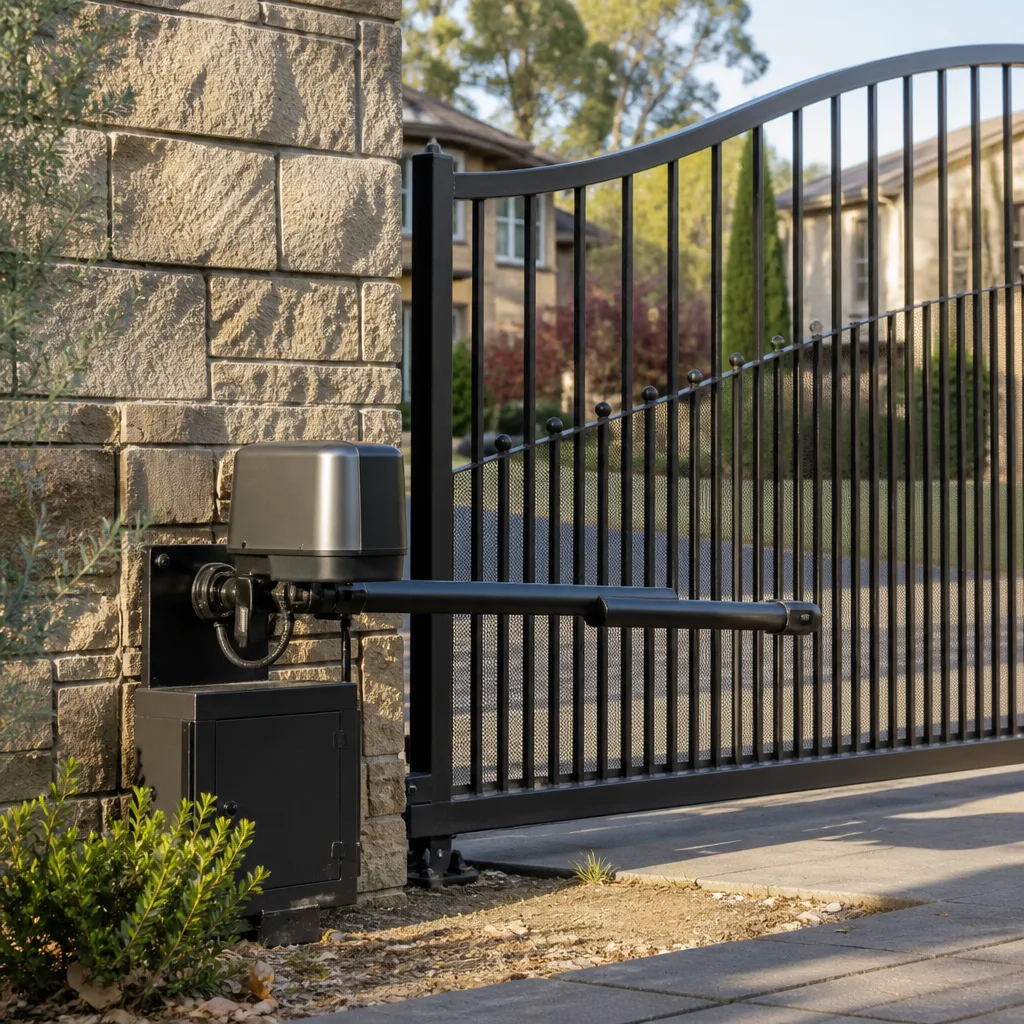 LiftMaster operators
Free on-site gate assessment - hinges, posts, and your LiftMaster or Nice gate operator checked before anything is quoted
The assessment is free and the quote is the invoice.
Get your free estimateGate Repair Maintenance Checklist for Pocket Homeowners
Most gate maintenance checklists fail because they treat every task as equally important. That’s backwards. In Pocket, where winter rains saturate clay soil and summer heat bakes exposed metal, the failure curve is predictable. Photo-eyes drift out of alignment long before rollers wear out. Control boards corrode at their terminals before hinges seize. Yet most checklists spend half their space on tasks that rarely matter here and bury the three things that actually prevent 80% of Pocket gate failures at the bottom.
This guide sequences maintenance by failure probability, not by category. It’s built from what we see in driveways along Pocket Road, Riverside Boulevard, and throughout the Greenhaven corridor. You’ll learn which five tasks matter most, which lubrication actually works in riverside humidity, how to self-test your gate operator’s safety reverse without a technician, and what to write down so the next repair costs less.
Styles & brands we work with
- Wrought iron
- Wood & steel frame
- Farm & ranch
- Sliding driveway gates
- LiftMaster operators
Quick Answer
The gate maintenance checklist that actually works in Pocket starts with three tasks most guides skip or bury: photo-eye alignment testing, ground-loop and wire-terminal inspection, and safety reverse cycle testing. After those, check gate leaf balance and the condition of rollers, hinges, and track. Lubricate only at the end, using a heavy-duty silicone spray rather than white lithium grease, which attracts dust and gums up in Pocket’s humidity range.
Table of Contents
- Why Sequence Matters: The Pocket Failure Curve
- Step 1: Test Photo-Eye Alignment Before Touching Anything Else
- Step 2: Self-Test the Safety Reverse Cycle
- Step 3: Inspect Terminals and Low-Voltage Wiring for Pocket’s Corrosion Patterns
- Step 4: Lubrication for Riverside Humidity, Not Arizona Dry Heat
- Step 5: Seasonal Adjustments for Pocket’s Two Critical Windows
- Step 6: Log Every Inspection So Repair Costs Less
- Common Mistakes to Avoid
- When to Call a Professional
- Frequently Asked Questions
- The Bottom Line
Why Sequence Matters: The Pocket Failure Curve
A gate in Pocket doesn’t fail randomly. It fails in a predictable order tied to two things: the Sacramento River’s humidity influence and the clay-heavy soil common throughout this part of Sacramento County. Understanding this order is what separates maintenance that prevents breakdowns from maintenance that just keeps you busy.
In our experience servicing gates in Pocket and surrounding Sacramento neighborhoods, the failure curve looks like this over any 12-month period:
- Photo-eye misalignment – Nighttime temperature swings shift gate frames by fractions of an inch. Over weeks, those fractions add up. A misaligned photo-eye is the most common cause of a gate that stops mid-cycle or refuses to close.
- Safety reverse sensor failure – Either the sensor drifts out of calibration or the gate’s travel limits shift after soil movement. This creates a gate that reverses unpredictably or doesn’t reverse when it should.
- Terminal corrosion – Winter moisture combined with summer heat accelerates oxidation at low-voltage wire terminals, especially on equipment installed more than five years ago.
- Lubricant breakdown – Conventional white lithium grease absorbs moisture, collects dust, and turns into a grinding paste by August. Hinges start squealing, then binding.
- Mechanical wear on hinges and rollers – This happens last because most gate hardware is overspec’d for residential use. When it does fail, it’s usually because the earlier items on this list were ignored.
This is why a generic checklist that starts with lubrication wastes your best maintenance hour. The photo-eye and safety reverse issues are what actually cause the “stuck gate” call at 7:15 on a Tuesday morning, not a dry hinge.
Step 1: Test Photo-Eye Alignment Before Touching Anything Else
Photo-eyes are the small paired sensors mounted low on either side of the gate opening. One sends an invisible infrared beam; the other receives it. If that beam is interrupted, the gate operator won’t close the gate – or it reverses mid-cycle. In Pocket, alignment drift happens for two reasons that have nothing to do with anyone bumping the post.
First, the clay soil beneath gate posts expands when wet and contracts when dry. A winter of rain followed by a dry spring can shift a post by a quarter inch. At 12 feet of gate span, a quarter inch at the post translates to half an inch at the sensor. That’s more than enough to break the beam.
Second, thermal expansion moves the gate leaf itself. A steel gate that’s 14 feet long grows by about an eighth of an inch between a 45-degree January morning and a 105-degree July afternoon. The sensor alignment that worked in February may not work in June.
Here’s the five-minute test we recommend for every Pocket homeowner:
- Put the gate in manual release mode (pull the release handle on the operator; for most models you’ll find it on the side or underside).
- Close the gate by hand until it’s about two feet from the fully closed position.
- Look at the receiving photo-eye. Most units have a small LED. Green or solid red means the beam is received. Blinking red or no light means it’s not.
- If the light isn’t solid, don’t bend the bracket by hand. Loosen the mounting screw, nudge the sensor up or down a fraction, and watch for the LED to turn solid.
- Once the light is solid, reconnect the operator and run one full open/close cycle to confirm.
This one check prevents more service calls in Pocket than any other single maintenance task. If the gate works in manual mode but not on the operator, photo-eye alignment is the first thing to check before assuming the motor is dead.
Step 2: Self-Test the Safety Reverse Cycle
Every automatic gate installed in California is required to have a safety reverse mechanism that detects resistance when the gate hits an obstruction and reverses direction. You can test this yourself without any tools, and you should test it every three months. A failed safety reverse test doesn’t just mean a repair is needed – it means the gate is currently unsafe around children, pets, and deliveries.
Here’s the simple version of the test:
- Open the gate fully.
- Place a plastic trash can or a rolled-up moving blanket in the gate’s path, about where a car’s front bumper would be.
- Trigger the gate to close.
- Watch what happens when the gate contacts the object.
What you want to see: the gate stops immediately and reverses direction within half a second of contact. What a failed test looks like: the gate pushes the object, slows down, groans, or keeps trying to close against resistance before stopping.
If the gate fails this test, the cause is usually one of three things: a sensitivity setting that’s drifted out of calibration, a worn drive belt or chain causing the operator to misread pressure, or a failing motor capacitor making the operator sluggish. None of these are DIY fixes. A technician who works on Viking, Ghost Controls, DoorKing, and Elite operators daily can diagnose which one is at play in about 20 minutes, because the failure patterns are specific to each brand. We service all four, along with five other major brands, across Pocket and the surrounding Sacramento area.
Step 3: Inspect Terminals and Low-Voltage Wiring for Pocket’s Corrosion Patterns
Pocket sits close enough to the Sacramento River that ambient humidity runs higher than eastern Sacramento neighborhoods, especially from November through March. That moisture works its way into control boards, terminal strips, and low-voltage connections. The result is a specific corrosion pattern we see constantly: green or white powder at screw terminals, darkened copper at wire ends, and intermittent faults that make the gate work fine one day and dead the next.
Here’s what to check, in order of likelihood:
- Control board terminals: Open the operator cover (power off first at the breaker or disconnect switch). Look at every screw terminal where a wire lands. Green fuzz or white powder is corrosion. Tighten the screw gently – don’t overtighten, which can strip the terminal block.
- Photo-eye wire connections: These are usually wire-nutted or crimped in an underground junction box near the gate post. If the splice is below grade and the box wasn’t waterproofed, this is a common failure point in Pocket rain years.
- Keypad and intercom wiring: Exposed wiring on keypads faces direct rain. Corroded keypad terminals cause buttons to work intermittently, which homeowners often misdiagnose as a dead keypad battery.
- Ground loop wiring: If your gate has a vehicle detection loop cut into the driveway, check the loop’s lead wire where it enters the operator. Corroded loop connections cause the gate to open randomly or fail to detect a car.
If you find corrosion, clean it with electrical contact cleaner (available at any hardware store) and a small brass brush, then reseal the connection with dielectric grease. If the corrosion has eaten into the terminal block itself, the block needs replacement. That’s a technician-level repair, not a cleaning job.
Step 4: Lubrication for Riverside Humidity, Not Arizona Dry Heat
Most generic gate maintenance guides recommend white lithium grease for hinges, rollers, and chains. That’s bad advice for Pocket. White lithium grease is a thick petroleum-based product that attracts and holds dust. In a dry climate like Phoenix, that’s tolerable because there’s little moisture to mix with it. In the Sacramento River corridor, winter humidity gets into that grease, creates a slurry, and by July you have a grinding compound that accelerates wear on the parts it was meant to protect.
What works better in this climate:
- Heavy-duty silicone spray for hinges, pivot points, and slide-gate rollers. Silicone displaces moisture, doesn’t attract dust, and won’t break down in humidity. Apply quarterly.
- Dry PTFE (Teflon) lubricant for chains and sprockets on chain-drive operators. Wet chain lubes pick up sand and grit; dry PTFE bonds to the chain and stays clean.
- Dielectric grease for electrical connections, not moving parts. Use it sparingly on battery terminals, keypad contacts, and any low-voltage plug connections.
One more Pocket-specific note: don’t lubricate a gate that has a belt drive. Belt-drive operators like most models from Ghost Controls and several DoorKing residential units use a synthetic rubber belt that requires no lubrication at all. Oiling a belt shortens its life.
Step 5: Seasonal Adjustments for Pocket’s Two Critical Windows
Pocket has two seasonal windows when gate problems spike: late March through April, and late July through August. Here’s how to use those windows.
Post-Rainy Season (March-April): Check post settlement and travel limits.
Winter rain saturates the clay soil around gate posts. As the soil drains and recompacts in spring, posts can settle by a quarter to a half inch. When a post settles, the gate leaf droops, putting strain on hinges and causing the operator’s travel limits to be off by just enough that the gate doesn’t sit flush when closed or doesn’t trigger the limit switch correctly.
In late March, do this:
- Look at the gap between the gate leaf and the post at the latch side. If the gap is wider at the top than the bottom, the post has settled.
- Check that the gate fully reaches its closed and open positions without stalling short of the limit.
- If the operator is a screw-drive or chain-drive unit, listen for grinding at the end of travel. That indicates the limit switch needs adjustment.
Pre-Summer Heat (Late July-August): Adjust sensitivity and check thermal expansion.
A steel gate expands in direct sun. A gate that’s perfectly adjusted in May can bind against its latch post in August. Symptoms: the gate stalls mid-cycle, reverses unexpectedly near the closed position, or the operator times out.
In late July, run a full open/close cycle during the hottest part of the day. If the gate hesitates or stalls near any position, the operator’s sensitivity setting may need a small decrease to compensate for the extra friction. If the gate is a slide gate, check that the track hasn’t buckled or shifted from thermal expansion.
Both adjustments are simple for an experienced tech to make, but they require knowing the specific parameter menus on your operator. A Gatehouse Gate Repair technician can handle the brand-specific settings on LiftMaster, FAAC, BFT, Linear, Viking, Ghost Controls, DoorKing, Elite, or Mighty Mule equipment – we work on your brand, not just the one we’d prefer to sell you.
Step 6: Log Every Inspection So Repair Costs Less
There’s a maintenance habit that saves Pocket homeowners more money than any amount of lubrication or sensor cleaning: writing down what you find. Not because we love paperwork, but because a dated log turns a vague “it’s been acting weird for a while” into a diagnostic map.
When you run a maintenance inspection, log these five things:
- Date and outside temperature – Thermal issues appear only in heat; knowing it was 94 degrees when the gate stalled tells a technician more than “it stalls sometimes.”
- What the photo-eye LED showed – Solid green, blinking red, or off. This is the single most useful piece of diagnostic information for intermittent gate failures.
- Results of the safety reverse test – Pass or fail, and what the gate did if it failed.
- Any unusual sounds – Grinding, clicking, humming, or squealing, and at what point in the cycle they occurred.
- Manual-release behavior – If you can move the gate by hand when it’s in manual release, that rules out a mechanical bind and points to the operator. If you can’t, it points to hinges or track.
A homeowner who keeps this log for a year gives us 20 minutes of diagnosis head start. A homeowner who doesn’t often spends 45 minutes of paid diagnostic time so we can recreate conditions the homeowner has already lived through. The difference shows up on the invoice.
Common Mistakes to Avoid
- Lubricating first, testing later: If the photo-eyes are misaligned, no amount of silicone spray will make the gate close. Test alignment and safety reverse before you touch anything else. In Pocket’s moisture cycle, alignment drift is the problem far more often than dry hardware.
- Using white lithium grease on hinges and chains: In riverside humidity, white lithium grease becomes a dust-magnet that turns abrasive. Use heavy-duty silicone spray and dry PTFE lubricant instead.
- Ignoring a blinking photo-eye LED: That blinking light is the gate telling you exactly what’s wrong. Don’t power-cycle the operator to clear it and hope for the best – that just resets the symptom, not the cause.
- Failing the safety reverse test but not doing anything about it: A gate that pushes against a car bumper or a child is a legal and safety problem, not just a maintenance item. Failed safety reverse means the operator’s sensitivity or limit settings need attention now.
- Waiting until the gate completely fails before looking at the terminals: Intermittent dead-keypad or dead-remote problems are usually corrosion at a terminal, not a failed part. Catch it early with a five-minute visual check and you avoid a full replacement later.
- Lubricating a belt-drive operator: Belts from Ghost Controls and several DoorKing residential units are self-lubricating by design. Any spray or oil you add just attracts dust and shortens belt life.
- Skipping the seasonal post-settlement check: In Pocket, post settlement after winter rain is the most predictable annual gate problem. Five minutes in March saves a stuck gate in May.
When to Call a Professional
Some gate issues are maintenance. Some are repair. Knowing the line saves you time and money. Call a professional when: the safety reverse test fails and the cause isn’t an obvious obstruction; the gate stalls or reverses only in hot weather; you find corrosion on a control board terminal block rather than just on wire ends; the gate is a slide gate and the track has shifted; or the operator is more than 15 years old and needs its first major component replacement. Electric gate components carry real electrical current, and automated gates hold tension in springs and drive mechanisms that can release suddenly. Don’t open a control panel with the power live, and don’t try to force a gate leaf that’s binding against its track. For any of these situations, Gatehouse Gate Repair offers free estimates in Pocket – call (833) 620-5971 and we’ll diagnose the problem before recommending any work.
Frequently Asked Questions
How much does gate repair cost in Pocket?
Gate repair in Pocket typically ranges from $150 to $400 for common fixes like photo-eye realignment, limit switch adjustment, or terminal cleaning. More involved repairs – control board replacement, motor capacitor replacement, or hinge post repair – run $400 to $1,200 depending on the brand and the age of the system. Most reputable gate specialists quote the price before starting work, not after. Call (833) 620-5971 for a free estimate.
How do I know if my gate problem is the operator or the gate itself?
Release the operator into manual mode and try moving the gate by hand. If it swings or slides freely, the mechanical gate is fine and the problem is in the operator, wiring, or controls. If the gate binds, sags, or won’t move manually, the problem is mechanical. This single test saves hundreds in unnecessary diagnostics and parts.
How often should I maintain my automatic gate in Pocket?
Run the photo-eye check and a quick visual inspection every three months. Run the full safety reverse test every three months and after any storm that brought heavy rain. Do the lubrication and terminal inspection twice a year, in March and September. Do the seasonal settlement and thermal expansion checks in March and July.
What brands of gate operators do you service in Pocket?
We service LiftMaster, FAAC, BFT, Linear, Viking, Ghost Controls, DoorKing, Elite, and Mighty Mule equipment. That covers the full range from entry-level residential swing gates to commercial high-cycle operators, which means we can diagnose what’s actually wrong with your existing system rather than steering you toward a different brand we’d rather sell.
Can I fix a sagging gate post myself?
You can shim a slightly settled post to restore alignment, but if the post is visibly leaning or the gate is binding, the post base is compromised. In Pocket’s clay soil, compromised post footings usually need concrete work, not shims. That’s a job for a gate specialist with the right equipment, not a DIY weekend project.
What should I do if my gate opens but won’t close?
First check for an obstruction in the beam path from the photo-eyes. Second, look at the photo-eye LED – if it’s blinking, the beam is interrupted or the sensors are misaligned. Third, test the safety reverse cycle; if it’s overly sensitive, it will reverse every time the gate tries to close. If all three check out, you likely have a limit switch or control board issue, and that’s a technician diagnosis.
The Bottom Line
Gate maintenance in Pocket isn’t about doing more tasks – it’s about doing the right tasks in the right order. Start with photo-eye alignment and safety reverse testing, because those are the leading causes of stuck and unsafe gates in this climate. Inspect your terminals before you lubricate anything, and when you do lubricate, use silicone and dry PTFE, not white lithium grease. Adjust for post settlement in March and thermal expansion in July. Log what you find every time. If the gate is binding, failing safety tests, or corroding at the board level, don’t push it – a specialist who works on gates every day will fix it faster than a generalist who works on gates occasionally. From the motor to the hinge, the right sequence is what keeps your gate working.
Written by the team at Gatehouse Gate Repair, serving Pocket since 2018.
See the difference
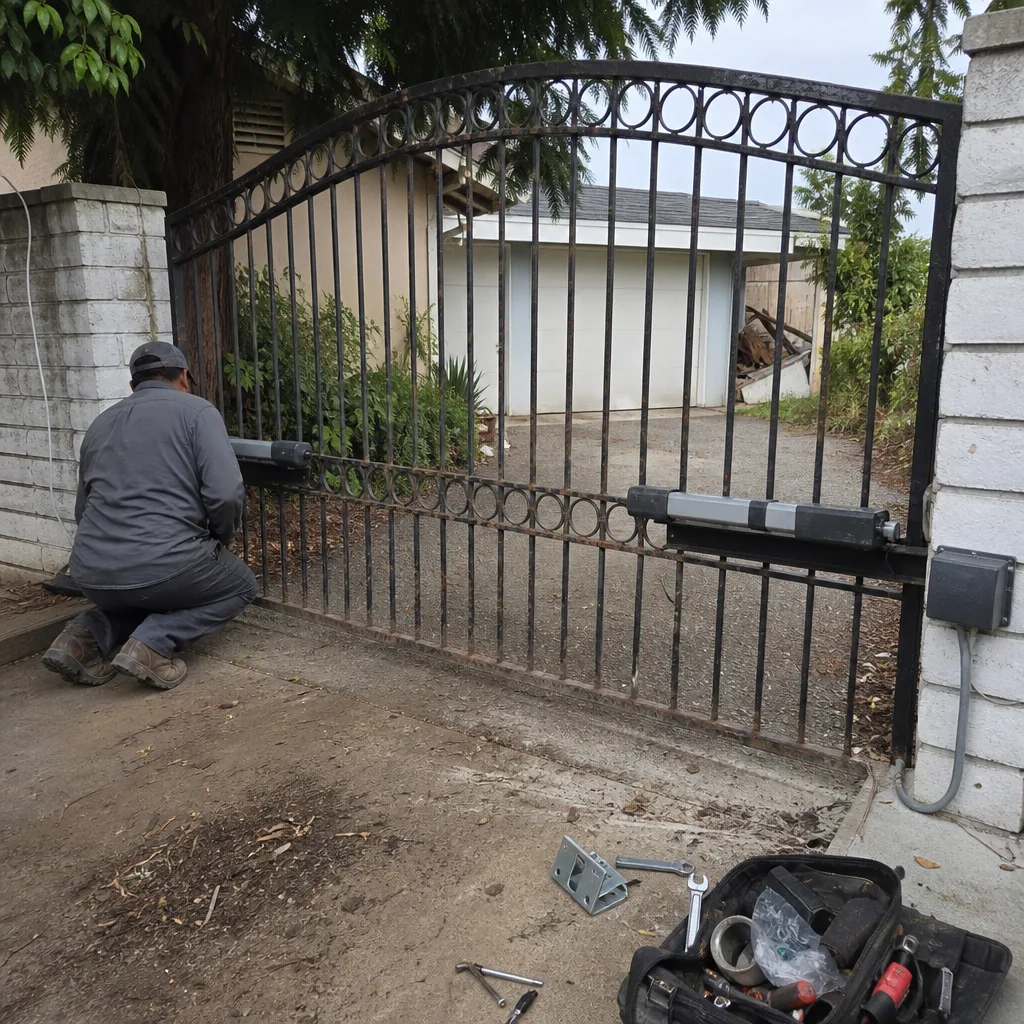 Before
 After
 Before
 After
 Before
 After