
Last updated November 2, 2026
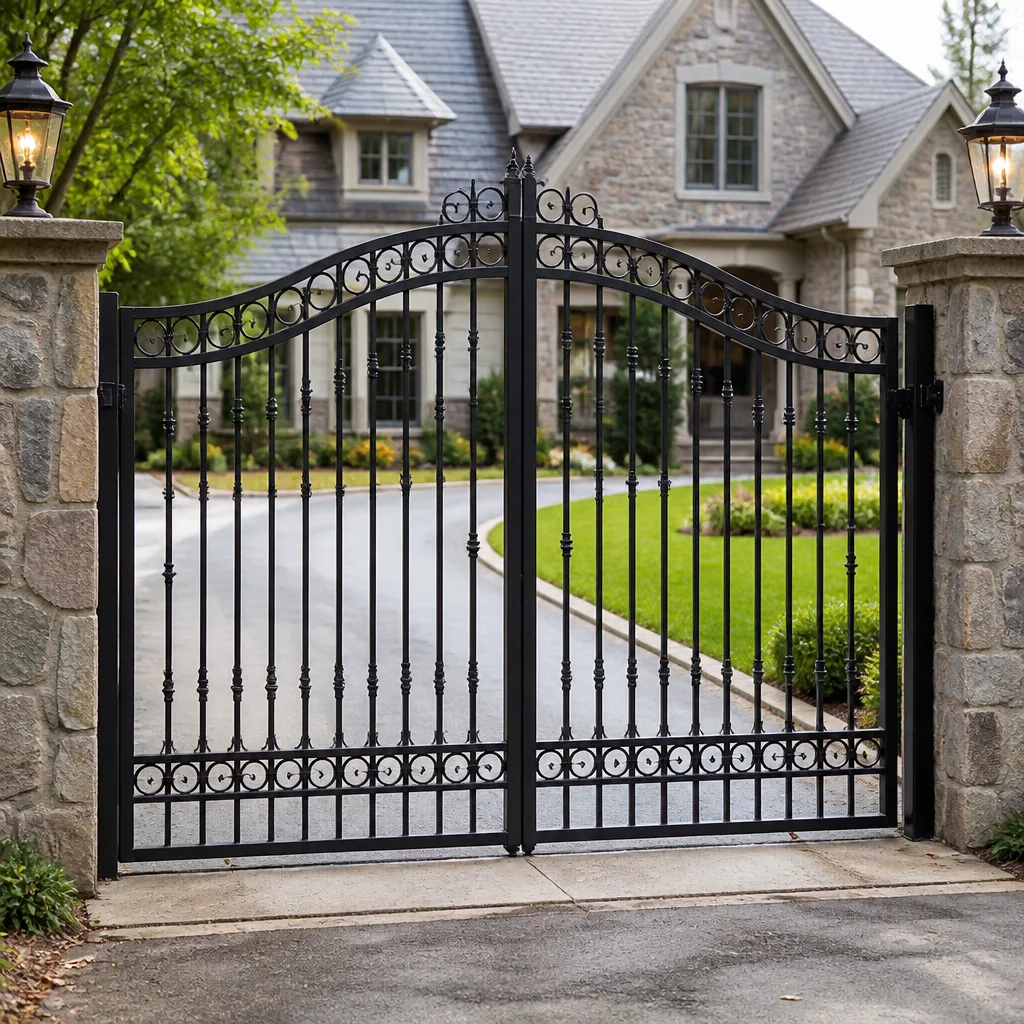 Wrought iron
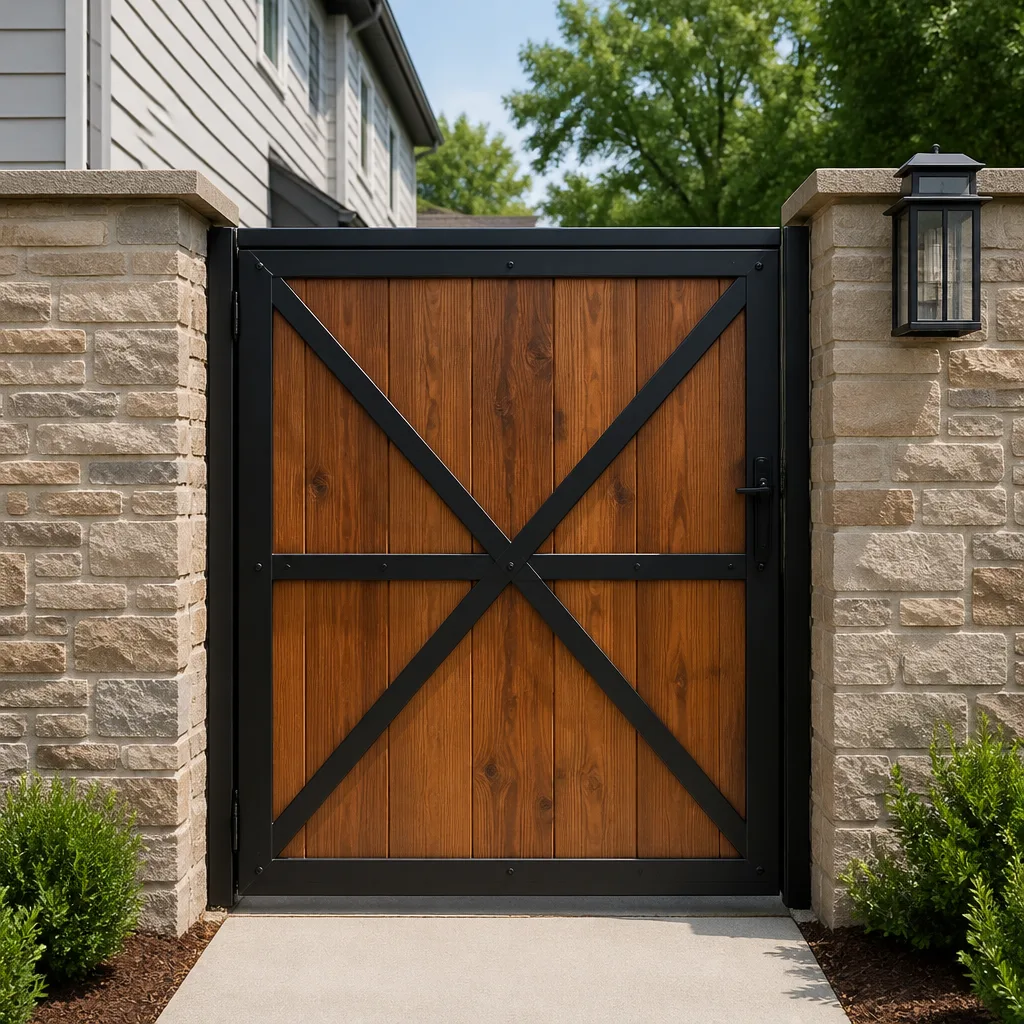 Wood & steel frame
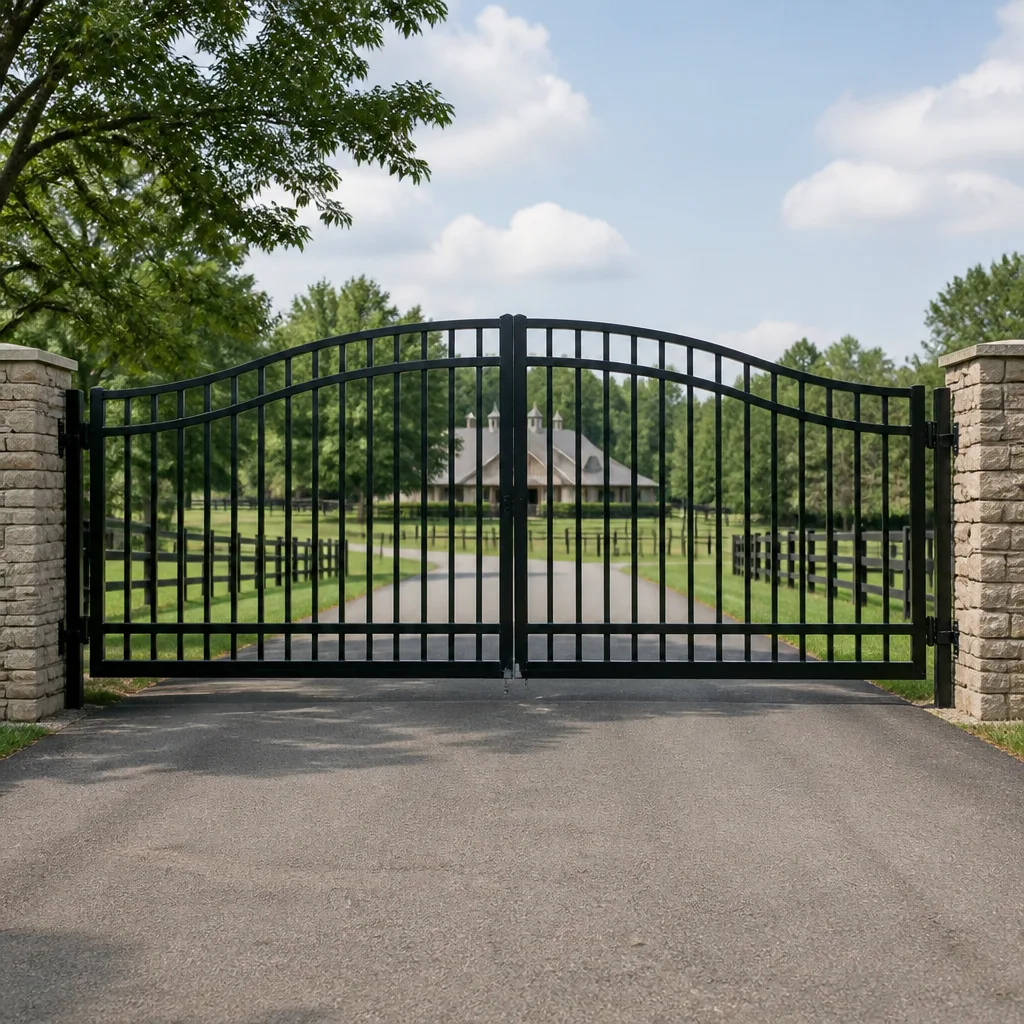 Farm & ranch
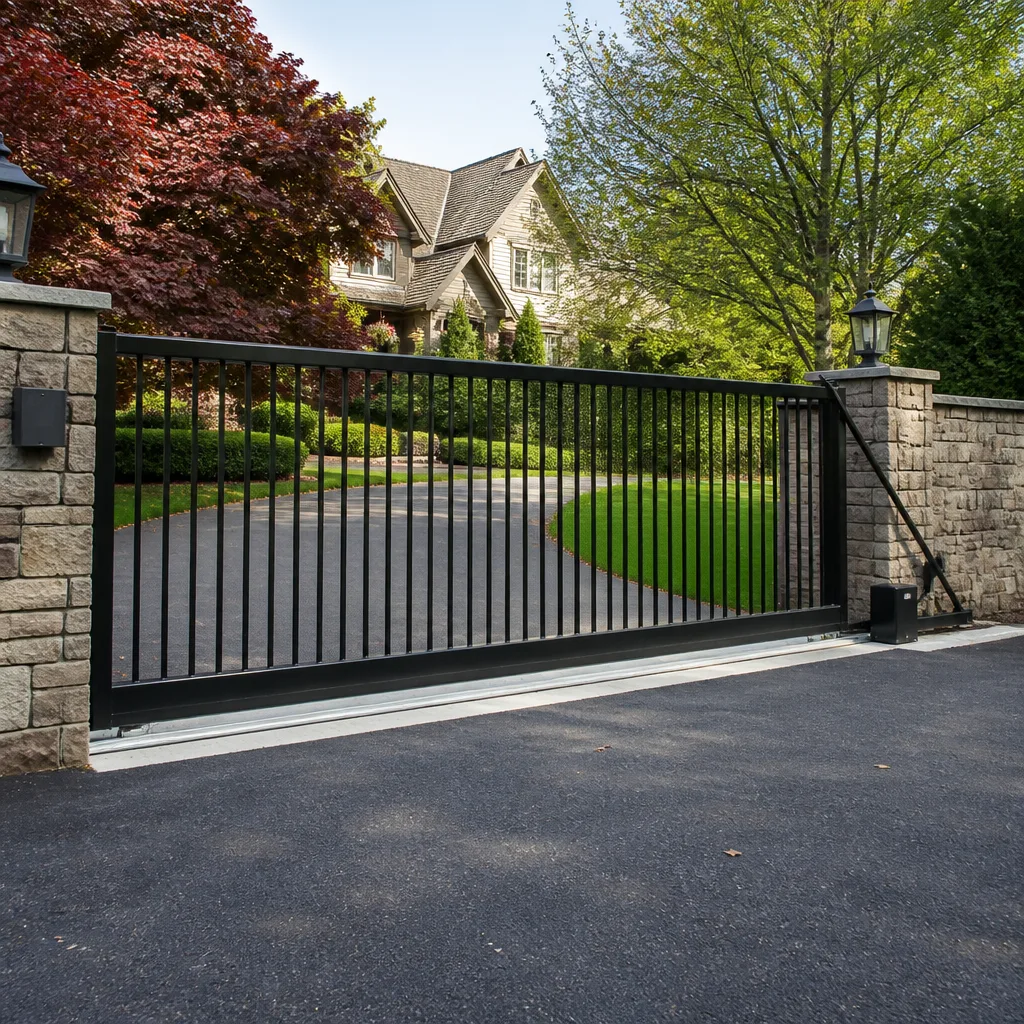 Sliding driveway gates
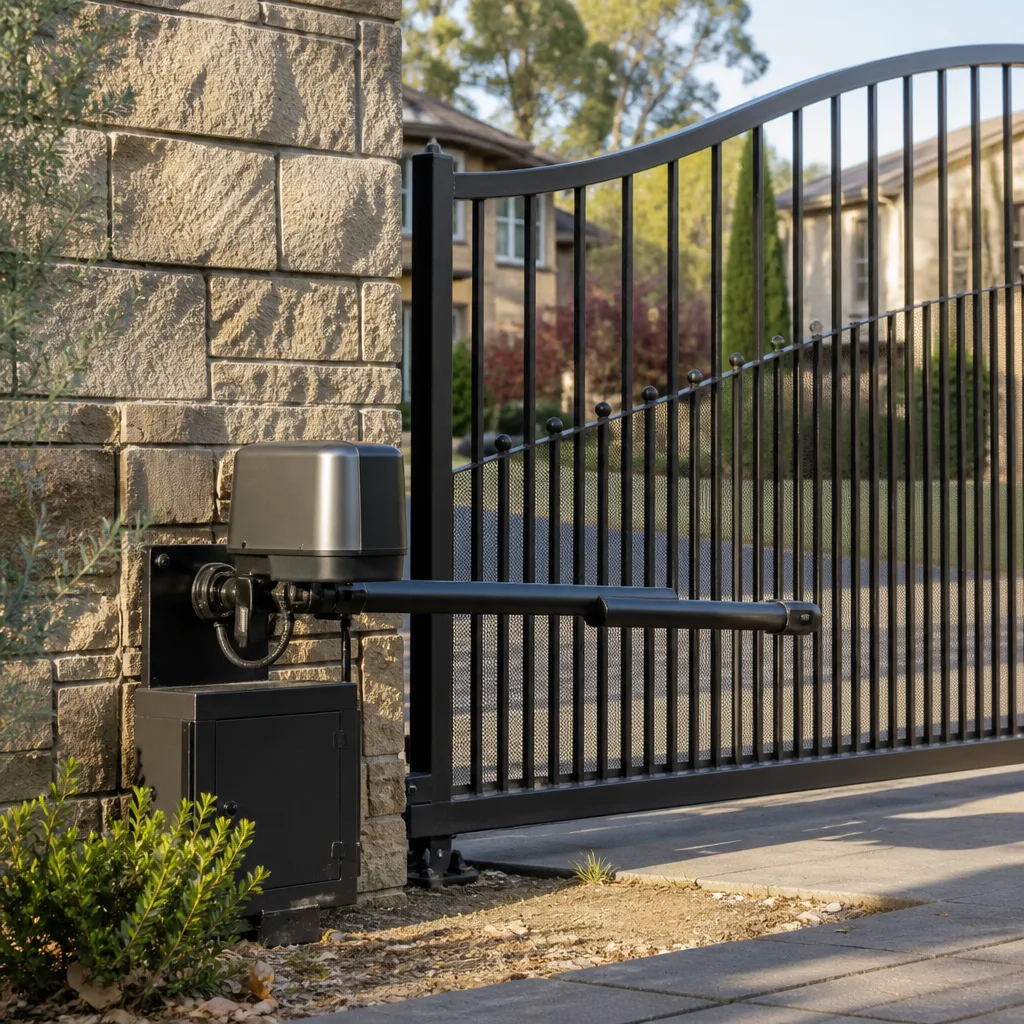 LiftMaster operators
Free on-site gate assessment - hinges, posts, and your LiftMaster or Nice gate operator checked before anything is quoted
The assessment is free and the quote is the invoice.
Get your free estimateHow to Hire a Gate Repair Contractor in Pocket: A Step-by-Step Guide
Most gate repair disasters in Pocket start the same way: a homeowner calls the first fencing company or garage door shop that shows up on Google, gets a technician who works on gates twice a month instead of twice a day, and pays for a misdiagnosis. The counterintuitive truth about automated gate systems is that they combine mechanical engineering, low-voltage electronics, and access control logic into one machine. A contractor who’s great at welding fence posts rarely has the oscilloscope-level diagnostic skill to trace a phantom operator fault. This guide teaches you how to screen for gate-specific expertise before the first phone call ends, so you hire the right contractor the first time. We’ve been repairing gates in Pocket since 2018, and we’ve seen every hiring mistake a homeowner can make.
Quick Answer
To hire a gate repair contractor in Pocket, verify their California contractor license covers automated gate systems, ask brand-specific questions about the operator on your gate (LiftMaster, FAAC, BFT, and others), require an itemized written estimate that lists parts by model number and labor by task, and confirm they stock or source parts locally rather than ordering retail. A dedicated gate specialist will answer brand questions instantly; a generalist will hesitate, and that hesitation is your signal to keep looking.
Table of Contents
- 1
- 2
- 3
- 4
- 5
- 6
- 7
- 8
- 9
- 10
Step 1: Screen for Gate-Specific Expertise Before You Even Call
Before you dial a single number, look at the contractor’s website and ask one question: is gate repair the main thing they do, or is it buried under fencing, garage doors, welding, and handyman services? The answer tells you how many gates their technicians touch in a month. A fencing company installs gates as part of fence projects. A garage door company works on gates occasionally when a customer asks. A dedicated gate specialist works on swing gates, slide gates, barrier arms, and access control every working day. That volume creates pattern recognition. We’ve walked onto Pocket properties where a generalist spent three hours trying to fix a Mighty Mule operator that was never the problem, because the actual fault was a misaligned safety edge the technician had never seen before. Pattern recognition is what you’re paying for.
Pocket has a particular mix of residential properties, from newer construction near the river to established homes with gate systems that are ten to twenty years old. Older operators develop age-specific failure modes. Newer smart systems fail in completely different ways. A contractor who sees gates in this neighborhood regularly brings that context to your driveway. Gate repair in Pocket requires familiarity with how local climate affects your specific hardware, from sun-baked control boards to corroded connections near the river.
Here’s the practical screening checklist to run through before you call:
- Website focus: Is gate repair listed as a primary service, or is it item 14 on a list that includes decks, patios, and custom furniture?
- Brand mentions: Does the site name specific operators like LiftMaster, FAAC, BFT, Elite, or DoorKing? Generalists say “all brands.” Specialists name them.
- Service depth: Does the site distinguish between electric gate repair, mechanical gate repair, and access control installation? Those are three different skill sets, and a contractor who doesn’t separate them doesn’t understand them.
- Parts language: Look for words like “actuator,” “loop detector,” “photo eye,” and “safety edge.” If the site only says “we fix gates,” they may only know how to grease hinges.
Step 2: The Five Questions That Separate Specialists From Generalists
Here’s the opening hook from the top of this guide: ask any contractor you’re considering this one question: “What operator brand do you stock parts for?” A generalist will fumble. A specialist will answer in under three seconds. That single question does more vetting than an hour of online research, because parts inventory reveals where a contractor’s real investment lies. You can’t fake parts inventory.
But the screening doesn’t stop there. The following five questions are designed to reveal whether you’re talking to a gate specialist or a generalist who’s about to learn on your dime. Ask them in order, and listen carefully to the quality of the answers, not just the words.
- “What’s the most likely cause of my specific symptom?” Describe the symptom accurately: the gate opens but won’t close, the operator hums but nothing moves, the remote works intermittently. A specialist will narrow the cause to two or three possibilities and explain the diagnostic path to confirm each one. A generalist will say “it could be a lot of things, we’ll have to take a look.” Vague is the tell.
- “Which safety inputs does this operator monitor?” Automated gates are required to have safety devices like photo eyes, edge sensors, and loop detectors. A specialist can explain how a fault in any of these inputs causes the operator to behave erratically or shut down. A generalist often forgets safety inputs exist and chases the operator itself. This question also tells you whether the contractor takes UL 325 safety requirements seriously.
- “Do you service this brand regularly, or will you need to research it?” If your gate runs a FAAC operator and the contractor’s face goes blank at the word “FAAC,” you’ve learned something. Every technician has strengths, but a company that claims to service nine major brands should be able to name the most common failure modes for the one on your property without hesitation.
- “What parts do you stock on your truck for this brand right now?” This is a sharper version of the parts question. A dedicated gate specialist carries high-failure items: control boards, limit switches, capacitors, photo eyes, and remote receivers. A generalist carries a multimeter and a socket set. The difference determines whether your gate is fixed on the first visit or on the third.
- “Will you provide an itemized written estimate before starting work?” This is a yes-or-no question. Any contractor who resists itemizing parts and labor is protecting their own margin, not your property. A legitimate gate repair company quotes the price and gets your agreement before any work begins, every time.
One more note on the questions themselves: you don’t need to understand the answers. You need to hear confidence, specificity, and a lack of hesitation. A specialist talks about gate systems the way a mechanic talks about engines, with the same effortless vocabulary. Electric gate repair in Pocket is electronics work as much as it is mechanical work, and you’re listening for evidence that the contractor knows which tool applies to which problem.
Step 3: What a Legitimate Gate Repair Estimate Should Itemize
An estimate is a test of honesty. A legitimate gate repair estimate in Pocket breaks down into three components: parts listed by model number, labor broken down by task, and diagnostic time stated separately. A vague quote that says “gate repair: $875” with no breakdown tells you nothing about what you’re actually buying, and it protects the contractor’s ability to substitute cheaper parts after you’ve agreed. Here’s what a useful estimate looks like.
Parts should be listed by brand and model number. “New control board” is not acceptable. “LiftMaster Model 850LM control board: $142” is what you want. Model numbers let you verify prices online in ninety seconds, and they prevent bait-and-switch part substitution. A contractor who refuses to put model numbers on an estimate is telling you something about how they intend to buy parts.
Labor should be itemized by task, not lumped together. “On-site repair” tells you nothing. You want line items like “remove existing actuator: 1.5 hours,” “install new FAAC 400 actuator: 2 hours,” and “reprogram travel limits and force settings: 0.5 hours.” When labor is itemized, you can compare apples to apples between two bids. When it’s lumped, you can’t.
Diagnostic time should be a named line item. Gate diagnosis takes real time, especially for intermittent faults that require cycling the gate repeatedly while testing inputs. Some contractors waive the diagnostic fee if you hire them for the repair. Others charge it separately. Either way, it should be explicit. A contractor who hides diagnostic time inside the labor line is making the estimate harder to verify.
The estimate should match the repair, not the replacement. This is where generalists burn Pocket homeowners most often. When a technician is not confident in their diagnosis, the safe financial play is to quote a full operator replacement. Replacement is always easier to justify than repair. A specialist with brand-level training can often replace a failed component inside a $400 operator for $120 in parts and an hour of labor. The cheaper repair is the honest recommendation when the operator has years of life left. The right question to ask on any quote is: “Is this the repair, or is this the replacement because you’re not certain what failed?”
A final point on price: the quote is agreed before work starts. That’s standard practice for legitimate gate contractors. If a company wants to start work before giving you a written number, find another company.
Step 4: California Contractor License Lookup for Gate Work
California requires a contractor license for any gate repair or installation job that exceeds $500 in labor and materials, and automated gate systems almost always cross that line. The tricky part for homeowners is that “gate work” doesn’t have its own dedicated license classification, so the classification number on a contractor’s license tells you more than just “are they licensed.” You want to know what kind of work they’re actually licensed to do.
The relevant license classifications for gate repair in Pocket are:
- C-61 / D-28: Doors, Gates, and Activating Devices. This is the specialized classification that covers automated gate operators, access control integration, and the electrical work required for gate automation. A contractor holding this license has demonstrated competence specifically in gate system work. This is the classification you most want to see.
- C-10: Electrical Contractor. An electrical license covers the low-voltage and line-voltage wiring associated with automated gates. Many electric gate repair companies hold a C-10 or partner with an electrical contractor for power runs to gate operators.
- C-13: Fencing Contractor. Fencing contractors are licensed for the physical fence and gate frame, but a C-13 alone does not cover the electrical, electronics, and access control components of an automated gate. If a fencing contractor is quoting your automated gate repair, ask whether they hold the D-28 classification or will bring in a licensed electrician for the operator work.
To verify a contractor’s license yourself, visit the California Contractors State License Board website at cslb.ca.gov and use the “Check a License” tool. Search by company name or license number, then confirm three things:
- The license is active. “Active” is not the same as “expired, pending renewal.”
- The classification covers gate work. Look for D-28 specifically if automated gate repair is the job.
- The license has no active suspensions or judgments. The CSLB publishes disciplinary actions, and a history of unresolved complaints is a reason to keep looking.
One more consideration for Pocket specifically: many of the gate systems in this area are integrated with home security and access control systems. If your gate operator links to a keypad, intercom, or mobile access system, the contractor needs to understand low-voltage electronics, not just mechanical gate hardware. A D-28 license signals that expertise. A fencing license alone does not.
Step 5: How to Read Gate Contractor Reviews Like a Technician
Online reviews matter, but gate contractors get reviewed differently than plumbers or electricians, and reading those reviews requires translation. The most common misleading signal in gate contractor reviews is the phrase “great communication.” Here’s why: communication reviews mean the contractor called back, showed up, and was polite. They say nothing about whether the gate actually got fixed correctly. A contractor can have five-star reviews built entirely on friendliness while a trail of incorrectly diagnosed gates sits behind those reviews, because homeowners often don’t know whether the repair was correct until the gate fails again six months later. By then, they’ve moved on and left no review at all.
What you’re looking for instead:
- Technical language in reviews. Reviews that mention specific parts, brands, or diagnostic processes (“they traced the fault to a bad loop detector and replaced it same day”) are written by customers who watched real expertise. Reviews that only mention politeness tell you about the contractor’s customer service, not their competence.
- Repeat customers. A review that says “this is the third time I’ve called them for different gates” is gold. Gate problems are infrequent, so repeat business means the contractor earned trust across multiple years and multiple systems.
- Gate-specific review volume. Fifty reviews for a company that does fifty different services means maybe five of those reviews are about gates. Five reviews for a company that only does gates means five gate-specific data points. In this niche, focused review volume beats total review volume.
- Mention of the estimate matching the invoice. Reviews that say “the quote was exactly what I paid” signal that the contractor doesn’t pad invoices after the fact, which is the single most common complaint in gate repair across every market.
Red flags in reviews are easier to spot. A pattern of “they were nice but the gate broke again” reviews tells you the company is pleasant but not competent. Reviews that mention surprise charges or invoices higher than quotes signal a pricing problem. Reviews that say the first technician couldn’t fix it but the second one could signal training inconsistency. And a total absence of gate-specific technical language across a large review count means the company’s customers can’t tell whether the work was done well, which is its own warning.
Step 6: Why Parts Relationships Matter More Than You Think
Here’s a scenario we see in Pocket several times a month: a homeowner’s FAAC operator fails, they call a generalist who doesn’t stock FAAC parts, and the technician announces the part needs to be “ordered.” That order goes through a retail channel, takes seven to ten business days to arrive, and the gate sits stranded in the open or closed position that entire time. A homeowner in that situation faces a security problem, not just a convenience problem. Now here’s the same scenario with a dedicated gate specialist who maintains parts relationships with the major manufacturers: the same FAAC part is on the shelf locally, or available through a trade supplier within twenty-four to forty-eight hours. Same breakdown, completely different timeline.
This is what factory-trained really means. It means the contractor has an account with the manufacturer’s distributor network, not that they watched a training video. Manufacturer relationships give a contractor access to:
- Trade pricing on OEM parts. Not retail markups on Amazon.
- Technical support lines staffed by the manufacturer’s engineers. When a diagnosis is genuinely difficult, a contractor with factory relationships can escalate to the people who designed the operator.
- Bulletins on known failures and firmware issues. Manufacturers quietly update operators to fix recurring problems, and contractors with active relationships learn about those updates before they encounter them in the field.
- Warranty processing. A factory-authorized contractor can process warranty claims directly, which means a failed component under warranty gets replaced without you fighting the manufacturer yourself.
The practical takeaway: when you ask a contractor which brands they stock parts for, you’re really asking whether they have the purchasing infrastructure to fix your gate quickly. A contractor who services LiftMaster, BFT, FAAC, Elite, and Mighty Mule but stocks none of those brands locally is a contractor who will order your part retail and make you wait. Gatehouse Gate Repair home is built on the understanding that parts access is the difference between a one-day repair and a two-week ordeal, and our brand coverage reflects the brands Pocket homeowners actually have installed on their driveways.
Common Mistakes to Avoid
- Hiring a fencing company for automated gate repair. Fencing contractors build the fence and the physical gate, but automated operators, safety sensors, and access control are outside their core expertise unless they hold the D-28 classification. We’ve been called to Pocket properties where a fencing contractor replaced a $300 control board unnecessarily when the actual fault was a misaligned photo eye that cost $85 to realign.
- Accepting a verbal quote. A contractor who won’t commit a price to writing before starting work is a contractor who hasn’t decided what you’ll pay yet. Written, itemized estimates protect you from the most common gate repair complaint: invoices that don’t match quotes.
- Replacing the whole operator because one component failed. This is the generalist’s favorite move, because replacing a whole operator requires less diagnostic confidence than repairing one. A $45 capacitor failure doesn’t require a $700 operator replacement, and a specialist will tell you that even when the replacement would be more profitable for them.
- Hiring the cheapest quote without checking license status. Unlicensed gate work is common, and it’s dangerous. Automated gates carry enough torque to injure or kill, and safety devices like photo eyes and edge sensors need to be installed correctly for the gate to meet UL 325 standards. A cheap quote from an unlicensed contractor is cheap for a reason.
- Ignoring the safety equipment during a repair quote. When a gate operator is serviced, the safety inputs should be tested as part of the repair. If your contractor doesn’t mention photo eyes, loop detectors, or edge sensors during the diagnostic conversation, they may not know the safety system exists, which means they may not be able to diagnose why your gate is shutting down.
- Choosing a contractor based on arrival speed alone. A contractor who shows up fast but lacks brand-specific knowledge can create weeks of delay through incorrect diagnosis. Speed matters, but it matters in combination with competence. A specialist who fixes the problem correctly on the first visit will almost always be faster end-to-end than a generalist who needs two or three visits to figure it out.
When to Call a Professional
Some gate problems are genuinely simple: a loose hinge, a dead remote battery, a chain that needs tensioning. But automated gate systems cross over into professional territory fast. Call a gate specialist when your gate moves unevenly, makes grinding or clicking sounds, reverses direction unexpectedly, or fails to respond to remotes and keypads. Any symptom involving the operator, the control board, the safety sensors, or the wiring is electrical work, and DIY electrical repair on a system that weighs several hundred pounds and uses significant force is how injuries happen. Automated gate operators have crushed people. The safety devices exist to prevent that. If you’re in Pocket and your gate is acting unpredictably, Gatehouse Gate Repair offers free estimates in Pocket, call (833) 620-5971 and we’ll diagnose the problem before recommending any work.
Frequently Asked Questions
Ask what operator brands they stock parts for. A specialist answers instantly with specific brand names; a generalist hesitates, says “all brands,” or changes the subject. Also check their website: dedicated gate companies discuss specific operators like LiftMaster or FAAC by name, distinguish between electric and mechanical gate repair, and may mention access control separately from fence work.
Gate repair pricing in Pocket varies widely by fault type. A simple fix like a remote reprogramming or a limit switch adjustment may run $100 to $200, while a control board replacement on a mid-range operator typically falls between $300 and $600 including parts and labor. Full operator replacements start around $800 and go up based on brand and capacity. Call (833) 620-5971 for an exact quote, estimates are free and itemized by parts and labor before any work begins.
Most common gate repairs, such as control board swaps, actuator replacements, or safety sensor repairs, are completed in a single visit when the contractor stocks the parts locally. Repairs requiring a specialty part that must be ordered from the manufacturer can add a week or more, which is why parts relationships matter when you’re choosing a contractor. If your gate is stuck open in Pocket, a specialist with local parts access can often get it operating the same day.
Repair is the better financial choice when the operator is less than ten years old and the failure is isolated to one component, like a capacitor, limit switch, or control board. Replacement makes sense when the operator is nearing the end of its service life, has multiple failing subsystems, or no longer meets current UL 325 safety standards. A specialist who can diagnose down to the component level will give you an honest repair-versus-replace recommendation, not a default replacement quote.
In most cases, no. Fencing companies are licensed for the physical fence and gate frame, but automated operators, safety sensors, and access control require the D-28 classification or an electrical license. Garage door companies understand door openers but not swing gate actuators, slide gate tracks, or barrier arm logic. The systems share concepts but differ in hardware, and the technician who works on your brand every day will reach the diagnosis faster than the one who sees it occasionally.
A legitimate gate repair estimate itemizes parts by manufacturer model number, breaks labor down by specific task, and lists diagnostic time separately. The total price is quoted and agreed before any work starts. If a contractor gives you a single line item that says “gate repair: $875” and won’t break it down, treat that as a red flag and request the itemization or move on to another contractor.
The Bottom Line
Hiring a gate repair contractor in Pocket comes down to one principle: verify gate-specific expertise before you verify anything else. License checks matter, reviews matter, and written estimates matter, but none of them protect you from the core problem, which is hiring a generalist who treats your automated gate as a side job. Ask the brand questions. Check for the D-28 classification. Require the itemized estimate. And remember that the contractor who can name the failing component on your LiftMaster or FAAC operator in the first five minutes of the phone call is the contractor who will fix it correctly the first time. Gate installation in Pocket and repair are specialized trades, and choosing a specialist is the difference between a gate that works for years and a gate that fails again in six months.
Written by the team at Gatehouse Gate Repair, serving Pocket since 2018.
Styles & brands we work with
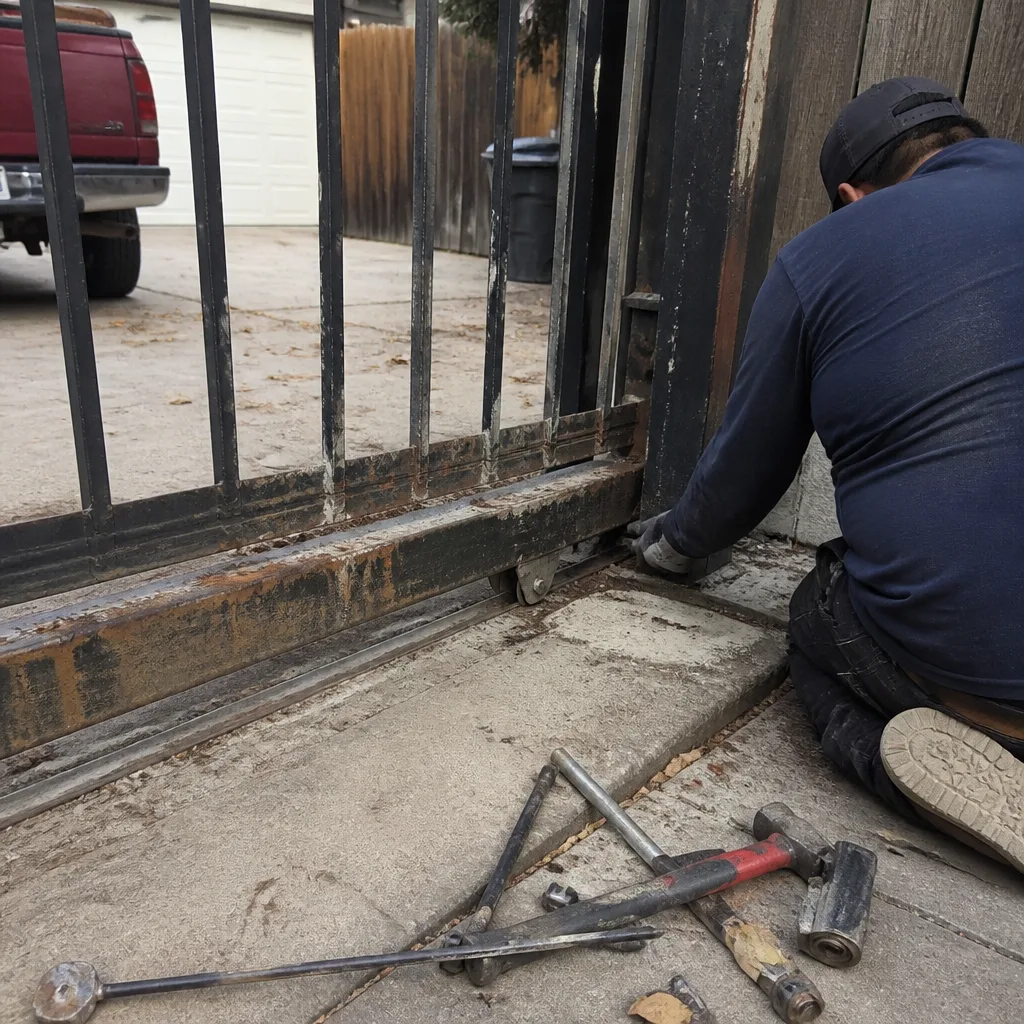
- Wrought iron
- Wood & steel frame
- Farm & ranch
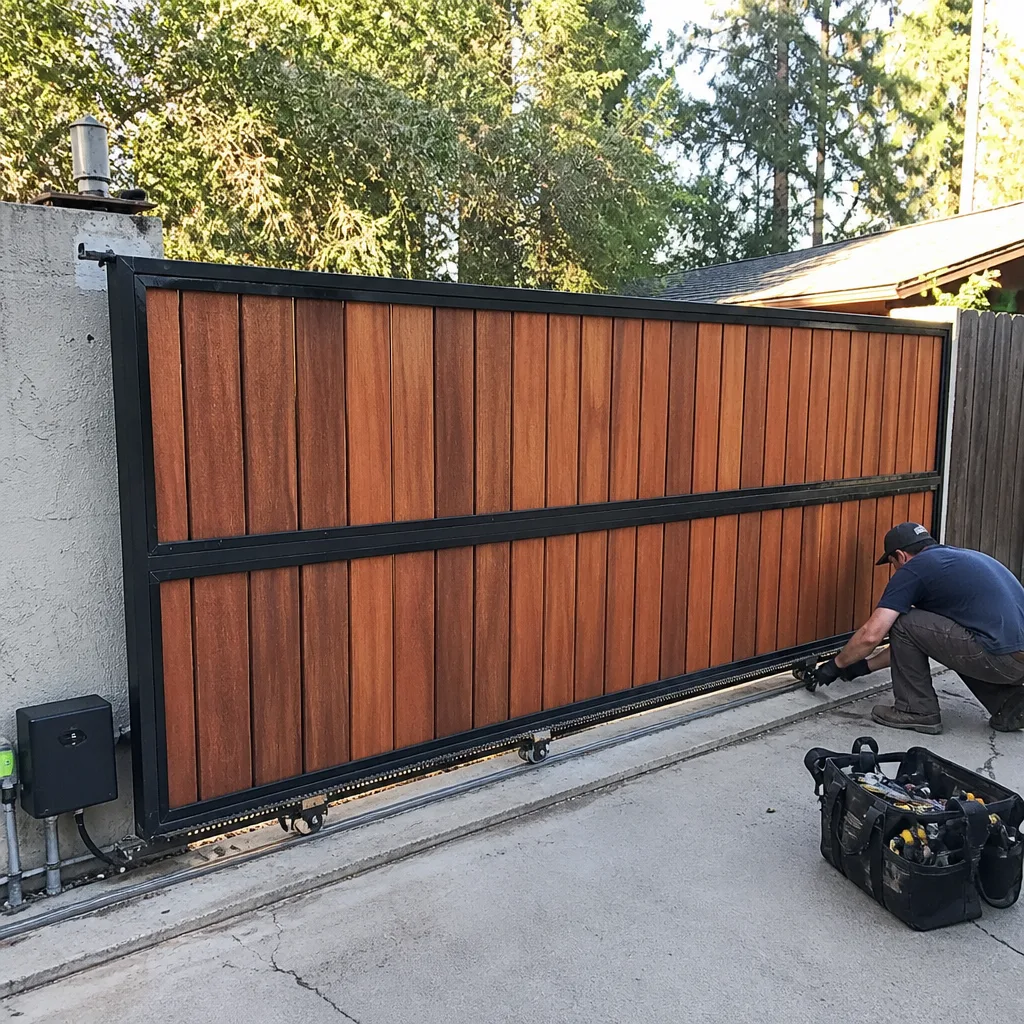
- Sliding driveway gates
- LiftMaster operators
See the difference
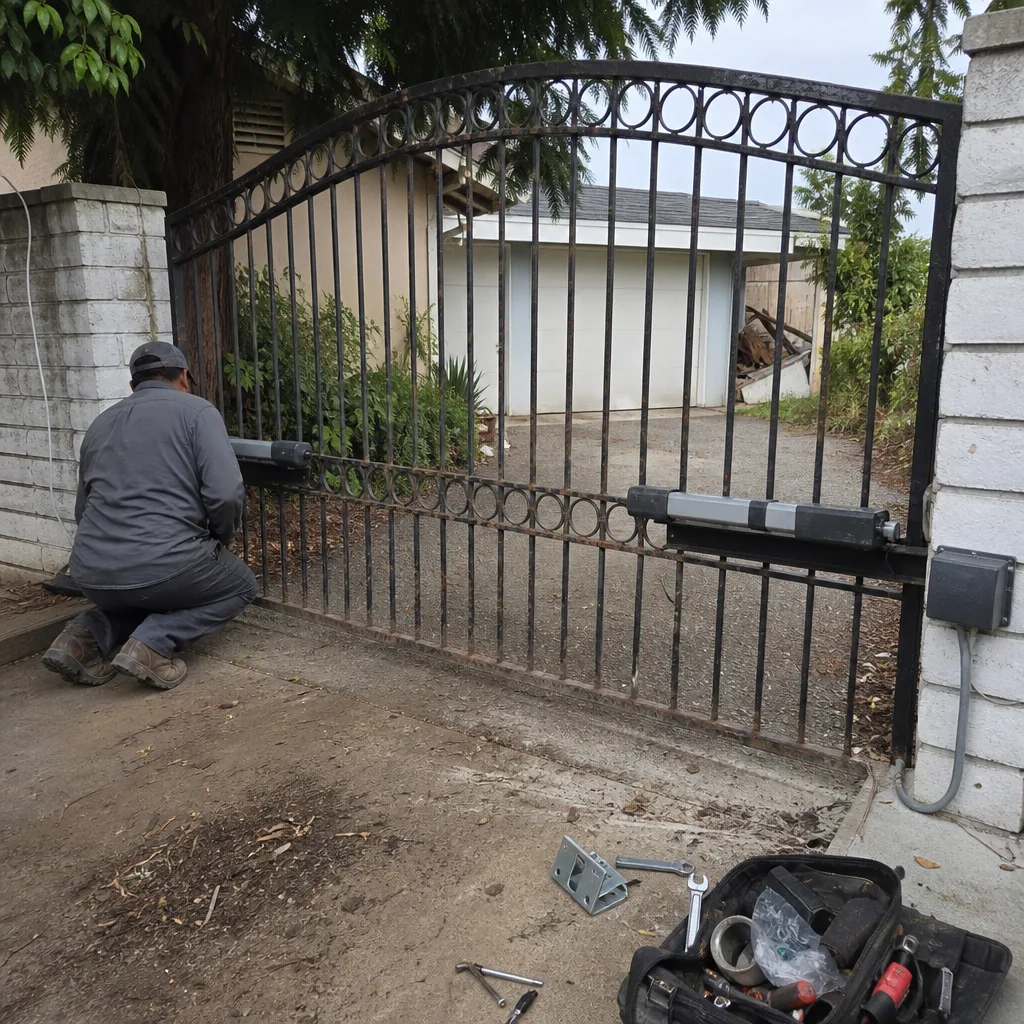 Before
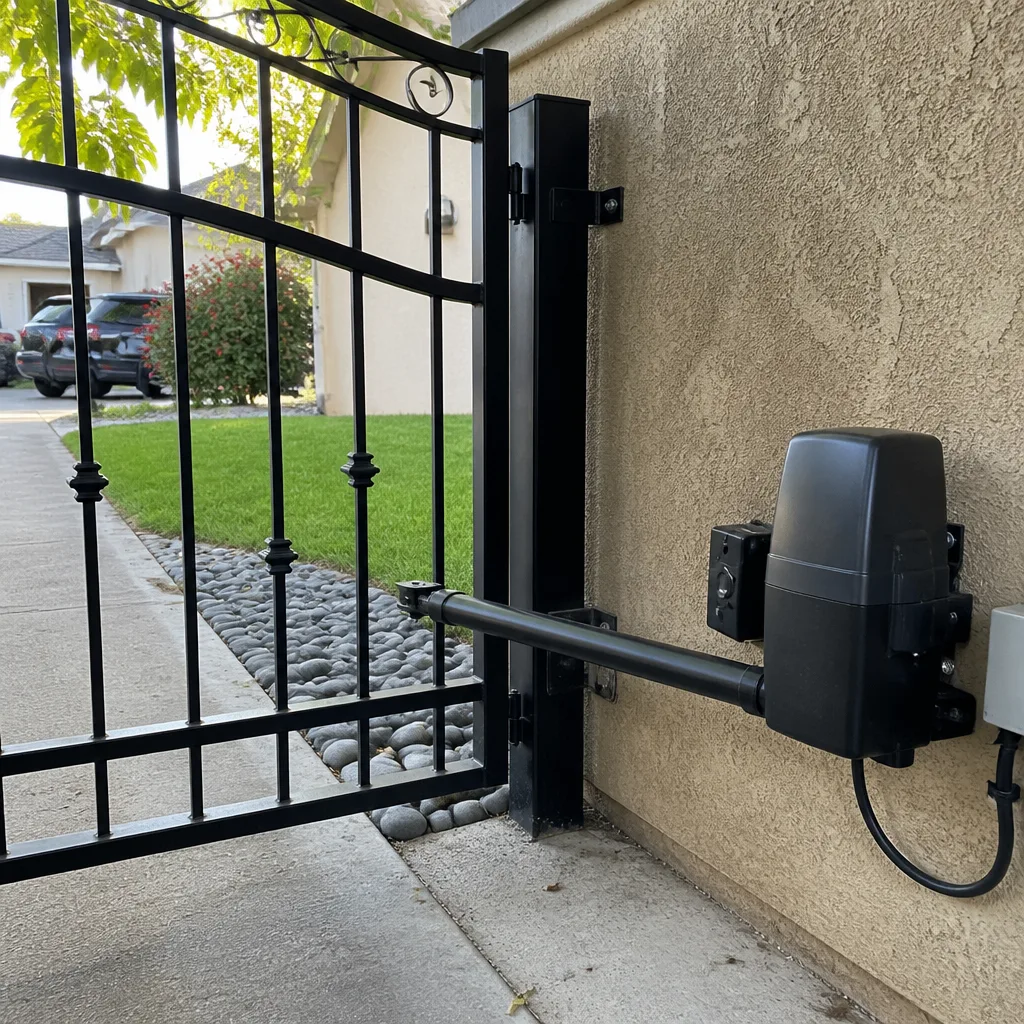 After
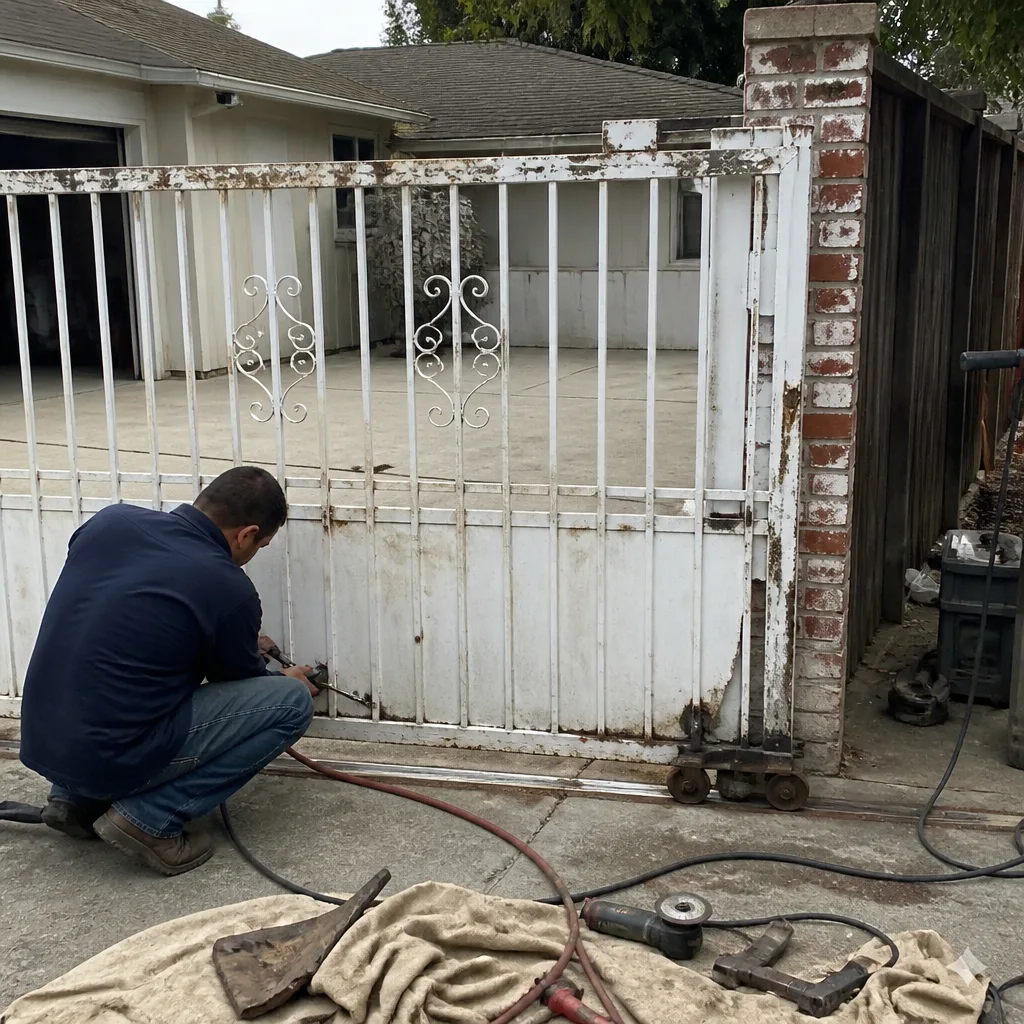 Before
 After
 Before
 After