
Last updated November 2, 2026
 Wrought iron
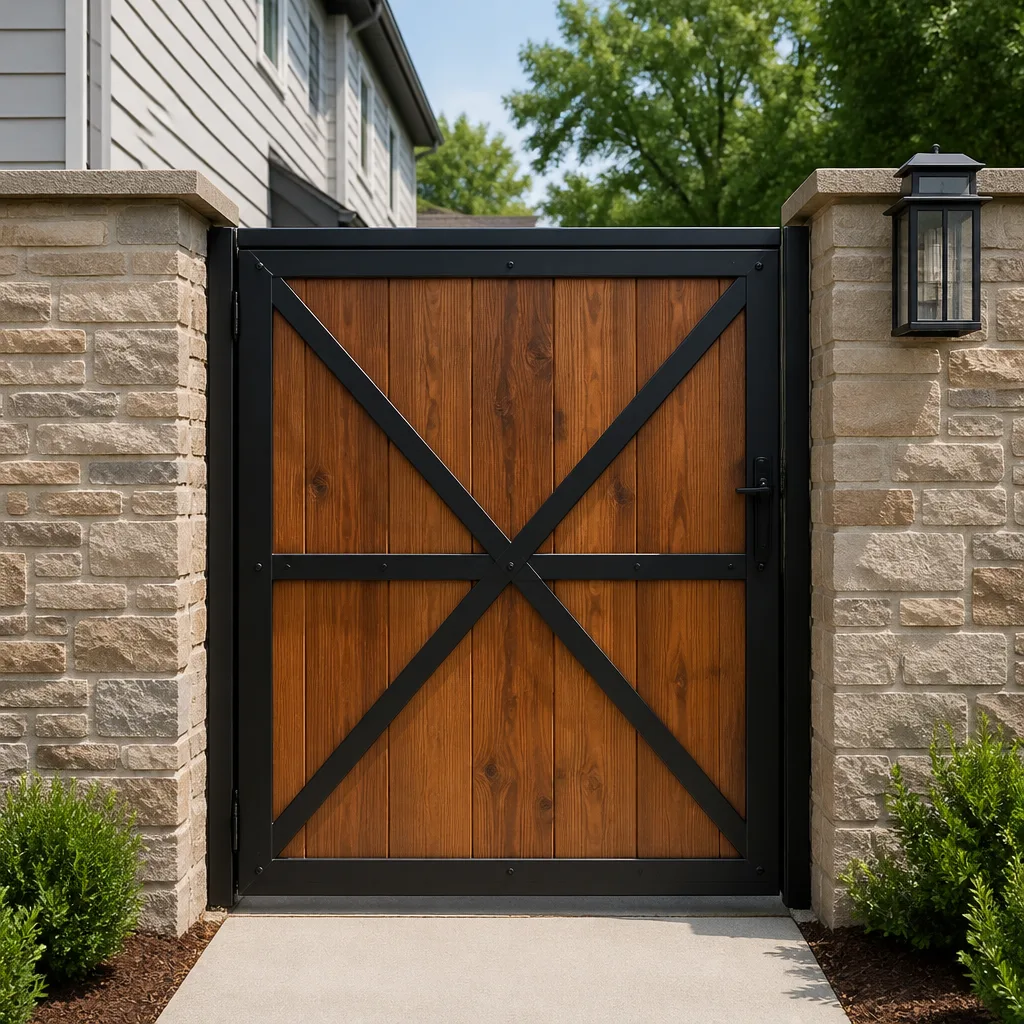 Wood & steel frame
 Farm & ranch
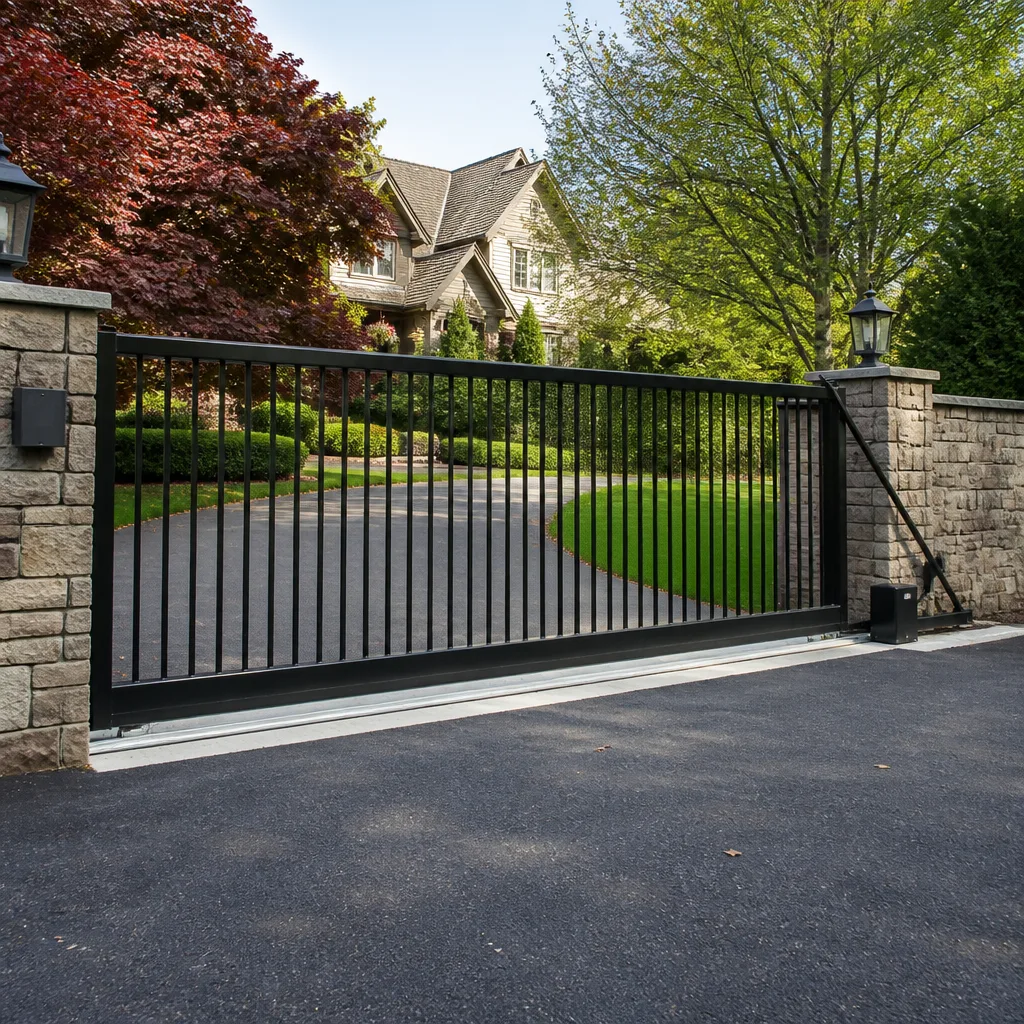 Sliding driveway gates
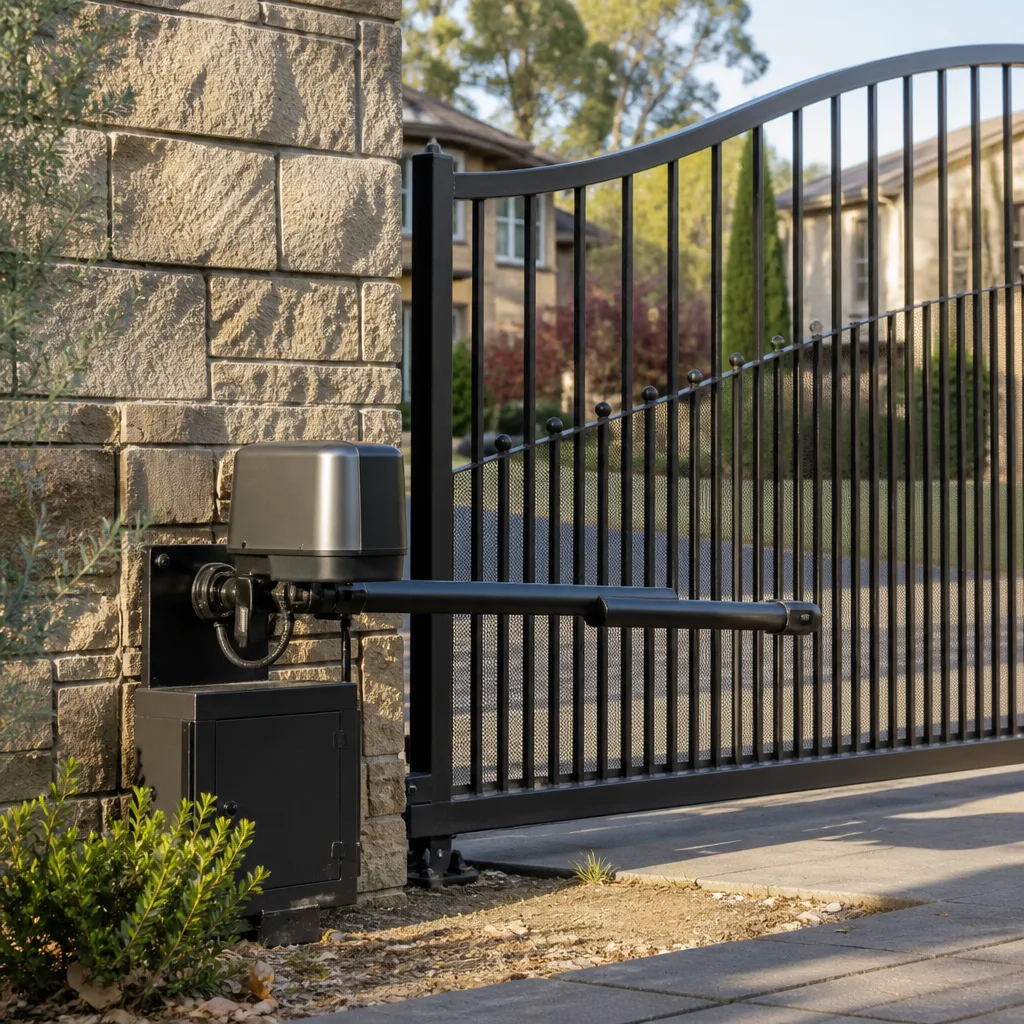 LiftMaster operators
Free on-site gate assessment - hinges, posts, and your LiftMaster or Nice gate operator checked before anything is quoted
The assessment is free and the quote is the invoice.
Get your free estimateGate Repair Permits, Codes & Inspections in CA: What You Need to Know
A $400 gate operator swap without a permit can turn into a $3,000 problem the day you sell your house. That’s not hyperbole. California’s building codes treat certain gate work as an electrical alteration, not a repair, and the distinction determines whether you need a permit, an inspection, and a paper trail that survives a title search. This guide walks you through the exact thresholds, the codes that govern them, and the steps Pocket homeowners need to take before and after gate work is done. We’ve spent years untangling this for customers across Pocket, and the rules are less ambiguous than most contractors admit.
Styles & brands we work with
- Wrought iron
- Wood & steel frame
- Farm & ranch
- Sliding driveway gates
- LiftMaster operators
Quick Answer
In California, replacing a manual gate or repairing existing hardware typically requires no permit, but installing or replacing an automatic gate operator, adding a new electrical circuit, or modifying a pedestrian gate on a multi-family property usually triggers permit and inspection requirements under the California Electrical Code, California Building Code, and state accessibility laws. Sacramento County enforces these rules locally, and unpermitted electrical work can complicate insurance claims and property sales in Pocket. When in doubt, verify with the county before work starts.
Table of Contents
- The Repair vs. Alteration Line: What Sacramento County Actually Requires
- Where the California Electrical Code Applies to Gate Work
- UL 325 Compliance: Why It Matters for Automatic Gate Operators
- Title 24 Accessibility Rules for Multi-Family and Commercial Gates in Pocket
- HOA Architectural Review vs. City Permit: Which Comes First in Pocket
- How to Verify Gate Work Was Properly Inspected – and Fix It If Not
- What to Do If You Discover Previous Unpermitted Gate Work
- Common Mistakes to Avoid
- When to Call a Professional
- Frequently Asked Questions
- The Bottom Line
The Repair vs. Alteration Line: What Sacramento County Actually Requires
Sacramento County building code draws a bright line between repairing an existing gate and altering it. A repair restores the gate to its original condition: replacing a bent hinge pin, welding a cracked weld, swapping a worn wheel on a slide gate, adjusting a sagging gate leaf. An alteration changes the gate’s function, configuration, or electrical load: adding an operator where none existed, converting a manual gate to automatic, replacing an operator with a different voltage or horsepower class, or adding a new circuit. The county generally does not require a permit for repairs that replace like-for-like parts with no change to the system’s design. Alterations almost always require a building permit, and electrical work requires an electrical permit.
In Pocket, where many homes date from the 1960s through the 1990s, we frequently encounter gates that were installed before current code cycles. A homeowner replacing a 20-year-old manual swing gate with a motorized one is performing an alteration, not a repair. That’s a permit-required project. But a homeowner replacing a dead battery in an existing gate operator, or swapping a broken photocell for the same model, is repairing: no permit needed. The distinction matters because Sacramento County building inspectors cross-reference permit records during property transactions, and Pocket homes with unpermitted alterations routinely surface during pre-sale inspections.
When Gate Work Crosses Into Permit Territory
Here’s the practical threshold we use when advising Pocket customers:
- Manual gate hinge or latch replacement: No permit. This is hardware repair with no code implications.
- Replacing an automatic gate operator with the same brand and model: Generally no permit, provided the electrical connection and mounting are unchanged. But this assumes the original installation was permitted and inspected.
- Replacing an operator with a different brand, voltage, or horsepower: Permit required. The electrical load and control wiring may differ, and the county treats this as a new installation.
- Converting a manual gate to automatic: Permit required. This involves new electrical circuits, low-voltage wiring, and UL 325 compliance verification.
- Adding a telephone entry system, keypad, or video intercom to an existing gate: Permit required for the low-voltage wiring if it penetrates walls or connects to the electrical panel. Surface-mounted battery units may not require one, but hardwired systems do.
- Replacing a gate leaf with a substantially heavier one: Permit may be required. Structural load changes affect the operator, hinges, and footings, and Sacramento County may require an engineering review.
This is not legal advice, and the county is the final authority. But this decision tree reflects the permitting patterns we have seen across hundreds of Pocket gate projects. When a customer calls Gate Repair in Pocket and asks whether their project needs a permit, we walk them through this exact framework before scheduling any work.
Where the California Electrical Code Applies to Gate Work
The California Electrical Code (CEC), which adopts and amends the National Electrical Code for California, governs the low-voltage and line-voltage portions of automatic gate systems. This includes the dedicated GFCI-protected outlet that powers the gate operator, the conduit running from the house or garage to the gate, the control wiring between the operator and any keypads, vehicle detectors, or intercom units, and the grounding of the operator housing. In Pocket, where most automatic gates draw power from a dedicated circuit run to the gate pier or a nearby outbuilding, the county inspector verifies the circuit was properly grounded, the receptacle is weather-rated and GFCI-protected, and the conduit is buried to code depth.
Here’s a specific Pocket scenario we see regularly: a homeowner has an existing dedicated circuit from the main panel to a gate pillar. The circuit was installed 25 years ago, before current CEC requirements for GFCI protection on exterior receptacles. The gate operator fails, and the homeowner replaces it with a newer model that has higher inrush current. The old circuit trips intermittently. The correct fix is not a larger breaker but a new circuit run with proper GFCI protection, conduit, and grounding. That fix requires an electrical permit and inspection in the county. The gate operator replacement on top of that comes under the same permit.
What the Inspector Checks on Gate Electrical Work
- Dedicated circuit: The gate operator must be on its own circuit, not shared with landscape lighting or an outlet in the garage.
- GFCI protection: Sacramento County requires GFCI protection for exterior receptacles serving gate operators. An inspector will trip the GFCI to verify it works.
- Conduit and burial depth: Underground conduit from the panel to the gate must be buried at least 18 inches below grade for PVC, or per the specific CEC article depending on conduit type and location.
- Low-voltage separation: The 24-volt control wiring for keypads, detectors, and intercoms must be separated from any line-voltage conductors, per CEC Article 725.
- Grounding: The operator housing and any metallic gate frame must be bonded to the equipment grounding conductor. This matters because a fault in the operator can energize the gate leaf itself.
We do not perform DIY electrical instruction. Working inside a live panel or running a new home-run circuit is genuinely dangerous, and a failed inspection due to improper grounding or conduit depth costs more to fix than the original electrical work. We recommend a state-licensed electrician for any circuit work, and we coordinate with the electrician on the gate-operator side so the whole project passes inspection the first time.
UL 325 Compliance: Why It Matters for Automatic Gate Operators
UL 325 is not a California-specific code. It is a national safety standard from Underwriters Laboratories that governs automatic gate operators, and any operator installed in California must be UL 325 compliant. The standard sets requirements for entrapment protection: the sensors, edges, and force settings that stop or reverse a gate when it encounters a person, pet, or vehicle. A non-compliant installation is not just a code violation. It is a liability transfer to the homeowner. If a visitor is injured by a gate that lacks proper entrapment protection, the homeowner’s insurance company may deny the claim on the grounds that the installation was not code-compliant.
In our work across Pocket and the greater Sacramento area, we encounter gate operators that are decades old, often installed before UL 325’s current entrapment protection requirements were adopted. These operators frequently lack external entrapment sensors. A homeowner may think the gate works fine because it opens and closes. But the liability is the hidden cost. A child or pet struck by a closing gate with no edge sensor and excessive force settings is a serious injury scenario that plays out in insurance claims across California every year. Brands like DoorKing and LiftMaster have shipped UL 325 compliant operators for years now, but older units from any manufacturer may predate the current standard.
What UL 325 Requires of an Automatic Gate Installation
- Primary entrapment protection: A contact sensor (safety edge) or non-contact sensor (photocell) that detects an obstruction and reverses the gate. Most modern installations use both.
- Secondary entrapment protection: A separate sensing mechanism, such as a reversing edge or a force-limiter that monitors motor current. The intent is redundancy.
- Force limitation: The operator must be set so the gate reverses at a specified force threshold on contact, as measured by the manufacturer’s test procedure.
- Warning signage: Permanent warning signs must be posted on both sides of the gate where the pinch points exist. This is a specific UL 325 requirement that inspectors do check.
- Manual release: An accessible manual disconnect must allow the gate to be opened by hand during a power outage. In Pocket, where winter storms occasionally knock out power for extended periods, this is a practical necessity, not just a code box to check.
If you have an existing automatic gate in Pocket and you’re not sure whether it meets current UL 325 requirements, look for two things: the warning signs on the gate and both a sensor and an edge or force-limiter on the closing path. If either is missing, the prudent move is a professional assessment. Our Electric Gate Repair in Pocket service includes a UL 325 compliance check on every automatic gate we touch, because we will not leave a gate that we know is a liability.
Title 24 Accessibility Rules for Multi-Family and Commercial Gates in Pocket
California Title 24, Part 2, the California Building Code, includes accessibility requirements that apply to pedestrian gates on multi-family residential properties and commercial buildings. The rules do not apply to single-family homes in Pocket. But if you own or manage a duplex, triplex, apartment building, condo complex, or commercial property in the Pocket area, any pedestrian gate that is part of an accessible path of travel must meet specific requirements. The most frequently missed one: the gate must open with no more than 5 pounds of force, and any gate hardware must be operable with one hand without tight gripping, pinching, or twisting of the wrist. An automatic pedestrian gate on an accessible route must also have a push-button or sensor that works from a wheelchair, with proper clear floor space in front of the control.
We see this bite property managers in Pocket regularly. A pedestrian gate on a multi-family property had a self-closing hinge installed to keep it shut. The hinge tension was set high to prevent the gate from being left open. That gate now requires more than 5 pounds of force to open, which violates Title 24. The violation surfaces during a tenant complaint, a building inspection, or a lawsuit. Retrofitting the gate with a compliant closer mechanism or an operator with the correct force settings is the fix, and it typically requires a permit because it changes the gate’s hardware configuration.
Practical Title 24 Gate Requirements for Pocket Property Managers
- Opening force: 5 pounds maximum on the accessible path. Have a gauge reading in your maintenance records.
- Hardware operability: Levers, not knobs. No tight pinching or twisting. Keypads mounted within reach range and clear floor space.
- Automatic gate controls: Push-buttons accessible from a wheelchair, with a 30-inch by 48-inch clear floor space in front of the control.
- Closing speed: Auto-closing gates must close slowly enough to allow safe passage, typically 5 seconds or more to travel from full open to within 12 inches of the latch.
- Maintenance logging: On commercial properties, Title 24 and best practice require periodic force checks. Document them. If a claim arises, your logs are the first thing a plaintiff’s attorney requests.
Most single-family gate projects in Pocket never touch Title 24. But the moment a homeowner rents a room, converts a garage to an ADU, or sells to someone who will, the accessibility equation changes. If you are adding a pedestrian gate alongside a driveway gate as part of an ADU conversion in Pocket, plan for Title 24 compliance from the start rather than retrofitting after a failed inspection.
HOA Architectural Review vs. City Permit: Which Comes First in Pocket
Pocket has several neighborhoods with active homeowner associations and architectural review committees, including communities along Pocket Road and the Greenhaven corridor. HOA approval and a city or county permit are two separate processes, and they do not substitute for each other. An HOA that approves a new gate does not relieve you of the county’s permit requirement. A county building permit does not mean the HOA will accept the gate’s appearance, height, or materials. Homeowners who complete one without the other create a problem they have to unwind later.
The correct order in Pocket is: check HOA covenants first, then apply for the county permit, then schedule the work, then request inspections. The HOA step comes first because the HOA may restrict gate height, materials, color, or even the type of operator you can use. Some Pocket HOAs restrict the color of gate operators to blend with fencing. If you obtain a permit and install a gate, only to have the HOA deny the style or require changes, you now have a permitted installation that violates HOA rules. That is harder to fix than proceeding in the right order.
Step-by-Step: Gate Permitting Sequence for Pocket Homeowners
- Review HOA covenants and architectural guidelines. Look for gate height limits, material restrictions, operator visibility rules, and any pre-approval forms.
- Submit the HOA architectural review application. Some Pocket HOAs require drawings or contractor details. Include the operator make and model if the gate will be automatic.
- Apply for the Sacramento County building permit. The county’s permit counter handles gate operator installations that involve electrical work. Bring a site plan showing the gate location and a description of the work.
- Schedule the work after both approvals are in hand. Never start before the permit is issued. Work started without a permit can trigger a stop-work order and doubled permit fees.
- Request inspections after the work is complete. For electrical work, this is typically a rough-in inspection before concealment and a final inspection after the system is operational.
- Keep the finaled permit paperwork. Whether electronic or paper, the finaled permit is what you will show a buyer’s inspector years later.
If you are unsure whether your Pocket HOA has architectural review, check your CC&Rs. If you cannot find them, the county recorder’s office retains copies. The $50 to $150 an HOA might charge for review is trivial compared to the cost of removing and replacing a non-compliant gate a year later.
How to Verify Gate Work Was Properly Inspected – and Fix It If Not
The only reliable way to verify that gate work was inspected is to confirm the permit record is closed, or “finaled,” with Sacramento County. A permit that was pulled but never finaled is essentially the same as no permit from the perspective of a future buyer, an insurance adjuster, or a refinancing lender. The county keeps permits open indefinitely, and open permits on a property are a routine title and lending scarlet letter. We have worked with Pocket homeowners who discovered open permits from gate work done 10 years before they bought the property, and the resolution required a new inspection and sometimes corrective work to bring the old installation up to current code.
How to Check Your Pocket Property’s Permit Status
- Search the county’s online permit portal. Sacramento County maintains a searchable database of building permits by address. Enter your property address and look for electrical or building permits related to gate work.
- Look for open permit records. An open permit means work was permitted but never finaled. An expired permit means work may or may not have been done under it, but the county was never sign-off.
- Request records from the county if needed. If the online system is unclear, the county’s building department can provide permit history. Fees are modest.
- Compare permits against what exists on the property. If the permit record shows a gate operator permit from 2008, but the current operator is a different brand or type, the current installation may not be covered by that permit.
- If a discrepancy exists, do not ignore it. Contact the county, explain the situation, and ask what is required to close the record or legalize the current installation.
In our experience, most homeowners who find an open or missing permit discover it only when they try to sell. The buyer’s inspector flags the gate work, the lender asks for permit records, and the deal stalls. Fixing it before listing the property costs far less than negotiating a price reduction under a deadline. This is also where our Gate Installation in Pocket experience matters: we can assess what was done, determine what would pass inspection today, and where the work does not meet current code, we handle the corrective installation with the appropriate permits.
What to Do If You Discover Previous Unpermitted Gate Work
Discovering unpermitted gate work is not a crisis, but it is a legal limbo that compounds over time. The most common situation in Pocket is a gate operator that was installed by a previous owner, a handyman, or a well-meaning relative, with no permit record. The operator works, the gate opens and closes, and nothing appears wrong. The problem emerges years later, when a title search or a buyer’s inspector asks the question no one thought to ask at installation: was this permitted?
The resolution path depends on the nature of the work. If the unpermitted work is limited to swapping an operator for a like-for-like model with no electrical changes, the practical fix may be straightforward: have the installation reviewed by a licensed contractor, make any necessary corrections to meet current code, and obtain a permit for the remaining work if the county requires it. If the unpermitted work involved a new electrical circuit, the county will typically require the circuit to be inspected, which may mean exposing conduit, verifying burial depth, and demonstrating GFCI protection. This is not a do-it-yourself situation. You need a contractor who understands what the inspector will look for.
Decision Path for Unpermitted Gate Work in Pocket
- Document what exists. Photograph the operator, the electrical connection, the control wiring, the sensors, and any evidence of the original installation date if known.
- Do not attempt to hide it. Failing to disclose known unpermitted work on a disclosure form is a liability worse than the unpermitted work itself.
- Have a licensed gate or electrical contractor assess the installation. A contractor who works on gates in Sacramento County daily will quickly identify what meets code and what does not.
- Decide: legalize or remove. Legalizing means pulling a permit and making corrections. Removing means reverting to a manual gate or a compliant permitted installation. Weigh the cost against the property value impact.
- After legalization, keep the finaled permit accessible. Scan it, store it with your property records, and give a copy to any future buyer.
One nuance most online guides miss: the county cannot force you to legalize unpermitted work on your own property in most cases. Enforcement typically happens at the point of transaction, refinance, or a complaint. But waiting until then means you are negotiating from a weak position, with a buyer or lender asking for credits. Handling it proactively in Pocket, where the buyer pool is educated and inspections are thorough, is the financially sound move.
Common Mistakes to Avoid
- Treating every gate project as a handyman job. A manual hinge replacement is one thing. Touching an operator, control board, or electrical circuit is different. We have corrected too many Pocket jobs where a handyman installed an operator without a permit, without UL 325 sensors, and without a dedicated circuit. The homeowner paid twice: once for the bad install and again for the fix.
- Confusing HOA approval with a county permit. As covered above, they are separate and both matter. An HOA approval letter in a drawer does not satisfy a lender’s permit requirement.
- Replacing a gate operator with a higher-horsepower model without checking the circuit. This is a common failure in Pocket homes with older 15-amp circuits. The new operator pulls more inrush current, the breaker trips, and the homeowner discovers they need a new circuit after all, with the permit that entails.
- Leaving a gate permit open after the work is done. The work is complete, the inspector never called back, and life moved on. The open permit sits in the county’s records. Close it. An open permit is a legal loose end.
- Ignoring entrapment protection on an existing automatic gate. We have heard homeowners say, “It has always worked fine.” Entrapment protection is not about convenience. It is about preventing a serious, documented injury. If your gate lacks sensors or a safety edge, the responsible move is to add them.
- Assuming a new gate does not need a permit because the old gate was permitted. The old permit applied to the old installation. A materially different gate or operator is a new project, and the county treats it as such.
- Not checking Pocket HOA rules before buying a gate. We have seen homeowners buy a $3,000 custom gate only to learn the HOA requires a specific style or maximum height. Read the covenants before you spend anything.
When to Call a Professional
You should call a gate professional when any of these apply: the project involves an automatic operator, any electrical work, a pedestrian gate on a multi-family property, or any situation where the gate’s entrapment protection is missing or questionable. You should also call a professional when you are preparing to sell a Pocket home and need to verify that existing gate work is permitted and inspected. And if you have discovered a problem, a gate that binds, a motor that trips a breaker, an operator that doesn’t reverse, do not keep resetting it. Each reset is a data point, and a specialist reads those data points faster than a generalist. Our technicians work on gates exclusively, diagnose first, and recommend replacement only when a repair won’t last. Gatehouse Gate Repair offers free estimates in Pocket – call (833) 620-5971 and we’ll tell you honestly whether your project needs a permit, an inspection, or just a fix.
Frequently Asked Questions
Replacing a gate operator in Pocket typically requires a permit if the new operator is a different brand, model, voltage, or horsepower than the one being replaced, because Sacramento County treats that as an alteration rather than a repair. Replacing like-for-like with no electrical changes may not require one. Call Sacramento County’s building department or ask a licensed gate contractor to confirm. If you need a permitted operator replacement, call (833) 620-5971 for a free assessment.
UL 325 is a national safety standard that governs automatic gate operators, requiring entrapment protection such as sensors, edges, and force settings that stop or reverse the gate when it encounters an obstacle. It applies to every automatic gate operator in California, including single-family gates in Pocket. A gate without UL 325 compliant entrapment protection is a liability risk, not just a code issue.
You can sell, but unpermitted gate work will surface during a buyer’s inspection or a lender’s permit review, and it typically forces a price concession or a delayed closing while the situation is resolved. The more practical path is to legalize the work before listing. We help Pocket homeowners assess and correct unpermitted gate installations so the sale proceeds cleanly.
No. An HOA architectural review approval in Pocket governs aesthetics and community standards, while a Sacramento County permit governs code compliance, electrical safety, and the legal status of the work. You need both for most new gate installations. HOA approval first, then the county permit, then the work.
The California Electrical Code applies to the circuit, conduit, grounding, and low-voltage control wiring of automatic gate systems. Sacramento County inspectors check for a dedicated GFCI-protected circuit, proper conduit burial depth, separation of low-voltage wiring, and grounding of the operator and gate frame. Work that touches any of these requires an electrical permit.
The cost to legalize unpermitted gate work in Pocket varies based on what was installed and what corrections are needed, but expect to pay for a contractor assessment, any necessary code corrections, the permit fee, and the inspection. For most single-family gate operator situations, the total lands between $400 and $1,200 when no significant electrical work is required. Complex cases involving new circuits or non-compliant operators run higher. Call (833) 620-5971 for an exact quote. Estimates are free.
The Bottom Line
Most gate repairs in Pocket need no permit. Most gate alterations do. The line between them is whether the work changes the gate’s function, configuration, or electrical load. Automatic operators, new circuits, multi-family pedestrian gates, and any work involving UL 325 entrapment protection on the more serious end all demand permits and inspections under California and Sacramento County codes. HOA approval runs parallel and does not substitute for a county permit. The cost of doing it right, with permits and inspections, is a fraction of the cost of unwinding unpermitted work during a sale or after an injury. If you own a gate in Pocket and you are unsure where your project falls, start with a professional assessment. Gatehouse Gate Repair home is the place to begin, and if you need a specific service, start with Gate Repair in Pocket or Electric Gate Repair in Pocket.
Written by the team at Gatehouse Gate Repair, serving Pocket since 2018.
See the difference
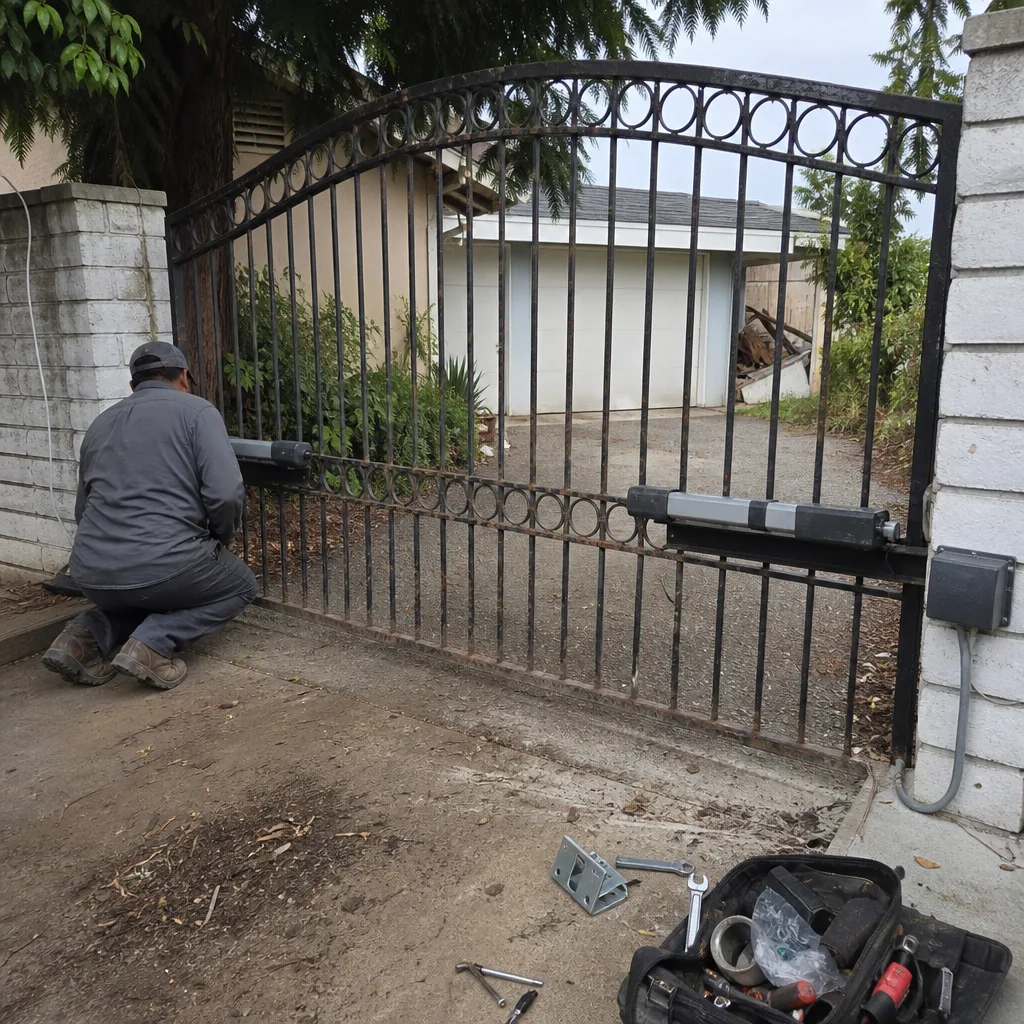 Before
 After
 Before
 After
 Before
 After