
Last updated November 2, 2026
 Wrought iron
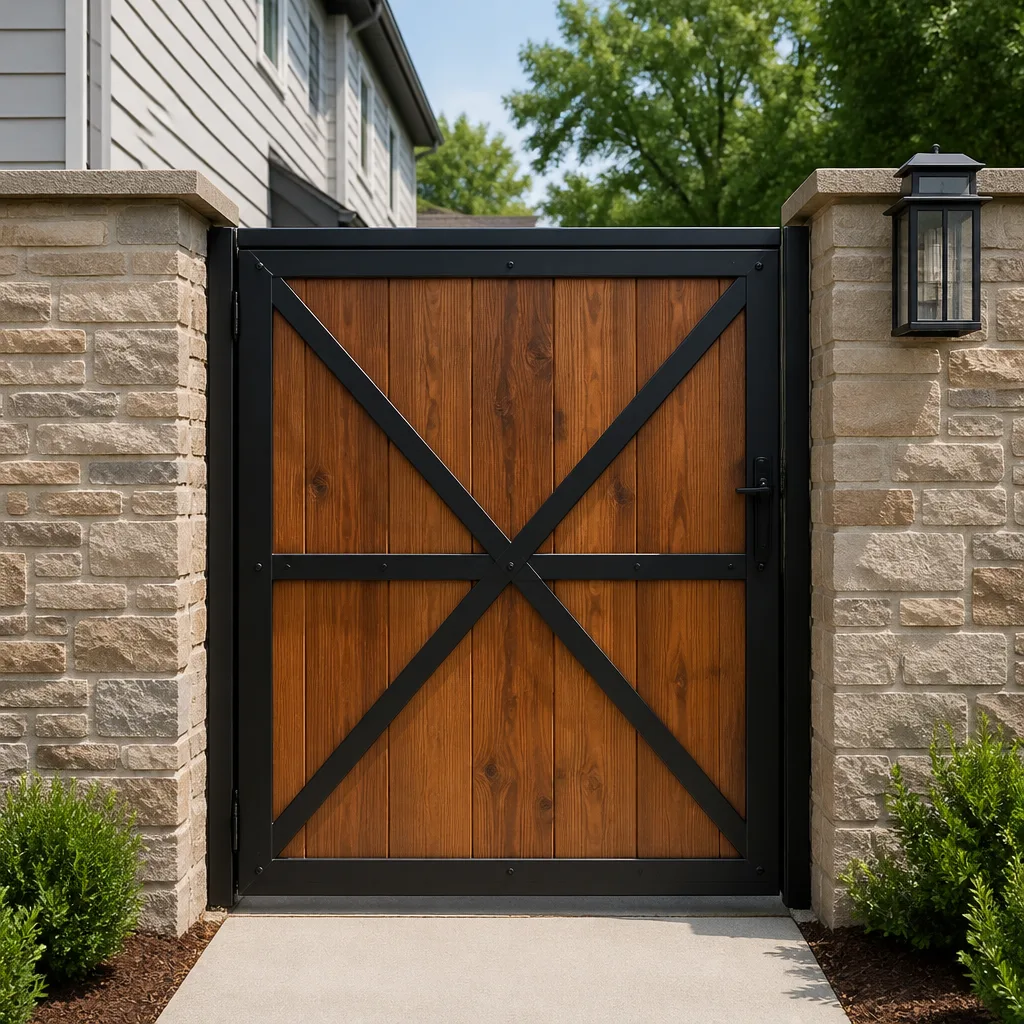 Wood & steel frame
 Farm & ranch
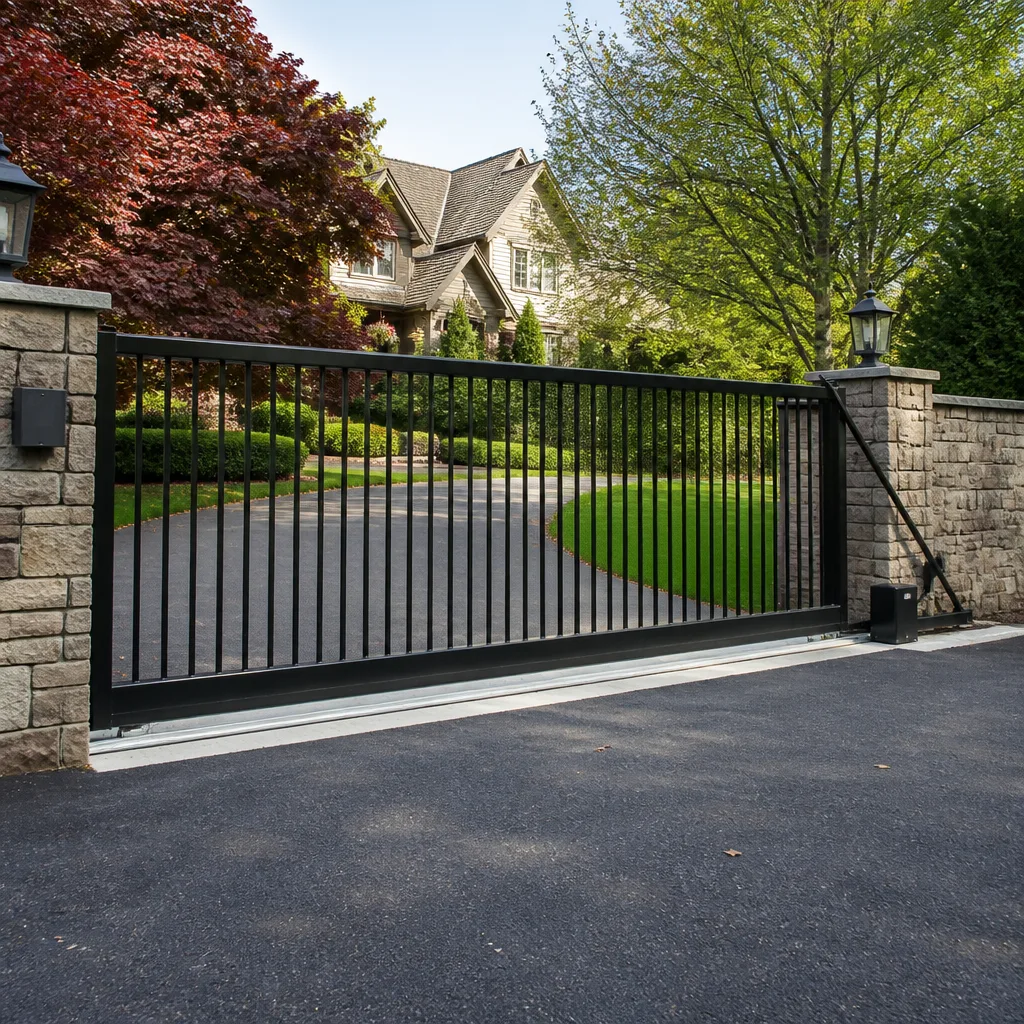 Sliding driveway gates
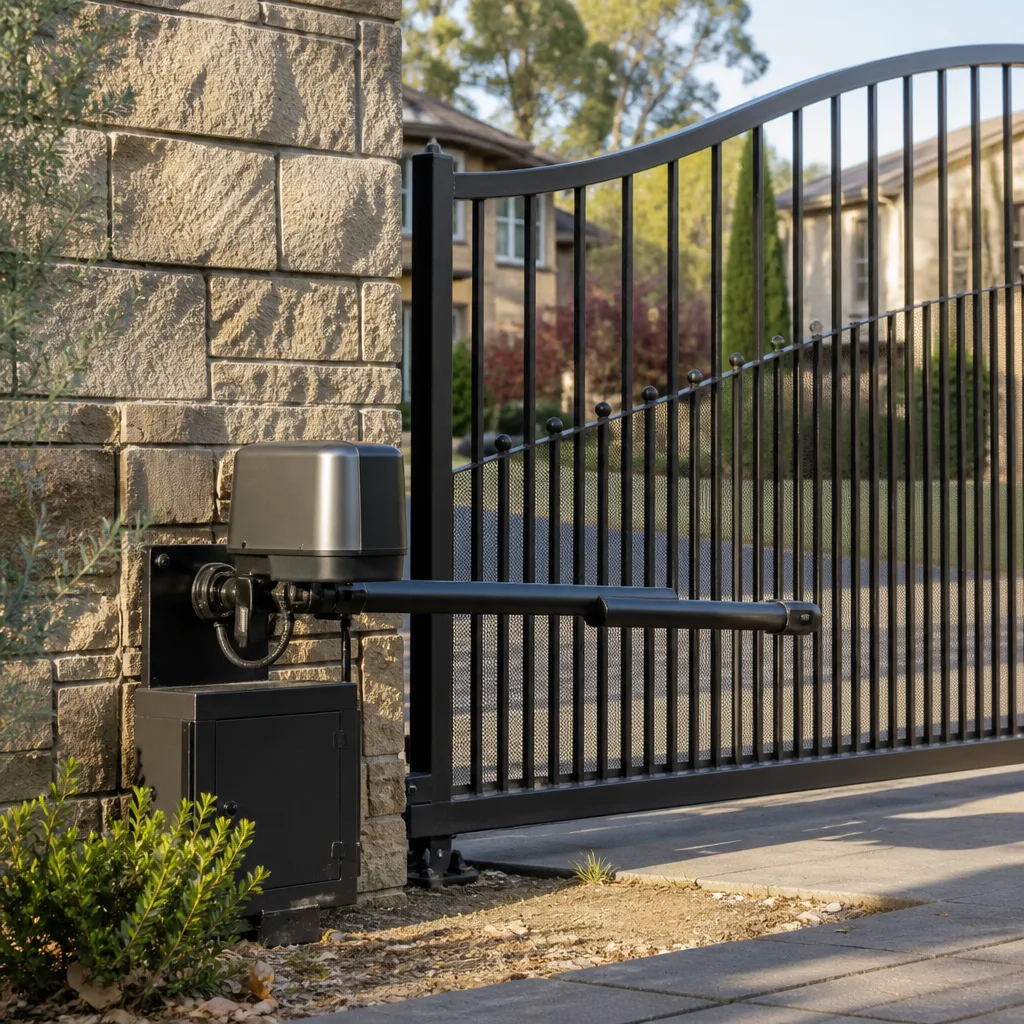 LiftMaster operators
Free on-site gate assessment - hinges, posts, and your LiftMaster or Nice gate operator checked before anything is quoted
The assessment is free and the quote is the invoice.
Get your free estimateSeasonal Gate Repair Care for Pocket: Year-Round Homeowner’s Guide
Pocket’s gate failure calendar has two predictable spikes – late February and late July – and both are preventable if you do the right thing in October and April. Most homeowners in this neighborhood don’t think about their automatic gate until it refuses to open, and by then the repair is an emergency instead of a maintenance item. This guide maps the entire year around Pocket’s actual weather patterns: saturated winter soil along the Sacramento River levee system and triple-digit summer heat that stresses steel and electronics differently than any other season. You’ll learn what to check, when to check it, what to seal, what to adjust, and when to stop touching things and call our Gate Repair services.
Styles & brands we work with
- Wrought iron
- Wood & steel frame
- Farm & ranch
- Sliding driveway gates
- LiftMaster operators
Quick Answer
Seasonal gate maintenance in Pocket means four focused tasks per year: seal and tighten everything in October before winter rain saturates the soil, inspect for water intrusion and post movement in February after peak rainfall, recalibrate travel limits and re-level hinges in April once the ground has stabilized, and adjust thermal expansion tolerances in June before Sacramento’s summer heat causes limit switch drift. Homeowners who follow this four-point seasonal rhythm typically avoid both of Pocket’s predictable failure spikes and extend the life of their gate operator by years.
Table of Contents
- October: Pre-Rain Preparation for the Winter Saturation Cycle
- February: Post-Storm Assessment After Peak Rainfall
- April: The Calibration Window After Winter Soil Shift
- June: Heat Preparation and Thermal Expansion Tolerances
- Year-Round Battery Backup Maintenance for SMUD Power Flickers
- Quarterly Maintenance Checklist for Every Pocket Homeowner
- Common Mistakes to Avoid
- When to Call a Professional
- Frequently Asked Questions
- The Bottom Line
October: Pre-Rain Preparation for the Winter Saturation Cycle
Pocket sits on alluvial soil deposited by the Sacramento River, and that soil does something predictable every winter: it absorbs rainfall, expands, and shifts. Gate posts set in concrete are only as stable as the soil beneath the footing, and when that soil turns to saturated mud, posts move. The gate that swung perfectly all summer starts dragging on the latch side or binding at the hinge by January. October is your only clear window to prepare before the saturation cycle begins.
What to do in October, in order of priority:
- Inspect every hinge, bracket, and bolt on the gate itself. Tighten anything that has worked loose over the dry summer months. Metal expands and contracts with temperature, and six months of expansion-contraction cycles loosens fasteners that felt rock-solid in May.
- Seal the bottom edge of the gate frame and any exposed steel. Sacramento winter rain is persistent, not dramatic, and standing water on horizontal surfaces is what starts rust. Use an exterior-grade metal sealant or automotive undercoating on seams where water pools.
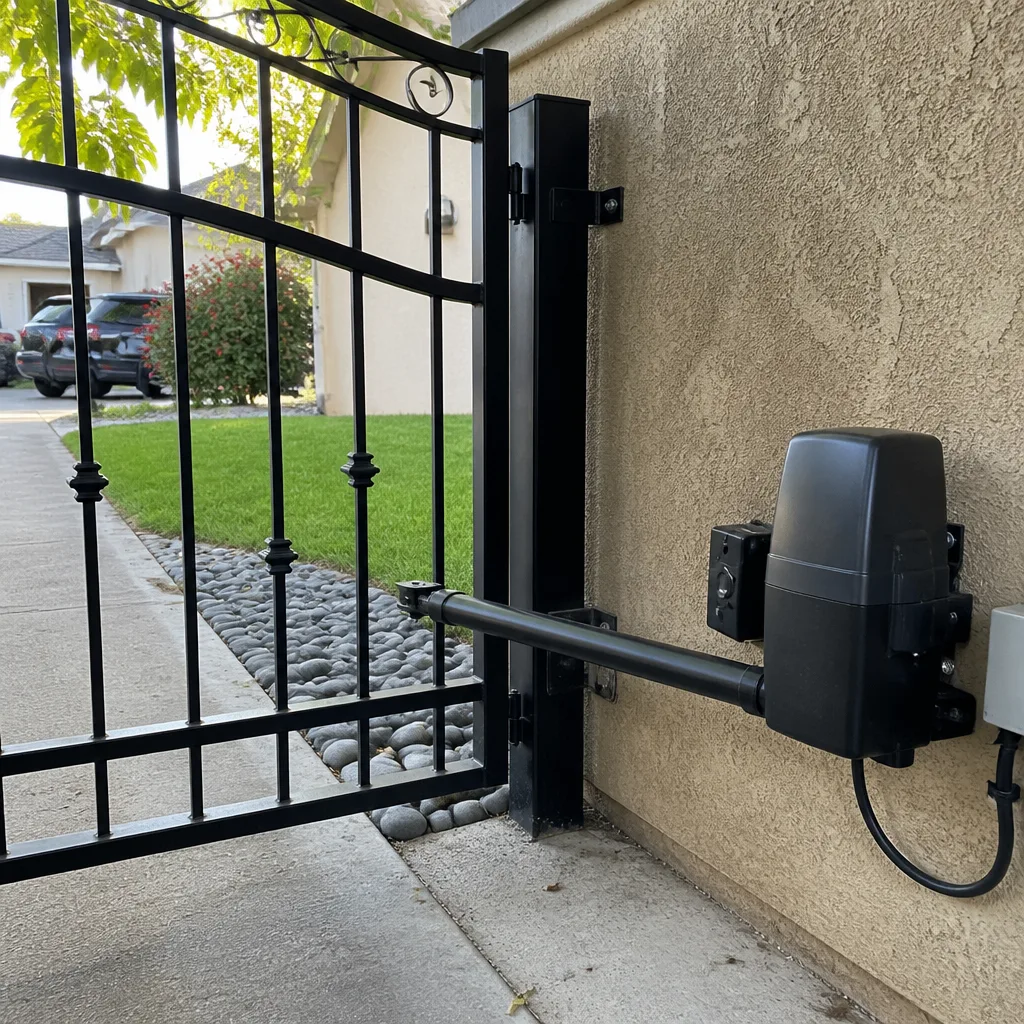
- Check the operator housing seal. LiftMaster and FAAC operators use weather-resistant housings, but the gasket between the housing base and the mounting plate degrades in Sacramento’s summer UV. A failed gasket in January means a soaked control board in February.
- Test the manual release. If the power goes out during a winter storm, you need to be able to open the gate by hand. Pull the release mechanism now, when it’s dry and you have time to troubleshoot, not when it’s raining and dark.
- Clear drainage paths around the gate posts and operator pad. Leaves, dirt, and debris accumulate through the fall and direct water toward spots you don’t want it. A five-minute cleanup prevents a season of standing water against the post base.
In our experience, the October homeowner who does these five tasks is the one we don’t hear from until April for a routine adjustment. The homeowner who skips October is the one calling us in February from a gate that won’t move. Pocket gets roughly 18 to 20 inches of rain annually, almost all of it between November and March, and the soil along the greenbelt and levee areas holds that moisture differently than the higher ground near Florin Road. Homes closer to the river experience more dramatic post movement than homes in the interior of the Pocket neighborhood.
February: Post-Storm Assessment After Peak Rainfall
By February, Sacramento’s peak rainfall months have done their work. The soil around your gate posts has expanded, contracted, and expanded again through multiple saturation cycles. This is when post movement becomes visible, and it’s also when water intrusion into the operator housing shows its consequences. A February walk-around with a level and a flashlight catches problems while they’re still repairable instead of catastrophic.
Here’s what you’re looking for in February:
- Gate sag at the latch side. Place a level on the top rail of the gate. If the bubble has drifted from center since October, the post on the hinge side has shifted. A quarter-inch of sag is enough to make an automatic operator work harder every single cycle.
- Fresh gaps between the post and the concrete footing. Look for hairline cracks or separation where the post enters the concrete. This is the first visible sign that the post has moved within its footing.
- Water staining or corrosion on the operator housing. Open the housing cover and look for moisture, mineral deposits, or condensation. A control board that got wet in December may work intermittently now and fail completely by summer.
- Scraping sounds during the travel cycle. Run the gate open and closed while listening. A gate that moved silently in October but scrapes now is telling you something changed geometrically.
- Slower operation than normal. If the gate takes longer to open than it did in the fall, the operator is working against increased mechanical resistance. That resistance shortens motor life and increases energy draw.
February is also the right time to inspect the weld points on steel gates. Cold, wet winter conditions combined with the stress of a misaligned gate can cause small cracks at weld joints that expand into full breaks by summer. Look at the hinge-side frame corners and anywhere a horizontal rail meets a vertical stile. If you see a crack forming, that’s a repairable condition in February and a gate replacement conversation in July.
For homeowners with electric gates, February is also when we see the most calls for electric gate repair in Pocket related to moisture in the low-voltage wiring connections. A splice that got damp in December corrodes through January and fails completely in February. If your gate opens sometimes and doesn’t open other times, especially after rain, the problem is frequently a wet or corroded connection rather than a failed operator.
April: The Calibration Window After Winter Soil Shift
By April, the soil has drained, stabilized, and settled into its dry-season configuration. This is the only correct time to re-set gate travel limits, because the gate’s geometry has changed since October and will stay relatively constant until the next winter cycle. Adjusting limits in February means adjusting them again in May. Adjusting them in April means you’re setting values that will hold through the summer.
Why travel limits matter: an automatic gate operator uses limit switches or sensors to know when to stop applying force. If the gate’s physical travel path has changed due to post movement, the operator either stops short, leaving the gate partially open, or over-travels, pushing against the stop block and stressing the motor, the chain or belt, and the gate frame itself. Both conditions shorten equipment life. Limit switch drift from post movement is one of the most common issues we diagnose during gate repair in Pocket calls each spring.
April calibration steps:
- Run the gate through a full open-close cycle and observe where it stops. It should stop fully open, resting gently against the open-side stop, and fully closed, resting gently against the closed-side catch or lock point.
- If it’s stopping short, adjust the open and close limit settings per your operator’s manual. LiftMaster models use different adjustment procedures than FAAC or Mighty Mule units. Most residential operators have mechanical limit nuts or electronic limit programming access under the housing cover.
- Check the closed-position locking mechanism. If the gate no longer lines up with the magnetic lock or the mechanical latch, adjust the latch plate rather than forcing the operator to push harder. The operator should never be the thing holding the gate closed against pressure.
- Re-check hinge bolts after adjustment. Sometimes post movement loosens the hinge bolts rather than moving the post itself. Tighten before you recalibrate, or you’ll be chasing your adjustment.
- Test the safety reverse function. Place an obstruction in the gate path and confirm the operator reverses on contact or detection. An improperly calibrated gate is more likely to fail this safety test.
April is also the right time to have your gate professionally leveled if the post movement is beyond what hinge adjustment can compensate for. A gate specialist can determine whether the post needs to be re-set, re-shimmed, or replaced, and whether the operator needs a 6010-6012 circuit board swap to accommodate corrected limits. This is preventive work that pays for itself when your gate operates properly through the entire summer instead of failing in July’s heat.
June: Heat Preparation and Thermal Expansion Tolerances
Sacramento summer heat creates a different failure mode than winter moisture. Steel expands when it heats up, and a steel slide gate or swing gate that clears its stops comfortably in April can bind or drift in July because the entire gate has grown slightly in every dimension. The hotter the day, the more thermal expansion you’re dealing with, and Pocket routinely sees stretches of 100-degree days where a gate that works at 7 AM fails at 3 PM.
Steel expands at roughly 6.7 millionths of an inch per inch per degree Fahrenheit. For a 16-foot steel slide gate on a 100-degree day, that’s enough dimensional change to cause the gate to contact the guide rollers differently than it did in April. Limit switches that were calibrated for cooler conditions begin to drift as the gate expands, and operators respond by stopping short or over-running. This is why late July is the second of Pocket’s two predictable failure spikes.
June heat preparation checklist:
- Re-check limit settings after the first sustained heat wave. If your gate operated properly in April and May but starts acting up after the first week of 95-degree days, thermal expansion is the most likely cause. Adjust limits with the gate hot, not cold, so the settings reflect operating conditions.
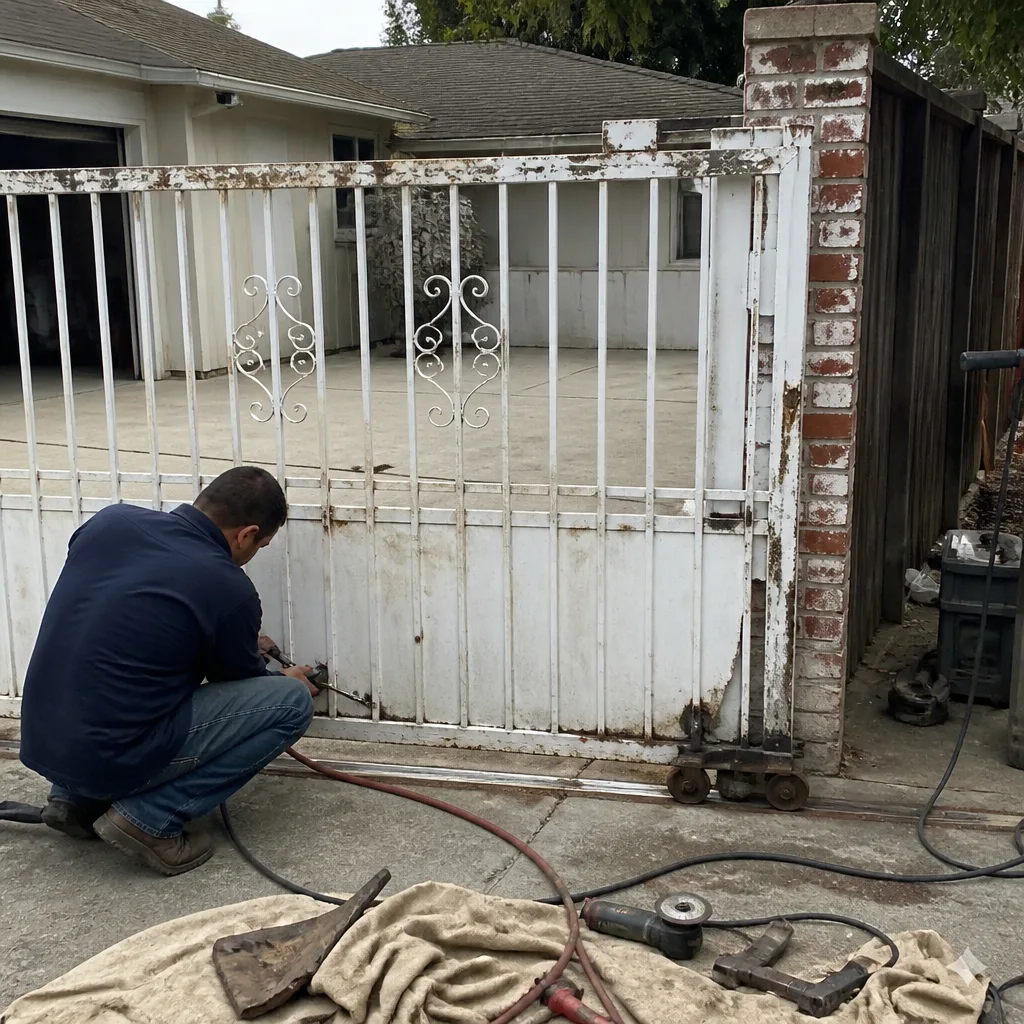
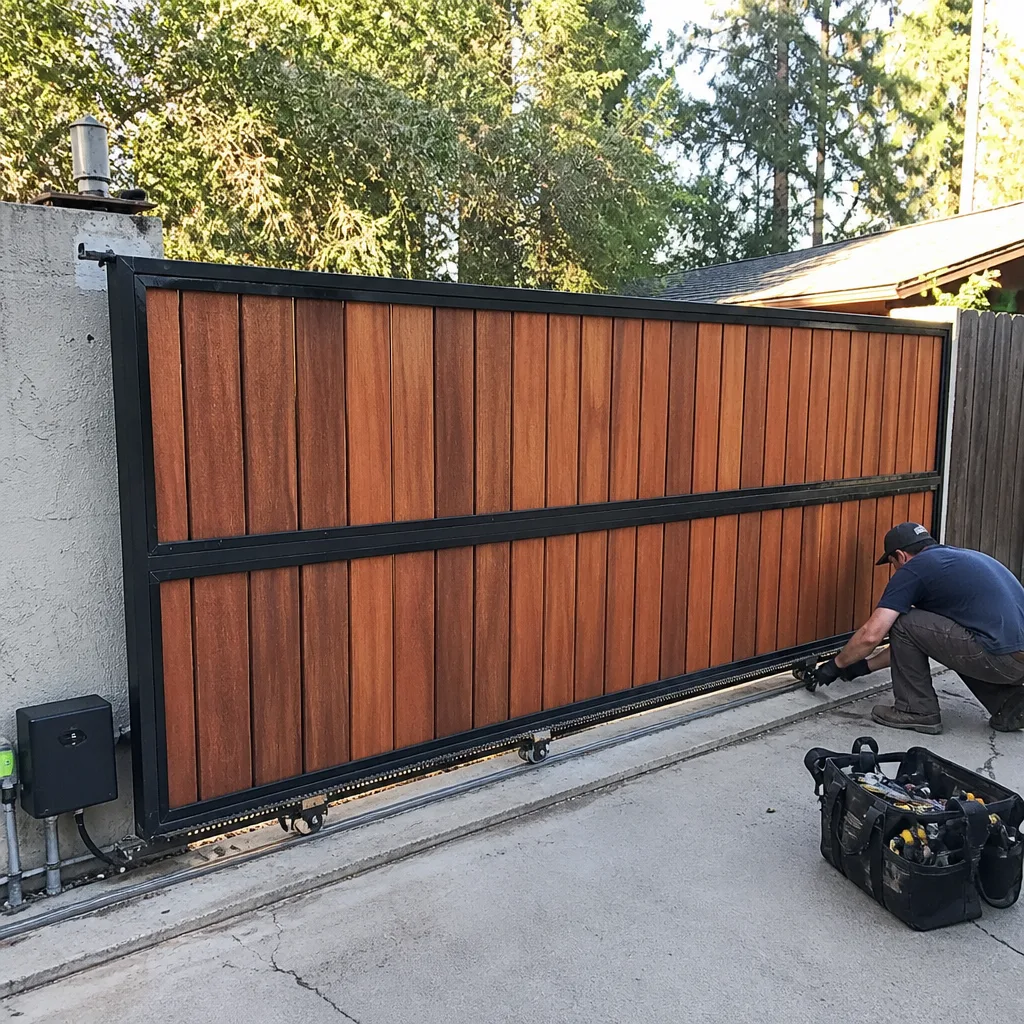
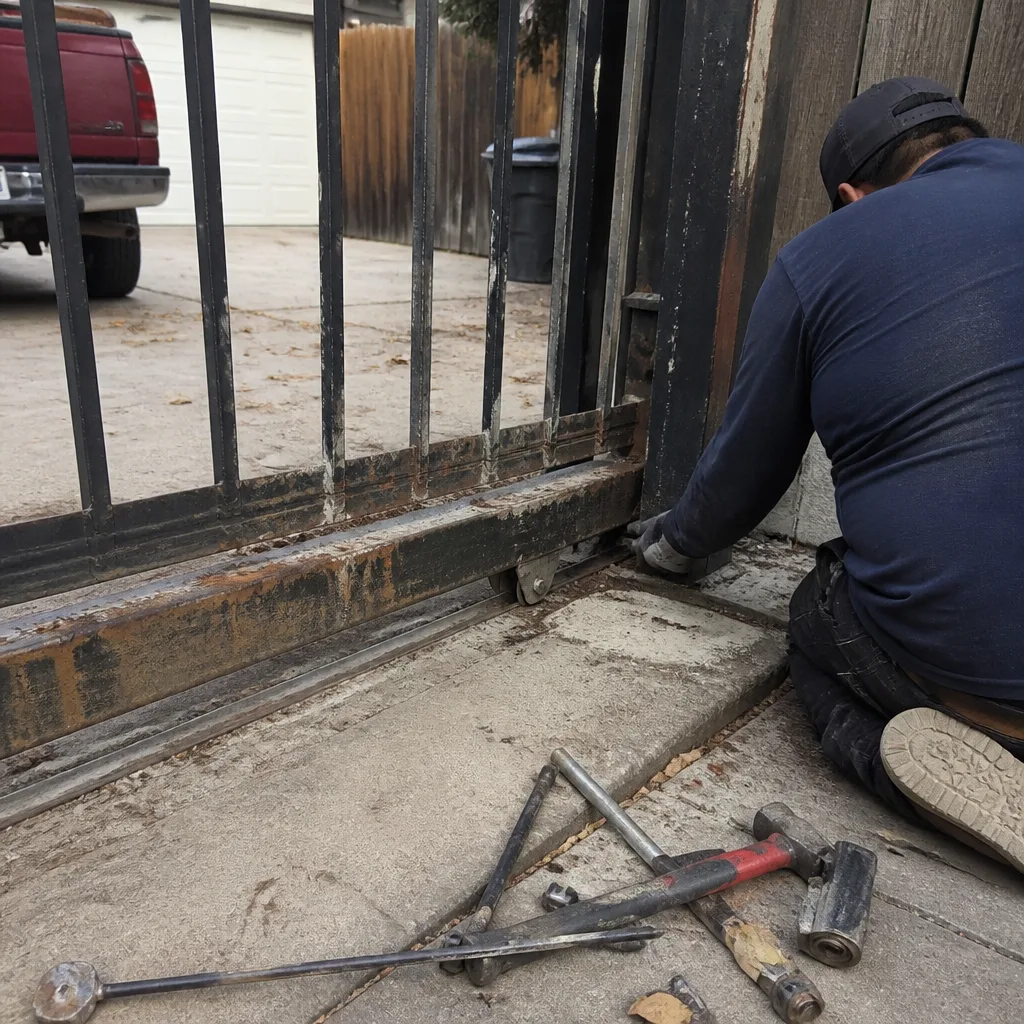
- Inspect guide rollers and tracks on slide gates. Rollers that were properly spaced in spring may bind against an expanded gate rail in summer. Look for flat spots on rollers, shiny wear marks on tracks, and any indication the gate is dragging rather than rolling.
- Check the operator’s thermal overload protection. If the gate runs a few cycles and then stops responding, the operator motor may be overheating. This is more common in July and August when ambient temperatures push motor temperatures past safe operating range.
- Verify hinge movement on swing gates. A swing gate that moves freely by hand should also move freely under power. If you notice resistance at the hinge during the hottest part of the day, the expansion is closing the hinge clearance gap.
- Lubricate hinges, rollers, and the operator drive mechanism. Use a quality lithium-based grease on metal-to-metal contact points and a silicone-based lubricant on rollers. This is a spring and early summer task, before the heat arrives, so the lubrication protects through the thermal stress period.
BFT and Viking operators are particularly sensitive to heat-related limit drift because their control systems use tighter tolerances than some other brands. If your BFT slide gate is stopping mid-travel on hot afternoons but working normally in the morning, that’s a classic thermal expansion signature. The fix is usually a simple limit adjustment performed during afternoon heat, not a control board replacement. A gate specialist who works on these brands daily recognizes this pattern immediately.
Year-Round Battery Backup Maintenance for SMUD Power Flickers
Pocket loses power more often than most Sacramento neighborhoods, and the pattern is predictable: summer grid stress on SMUD’s distribution system produces flickers and short outages during heat waves, sometimes multiple times per week in July and August. Every time power drops out and comes back, your gate operator’s control board experiences a voltage transient. A healthy battery backup absorbs these transients. A dead battery doesn’t.
The battery in your gate operator’s backup system has a service life of roughly two to three years, and Sacramento summer heat accelerates degradation. A battery that tested fine in January may fail completely by August because the chemical processes inside the battery speed up with heat. Here’s the maintenance rhythm that works for Pocket homeowners:
- Test the battery every quarter, not once a year. Disconnect AC power and run the gate through a full open-close cycle on battery alone. If the gate moves slower than normal or the low-battery warning illuminates, the battery is degrading.
- Mark your battery’s installation date on the housing. When you replace a battery, write the month and year on the battery itself. This removes all guesswork about age.
- Schedule battery replacement before summer, not after. If your battery is approaching its third summer, replace it in April or May. The cost of a new battery is a fraction of the cost of replacing a control board that a power surge destroys because the backup was dead.
- After every power outage, check that the gate returned to automatic mode. Some operators default to manual mode after a power interruption. If your gate won’t respond to the remote after an outage, check this before calling for service.
- Keep the battery terminals clean and tight. Corrosion on terminals creates resistance, and resistance creates heat, and heat shortens battery life. A wire brush and terminal protector spray take five minutes.
We also recommend that Pocket homeowners with electric gates pay attention to the pattern of outages. If you’re experiencing power flickers that are brief but frequent, consider having an electrician install a whole-panel surge protector at your main breaker. This protects not just your gate operator but your home’s entire electrical system from the cumulative damage that repeated voltage transients cause. The gate operator is often the first device to fail in these conditions because its control board is exposed to the outdoor environment.
Quarterly Maintenance Checklist for Every Pocket Homeowner
Beyond the seasonal-specific tasks above, there’s a fifteen-minute quarterly routine that catches most gate problems before they become failures. We recommend doing this in January, April, July, and October, aligning with the seasonal rhythm of this guide, or explore more guides & resources. If you perform these checks consistently, you’ll notice changes from one quarter to the next instead of discovering them as emergencies.
- Run the gate through three full cycles while watching and listening. Note any hesitation, scraping, grinding, or change in travel speed. Changes from the previous quarter are your early warning system.
- Test the safety reverse mechanism. This is the most important safety feature on your gate and the one most likely to fail silently. You should test it monthly if you have children or pets.
- Inspect all visible wiring for damage. Look for cracked insulation, exposed conductors, animal damage, or wires that have pulled loose from terminals. Sacramento’s squirrel population treats low-voltage wiring as nest-building material.
- Check the gate’s physical condition. Walk around and look at hinges, weld points, wheel assemblies, and the bottom rail. Rust, cracks, and wear patterns are all progressive conditions that get more expensive the longer they’re ignored.
- Test the remote controls and keypad. Replace remote batteries annually as a matter of routine, and clean the keypad surface with a dry cloth to keep the buttons responsive.
- Clear vegetation growth around the gate path and photo-eye sensors. Pocket’s growing season is aggressive, and a photoelectric sensor blocked by a shrub branch is one of the most common causes of a gate that refuses to close. Trim back anything within eighteen inches of the gate’s travel path.
Keep a simple log of these quarterly checks. Note the date, what you observed, and any adjustments made. When something does fail, that log gives your gate specialist a timeline that makes diagnosis faster and more accurate. For homeowners who have had gate installation in Pocket completed recently, the log also serves as documentation that could support warranty coverage if a problem is traced to a component defect rather than deferred maintenance.
Common Mistakes to Avoid
- Ignoring a gate that’s slightly out of alignment because it still works. A gate that scrapes or hesitates is telling you the geometry has changed. The operator doesn’t care that the problem is small; it’s working harder every cycle, and that extra strain accumulates into a motor failure or a stripped gear.
- Adjusting limits in the middle of winter or summer. Limits set during January’s saturated soil conditions won’t hold in April’s dry conditions, and limits set in July’s heat won’t hold in October’s cool weather. April and October are the only statistically stable windows for limit calibration in Pocket’s climate.
- Using WD-40 on gate hinges and rollers. WD-40 is a water displacer and light penetrant, not a lubricant. It strips away whatever lubrication was there and leaves the metal surface dry, accelerating wear. Use lithium grease on hinges and silicone lubricant on rollers.
- Replacing the operator when the problem is the gate. If the gate post has shifted and the gate is binding, a new operator will fail the same way the old one did. Diagnose the mechanical alignment first, then evaluate the electronics. This is a mistake we see from generalist handymen who don’t work on gates every day.
- Skipping the safety reverse test because “it’s always worked before.” Photo-eye sensors fail without warning, and a gate that doesn’t reverse on contact is a serious safety hazard. This is a monthly test that takes thirty seconds.
- Letting vegetation grow into the gate path. Pocket’s ivy and scrub growth is relentless, and branches in the gate’s travel path not only trigger false safety reversals but can also stress the operator as it pushes against resistance. Eighteen inches of clearance is the minimum; more is better.
- Deferring professional service because the gate “mostly works.” “Mostly works” is the phase when repairs are cheapest. The gap between “mostly works” and “doesn’t work at all” is often measured in days, and emergency service calls during summer heat waves are always more expensive than scheduled maintenance.
When to Call a Professional
Some gate maintenance tasks are squarely in the homeowner’s wheelhouse: tightening bolts, clearing vegetation, testing remotes, checking the battery. Others require a specialist. If your gate post has visibly shifted and the gate no longer meets the latch or the stops, that’s a structural repair, not a DIY adjustment. If your operator trips its circuit breaker repeatedly, produces a burning smell, or makes grinding sounds from inside the housing, stop using it and call for diagnosis. If you have an electric gate and you’re seeing intermittent operation that correlates with weather, a professional with a multimeter can trace the fault through the low-voltage system quickly. Read Choosing the Right Gate Repair Brand: A Buyer’s Guide for Pocket for help selecting equipment, or call Gatehouse Gate Repair at (833) 620-5971 for a free estimate and we’ll diagnose the problem before recommending any work. From the motor to the hinge, we diagnose first and replace only when repair won’t last.
Frequently Asked Questions
Twice a year is the right service interval for most Pocket homeowners: once in April after winter soil shift has stabilized, and once in October before the rainy season begins. These two service visits align with the two maintenance windows that matter most in this climate. Professional service at these intervals catches post movement early and prevents the predictable February and July failure spikes. Call (833) 620-5971 to schedule a seasonal maintenance visit.
Thermal expansion is the most common cause of gate failures during Pocket’s summer heat waves. Steel gates expand measurably in 100-degree temperatures, which causes the gate to bind against guide rollers or stops and triggers the operator’s safety systems to halt movement. Limit switches calibrated in cooler weather also drift as the gate expands. Adjusting limits during hot conditions usually resolves this. If your gate fails only in heat, call (833) 620-5971 and mention the pattern – it helps us diagnose faster.
Seasonal gate maintenance in Pocket typically ranges from $150 to $350 per visit depending on the type of gate, the number of operators, and the scope of adjustments needed. A basic hinge tightening and travel limit recalibration on a single swing gate sits at the lower end of that range, while a comprehensive service including battery replacement, post re-leveling, and full system testing on a slide gate with access control sits at the higher end. The price is quoted and agreed before any work starts, and estimates are free – call (833) 620-5971 for an exact quote on your specific gate.
Yes, the quarterly checklist in this guide covers the tasks a homeowner can safely perform: visual inspection, tightening accessible fasteners, clearing vegetation, testing remotes, testing the battery backup, and running the safety reverse test. What you should not DIY is any adjustment that requires loosening the operator housing’s internal mountings, recalibrating limit switches on units still under warranty, any repair involving post re-setting, or any electrical work beyond battery replacement. Electric gate systems involve line voltage and low-voltage circuits that can cause injury or equipment damage if handled incorrectly.
Gatehouse Gate Repair works on nine major gate automation brands, including LiftMaster, FAAC, BFT, Linear, Viking, Ghost Controls, DoorKing, Elite, and Mighty Mule. If your gate operator is from one of these manufacturers, we service it regularly and likely have the replacement parts or know exactly what to order. We’re gate specialists, not generalists, and we work on your brand rather than steering you toward a brand we prefer to sell.
Post movement from winter soil saturation is the most common Pocket-specific gate problem we see. The alluvial soil in this neighborhood expands when wet and contracts when dry, and gate posts set before modern footing standards were common tend to shift over a few seasons of this cycle. The symptom is usually a gate that starts scraping or failing to latch properly, and the fix ranges from hinge adjustment to post re-setting depending on the severity; see The Complete Gate Repair Guide for Pocket Homeowners for more detail. Homes near the Sacramento River levee see this more than homes in the interior of the Pocket neighborhood.
The Bottom Line
Pocket’s gate failure calendar runs on a rhythm that’s predictable once you understand the soil and the heat. October and April are your maintenance windows. February and July are your failure windows if you skip them. The homeowner who seals and tightens in October, inspects in February, calibrates in April, and adjusts for thermal expansion in June is the homeowner whose gate runs reliably for years without an emergency repair call. The homeowner who waits for the gate to fail is the one dealing with it during a heat wave while the gate is stuck open and the house is exposed. Four seasonal tasks per year, fifteen minutes per quarter, and a professional inspection twice a year is the entire system. If you want help setting up that rhythm for your specific gate, call (833) 620-5971 for a free estimate – we’ll walk your gate with you and tell you exactly what it needs and what it doesn’t.
Written by the team at Gatehouse Gate Repair, serving Pocket since 2018.
See the difference
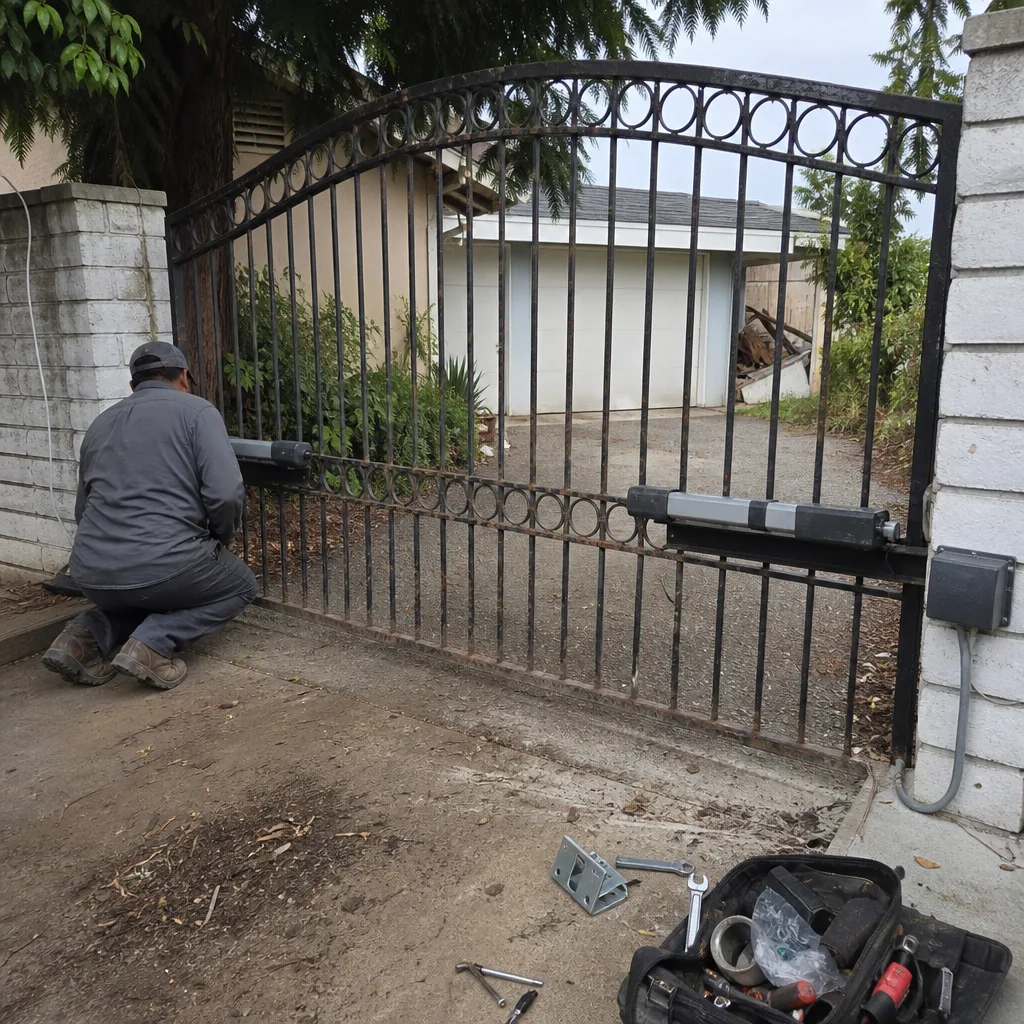 Before
 After
 Before
 After
 Before
 After