
Last updated November 3, 2026
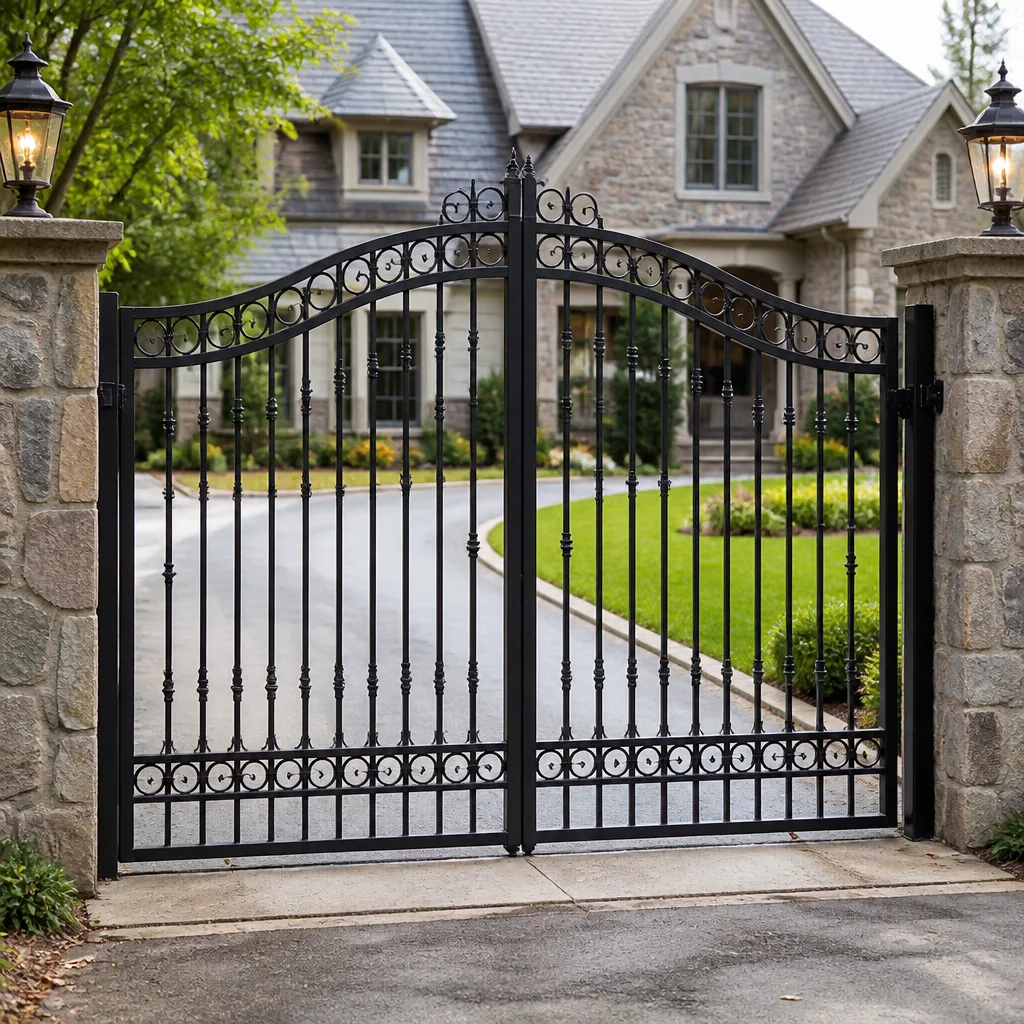 Wrought iron
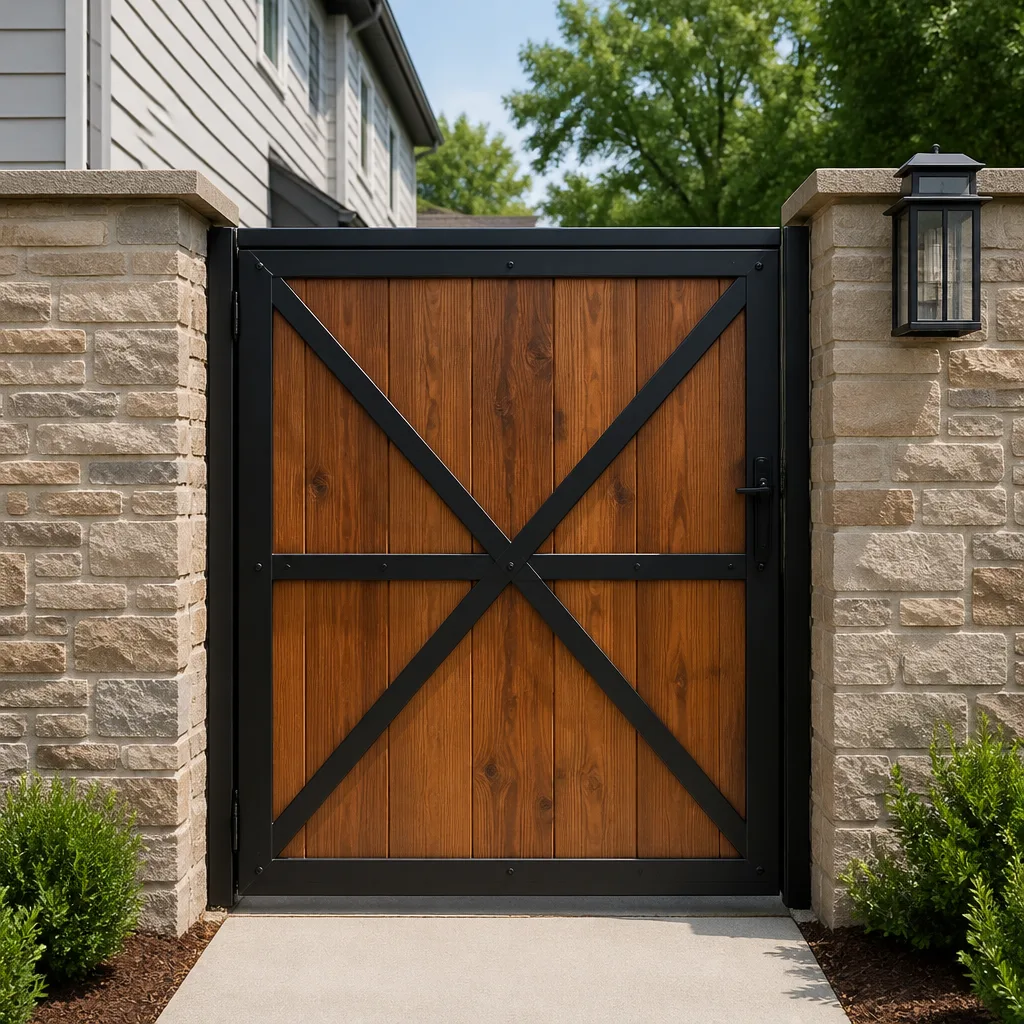 Wood & steel frame
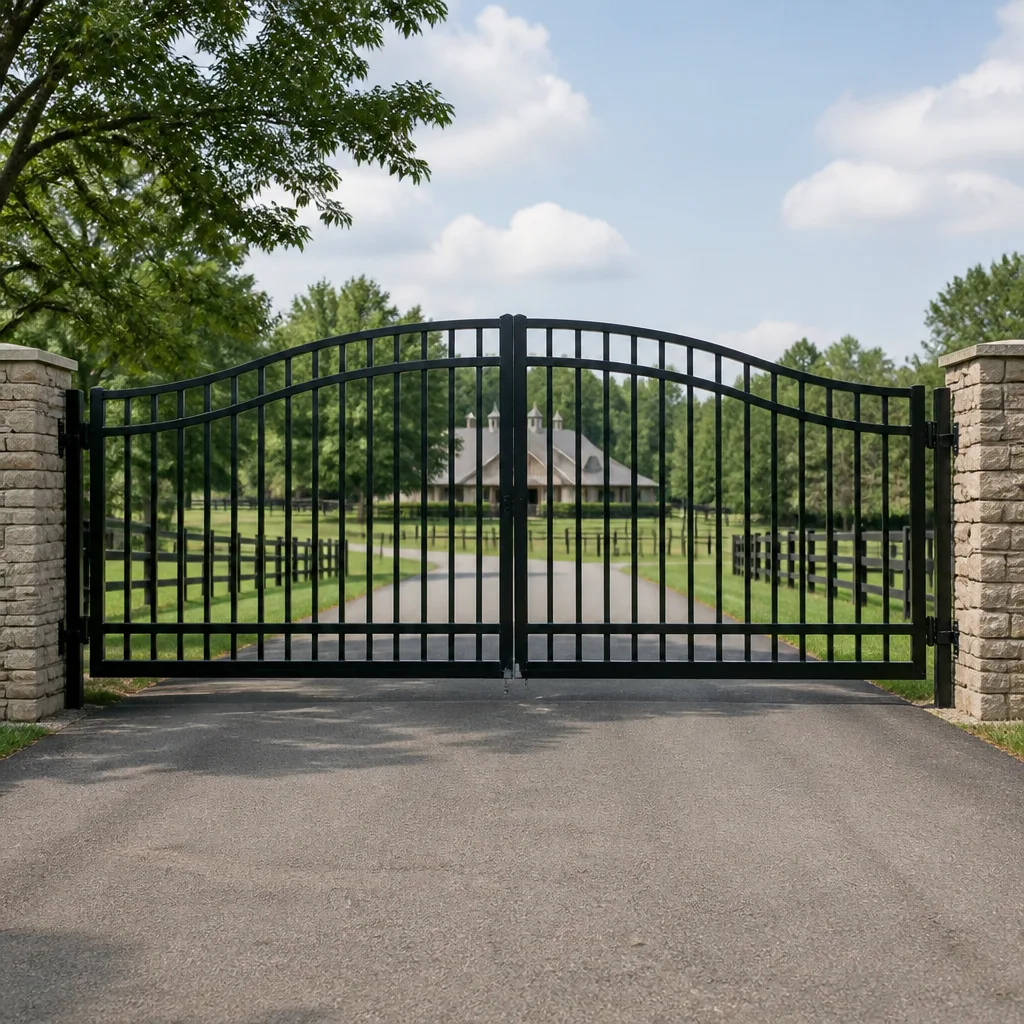 Farm & ranch
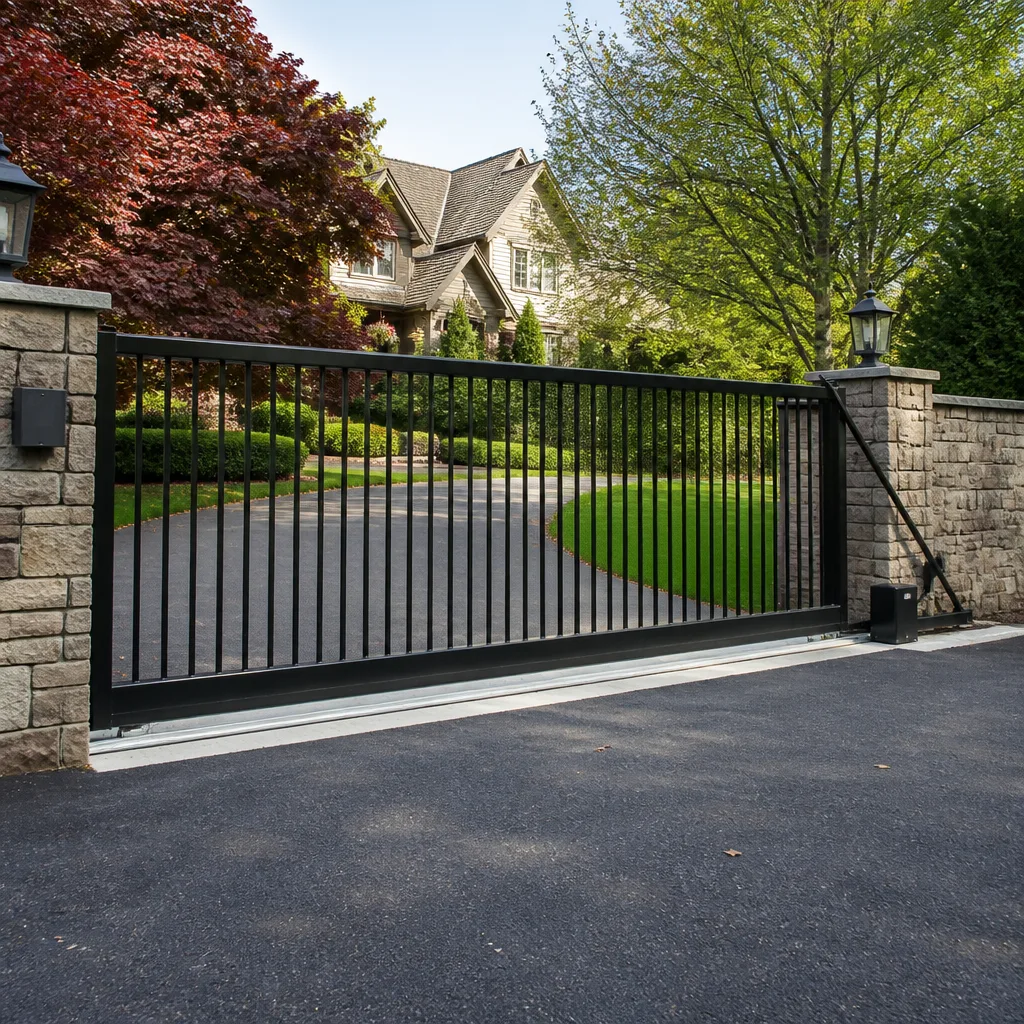 Sliding driveway gates
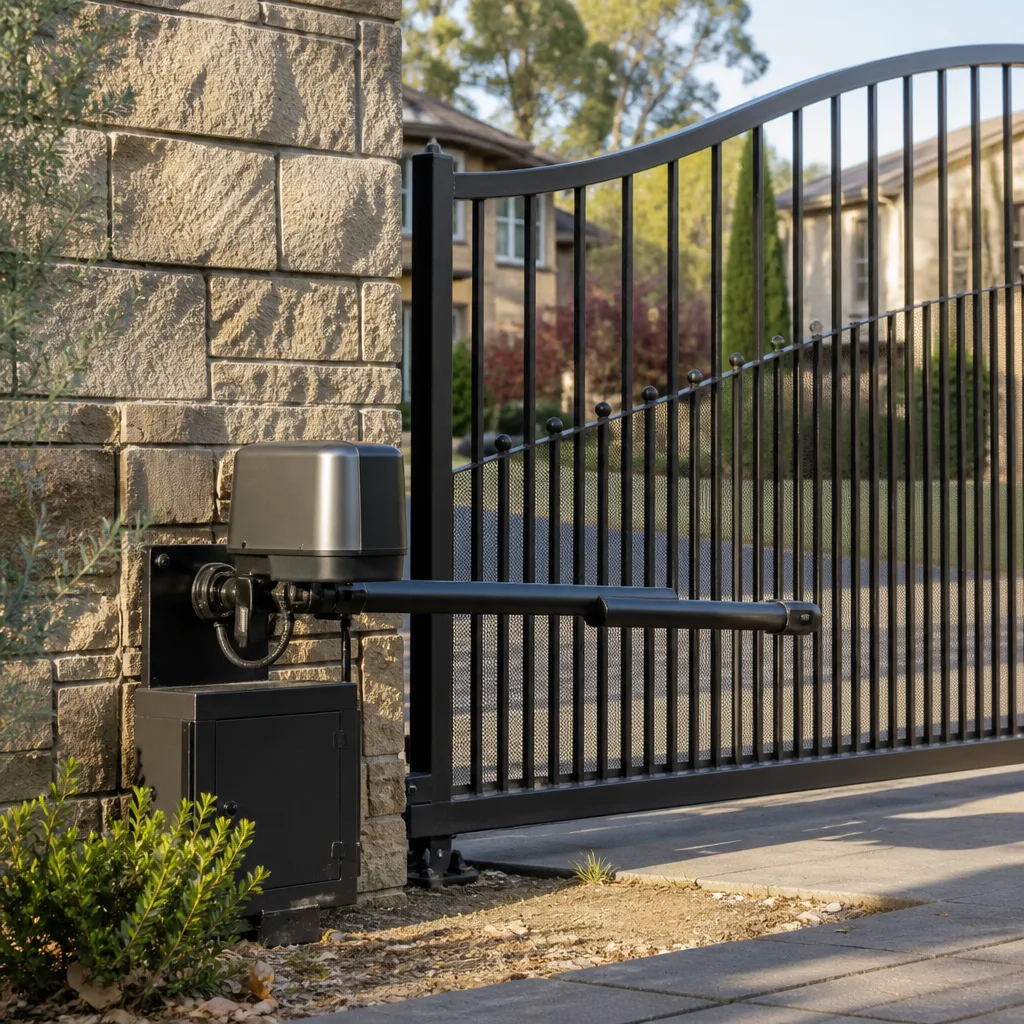 LiftMaster operators
Free on-site gate assessment - hinges, posts, and your LiftMaster or Nice gate operator checked before anything is quoted
The assessment is free and the quote is the invoice.
Get your free estimateChoosing the Right Gate Repair Brand: A Buyer’s Guide for Pocket
The gate operator brand that’s hardest to get parts for in Sacramento is also one of the most aggressively marketed, and Pocket homeowners are buying it based on Amazon reviews written in Florida. That matters because a gate operator is not a toaster. It’s a mechanical system that sits outside in Sacramento heat, cycles thousands of times a year, and eventually needs a capacitor, a limit switch, a control board, or a gear kit that only fits one manufacturer’s housing. When that day comes, the brand name on the unit decides whether you wait two days or three weeks. This guide evaluates the major gate brands through the lens of Pocket’s actual service reality: what we stock, what we can get, what holds up in this climate, and what five years of ownership really costs. For a deeper dive, see The Complete Gate Repair Guide for Pocket Homeowners. By the end, you’ll know which brands make sense for a Pocket driveway gate and which ones quietly transfer their inventory problems onto you.
Quick Answer
The best gate operator brand for a Pocket home is the one your local technician stocks parts for, not the one with the most YouTube ads. LiftMaster, FAAC, BFT, and DoorKing are the strongest choices in the Sacramento market because local parts availability is consistent and the equipment is built for heat and heavy use. Elite and Mighty Mule work for specific situations, but Mighty Mule’s consumer-grade electronics are a known weak point in Pocket’s summer temperatures. Before you buy any operator, call a gate repair company and ask one question: Which of these brands do you keep parts for on the truck? That answer matters more than any spec sheet.
Styles & brands we work with
- Wrought iron
- Wood & steel frame
- Farm & ranch
- Sliding driveway gates
- LiftMaster operators
Table of Contents
- The Real Cost of Parts Availability in Sacramento
- How Pocket’s Climate Treats Gate Operators
- Total Cost of Ownership: A Five-Year Look
- Access Control Integration: What Works With What
- Brand-by-Brand Notes for Pocket Homeowners
- The Stocking Question: How to Vet Any Gate Repair Vendor
- Common Mistakes to Avoid
- When to Call a Professional
The Real Cost of Parts Availability in Sacramento
In Pocket, a gate that’s stuck open is not a minor inconvenience. It’s an open invitation to anyone who noticed the driveway gate didn’t close behind you. So when a control board fails or an actuator strips a gear, the clock starts. The question is whether your repair company can fix it today or has to order a part from a distributor in Texas. The answer depends almost entirely on brand.
Here’s what we see in our trucks and in Sacramento-area parts distribution:
- LiftMaster and Linear: Stocked locally by multiple distributors. Common control boards, capacitor kits, and accessory parts are usually available same-week. In our experience, LiftMaster residential operators like the LA400 and LA500 series are the easiest to service quickly because the parts ecosystem is deep.
- FAAC and BFT: European brands with strong commercial distribution in California. Parts for the FAAC 400, 402, and 391 series and the BFT Deimos and Rigel are orderable from regional warehouses. Wait time is typically not bad, but same-day pickup is less common than with LiftMaster.
- DoorKing: Solid parts network on the West Coast, especially for the 9150 and 6500 series. DoorKing tends to be a commercial favorite, so distributors stock heavily.
- Ghost Controls and Mighty Mule: Consumer-grade operators sold heavily through big-box retailers and Amazon. Parts largely go through mail-order channels. If a Mighty Mule control board goes down, you’re usually replacing the whole unit or waiting on a shipped part. That’s a real consideration in Pocket, where monsoon-season moisture and heat both shorten the life of consumer electronics.
- Elite and Viking: Commercial-grade brands with good distributor presence in Northern California, but parts are less commonly stocked at retail counter level. Ordering is reliable, just a bit slower for the residential customer.
The takeaway is not that any of these brands are bad. The takeaway is that parts availability is a service-delay issue, and the brand you buy determines the delay. When a Pocket homeowner asks us which operator to install, our honest answer starts with what we can keep on the shelf and get fast from local sources. That’s the lens the Amazon reviews don’t show you.
How Pocket’s Climate Treats Gate Operators
Pocket gets real summer heat: weeks in the mid-90s, occasional triple-digit stretches, and direct afternoon sun on unshaded driveway gates. Add the Delta breeze’s humidity swings, winter fog, and the occasional heavy rain, and you have a demanding environment for any outdoor electromechanical device. Not all operators are built the same.
Heat tolerance matters most. An operator’s control board, capacitor, and transformer sit inside a steel or plastic housing that soaks up sun. On a 100-degree Sacramento day, the inside of a dark housing can push 130 degrees or more. Brands with better thermal design, meaning larger enclosures, better ventilation, and heat-rated capacitors, hold up longer. This is why we see fewer heat-related failures on LiftMaster and DoorKing residential units than on Mighty Mule and Ghost Controls units, which run smaller, tighter enclosures.
Humidity and corrosion matter more than people think. Close to the river, the air in Pocket carries more moisture than the dryer foothill regions. Rust forms on hinges, control-board contacts oxidize, and mild steel chassis brackets corrode. FAAC and BFT do well here because their European engineering emphasizes weather sealing and corrosion-resistant finishes. DoorKing and Viking commercial operators also hold up, especially the powder-coated steel cabinets. Mighty Mule’s consumer board enclosures are plastic and not weather-sealed to the same standard, so condensation becomes a slow killer.
Corrosion warranty terms differ substantially. Commercial-grade operators like FAAC, BFT, and DoorKing often carry explicit corrosion-warranty language on aluminum and stainless components. Consumer-grade brands typically limit warranty coverage on corrosion to 12 months or less. For a Pocket homeowner planning to keep the house for ten years, that’s a meaningful difference. Heat and moisture are your two invisible opponents here, and the brand’s design choices decide which one wins.
Total Cost of Ownership: A Five-Year Look
The cheapest operator is rarely the cheapest over five years. We calculate total cost of ownership for every brand we install, because our Pocket customers deserve that math before they spend money. Here’s the breakdown of what actually drives five-year cost:
- Parts cost and failure frequency. Consumer-grade operators like Mighty Mule may cost $300 to $700 upfront, but control boards fail more often in Sacramento heat. A replacement board might be $150 to $250, and you might replace it twice in five years. A LiftMaster LA500 might run $1,200 to $1,500 installed, but the board and motor are far more likely to last the full five years without a single failure.
- Labor for brand-specific repairs. Some brands are easier to diagnose and repair than others. LiftMaster and DoorKing have diagnostic LEDs and clean wiring layouts. FAAC and BFT are excellent but can require brand-specific programming knowledge that fewer generalists have, which means you might pay a specialist’s labor rate either way. If you hire a company that doesn’t know the brand, expect longer diagnostic time.
- Firmware and smart-operator updates. Modern smart operators with app control and camera integration are essentially computers. LiftMaster’s myQ ecosystem and FAAC’s newer digital platforms receive occasional firmware updates. Some updates are user-applied; others require a technician call. This is not a huge annual cost, but over five years it’s a real line item if the platform is glitchy or the manufacturer abandons older firmware, which happens more often with entry-level brands.
- Replacement cycles. A consumer Mighty Mule operator on a Pocket driveway gate might last four to seven years before major failure. A LiftMaster or FAAC unit on the same gate often lasts ten to fifteen. When you spread the upfront cost over the actual service life, the “expensive” brand usually costs less per year.
Our firm rule: before you buy any operator, pull up the parts list for the three most common failures (control board, limit switch, gear kit) and price them. Then add two hours of labor for each repair. That five-year projection tells you more than any sticker price.
Access Control Integration: What Works With What
If you’re in a Pocket HOA or manage a multi-unit property, access control integration is not optional. You need to know which gate operators talk to which access control systems without requiring an expensive interface box or a hacky relay setup.
LiftMaster and DoorKing are the easiest to integrate with Sacramento-area access control infrastructure. Both brands play well with phone-based entry systems, keypads, and tele-entry panels. LiftMaster’s myQ and DoorKing’s DKS interface board are well documented, and local access-control installers are familiar with them.
FAAC and BFT offer clean integration paths too, but their digital protocols are slightly more technical. If your property uses a modern access control platform from a company like Openpath or ButterflyMX, these brands work, but you’ll want a technician who understands European control logic. We handle this often because our dual-track experience covers both the mechanical and electronic sides, so one call resolves issues other companies would need to subcontract out.
Elite, Viking, and Linear are solid on the commercial side. Linear’s access control roots make its operators a natural fit for gated communities. Some older Linear systems can be harder to adapt to smartphone-based entry without an additional module, so check before buying.
Mighty Mule and Ghost Controls are residential. Their “smart” features are app-driven and proprietary. They are not designed for real multi-tenant access control. If your system ever needs to support tenant codes, visitor call boxes, or a property management platform, plan to replace the operator, not adapt it.
The rule of thumb: buy the operator brand that matches how the gate will actually be used. If it’s a single-family driveway gate in Pocket, most brands work. If it’s an HOA entrance or a commercial access point, choose from the commercial-friendly brands and plan the access control system first.
Brand-by-Brand Notes for Pocket Homeowners
Here’s a practical, service-first view of the brands we see most often in Pocket driveways. This is not a spec-sheet comparison. It’s what we observe when these units fail, what they cost to keep alive, and where they make sense.
LiftMaster
LiftMaster is the most common residential brand on Pocket driveways, and for good reason. The LA400 and LA500 swing operators are reliable in Sacramento heat, and local parts stock is deep. The myQ app platform adds convenience, though some homeowners tell us they preferred the simpler older models. If we have one criticism, it’s that the smart features sometimes introduce firmware quirks that the old-school units didn’t have. Overall, LiftMaster is our default recommendation for most Pocket single-family gates. Learn more about how we approach Gate Repair in Pocket with these systems.
FAAC
FAAC is a European commercial brand that builds genuinely durable operators. The articulation-arm 400 and 402 series are everywhere in commercial settings because they handle high cycle counts without complaint. For a Pocket homeowner with a heavy ornamental iron gate, FAAC is an excellent choice if you’re willing to accept slightly longer parts lead times and a bit more specialized service. The hydraulic operators in particular are smooth and quiet. If we’re installing a FAAC, we recommend planning ahead for service rather than assuming same-day parts will always be available.
BFT
BFT is another European brand with strong engineering and good corrosion resistance for Pocket’s riverside humidity. The Deimos series in particular is compact, powerful, and weather-sealed. BFT’s proprietary programming interfaces are not something a generalist picks up casually; they require a technician who has worked with European control boards before. The good news is that once installed correctly, BFT operators tend to be very stable. We see fewer mid-life failures on BFT than on most consumer brands. For electric gate work on these systems, see Electric Gate Repair in Pocket.
DoorKing
DoorKing is the workhorse of multi-unit and light-commercial gate systems in California. Their operators are big, serviceable, and designed for thousands of cycles a month. For a Pocket homeowner with a long, heavy driveway gate, the DoorKing 9150 is overkill in the best way: it does not strain. Access control integration is excellent. The downside is physical size and appearance: these are not sleek units. If you prioritize durability and don’t mind an industrial look, DoorKing is hard to beat.
Elite
Elite operators show up mostly on commercial gates, though we occasionally see them on high-end residential installations. Slide gate operators are Elite’s strength, and their build quality is comparable to DoorKing. Parts availability in Northern California is reasonable but not as immediate as LiftMaster. For a Pocket property manager who already has an Elite system, we would not recommend ripping it out. We would recommend a gate specialist who knows the diagnostics well.
Mighty Mule
Mighty Mule is the brand most Pocket homeowners buy on their own, usually from Amazon or a big-box store. The price is tempting, and the packaging promises easy DIY installation. The reality in Sacramento is mixed. On a light, well-balanced single gate, Mighty Mule can work for years. On a heavy gate or a gate that’s even slightly out of alignment, the operator struggles, the battery degrades faster in heat, and the control board failures begin. We see these units most often on service calls where the homeowner is frustrated and ready to switch brands. If you have a Mighty Mule that works, keep it. Just don’t expect it to match the lifespan of a LiftMaster or FAAC.
The Stocking Question: How to Vet Any Gate Repair Vendor
Here’s a piece of advice most guides won’t give you: your brand loyalty should follow your technician’s stocking decision, not the other way around. What that means in practice: if the gate repair company you plan to call for the next decade keeps LiftMaster parts on the truck and has to special-order FAAC boards from a distributor in Southern California, then LiftMaster is the right brand for you even if FAAC has a slightly better spec sheet. For The Complete Gate Repair Guide for Pocket Homeowners and additional context, see our resources. The brand you can’t get parts for is a brand that costs you days of downtime every single time something fails.
When you’re vetting a gate repair company in Pocket, ask these questions in this order:
- “Which brands do you stock parts for on the truck?” The answer tells you what happens at 3 p.m. on a Tuesday when your gate won’t close. If the answer is “we order everything,” expect multi-day waits.
- “Of the brands you service, which do you recommend for a gate like mine, and why?” A real specialist gives you a reasoned recommendation tied to your gate’s weight, material, and usage. A generalist says “whatever you want” or pushes a single brand they sell.
- “How often do you work on this brand?” You want a technician who has diagnosed this exact model dozens of times. Pattern recognition is the entire ballgame in gate repair. We work exclusively on gates and service nine major brands, which means our technicians see the same failure modes over and over and can diagnose faster than a company that does gates as a side service.
- “Do you handle both manual and electric gate work?” Many gate failures involve both: a mechanical hinge problem loads up the operator and burns out the motor. A company that only does automation will fix the motor and miss the hinge. A company that only does ironwork will fix the hinge and miss the board. We handle both the motor and the hinge, so the root cause gets found in one visit.
- “What’s your warranty on parts and labor?” Any reputable gate company should state this clearly. If they won’t, walk. We believe the price is quoted and agreed before any work starts, in writing, so there are no surprises at the end of the job.
For a full installation, the same logic applies. If you’re replacing an old operator with a new one, you want a vendor that can pull the old unit, install the new one, wire it correctly, and walk away having shown you exactly how the new system works. That’s the work we do on Gate Installation in Pocket every week.
Common Mistakes to Avoid
- Buying an operator based on price alone. A $450 Mighty Mule that dies in four years and needs two replacement boards in that time costs more than a $1,300 LiftMaster that runs for twelve. Factor in labor for each repair and the math flips fast.
- Ignoring the gate’s weight and balance. Every operator has a maximum gate weight and length rating. Pocket driveways often have wide gates that exceed consumer-grade capacities. When an undersized operator strains against a heavy gate, the motor and gear wear out years early. Properly balancing the gate before installing an operator is step one, and it’s a step many DIY installs skip.
- Choosing a brand your local tech doesn’t stock. We’ve made this point, and it bears repeating: the brand’s parts supply chain is more important than its advertising. If your repair vendor has to order a part from across the country, your gate stays broken longer.
- Buying a “smart” operator without checking firmware support. App-connected operators are convenient, but consumer brands sometimes orphan older firmware and then the app stops working. Before buying, verify that the manufacturer actively supports the current app and that firmware updates won’t require a paid technician visit every time.
- Assuming any handyman can install or repair a gate operator. Electric gate repair involves low-voltage electronics, motor controls, safety sensors, and access control wiring. A fencing company that installs the gate itself often is not qualified to wire the automation. Expecting them to do both leads to miswired boards and premature failures. This is one reason we exist as gate specialists rather than generalists.
- Not considering access control before the operator. If you’re planning a keypad, phone entry, or full access control on a Pocket property, choose the operator and the access control system together. Retrofitting a consumer operator to work with a commercial access system often costs more than buying the right operator in the first place.
- Deleting safety edges and photocells to save money. Safety devices are not optional extras. A gate without working safety edges or photo eyes is a serious injury risk and a liability. In Pocket, where many driveways are on quiet streets and delivery drivers, kids, and pedestrians are common, safety edges should be in place and tested regularly. If a technician suggests bypassing them, find a different technician.
When to Call a Professional
Call a gate specialist the moment your gate shows any of these symptoms: it shudders or jerks, it opens or closes slower than it used to, it reverses for no reason, the motor hums but the gate doesn’t move, or the keypad and remotes start working intermittently. These are early-warning signs that prevent full failures and expensive downstream repairs. If the gate has stopped working entirely and you can’t close it, call immediately. A stuck-open gate is a security gap, and a stuck-closed gate blocks emergency access. For any operator brand you choose, professional installation and periodic service extend the system’s life far more than any brand of lubricant or aftermarket gadget can. Gatehouse Gate Repair offers free estimates in Pocket, with the price quoted and agreed before any work starts. Call (833) 620-5971 to schedule.
See the difference
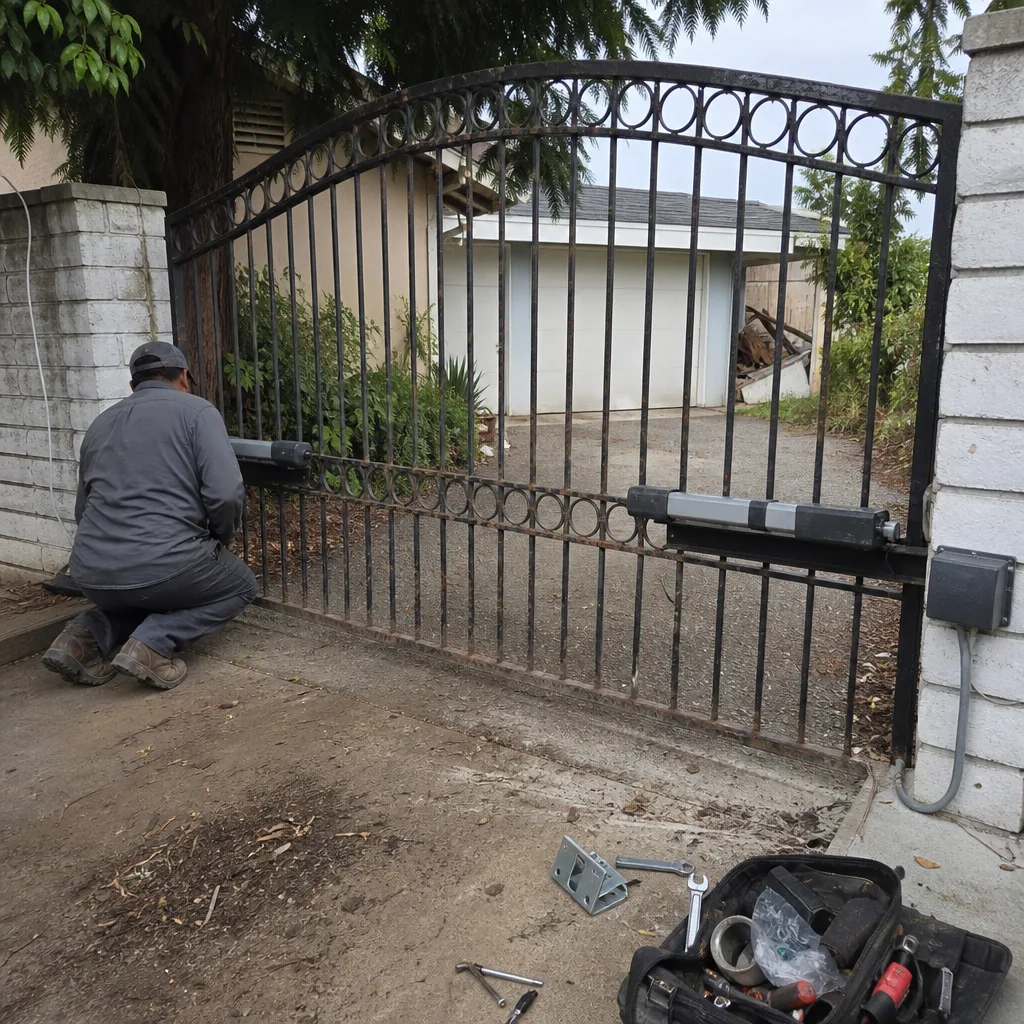 Before
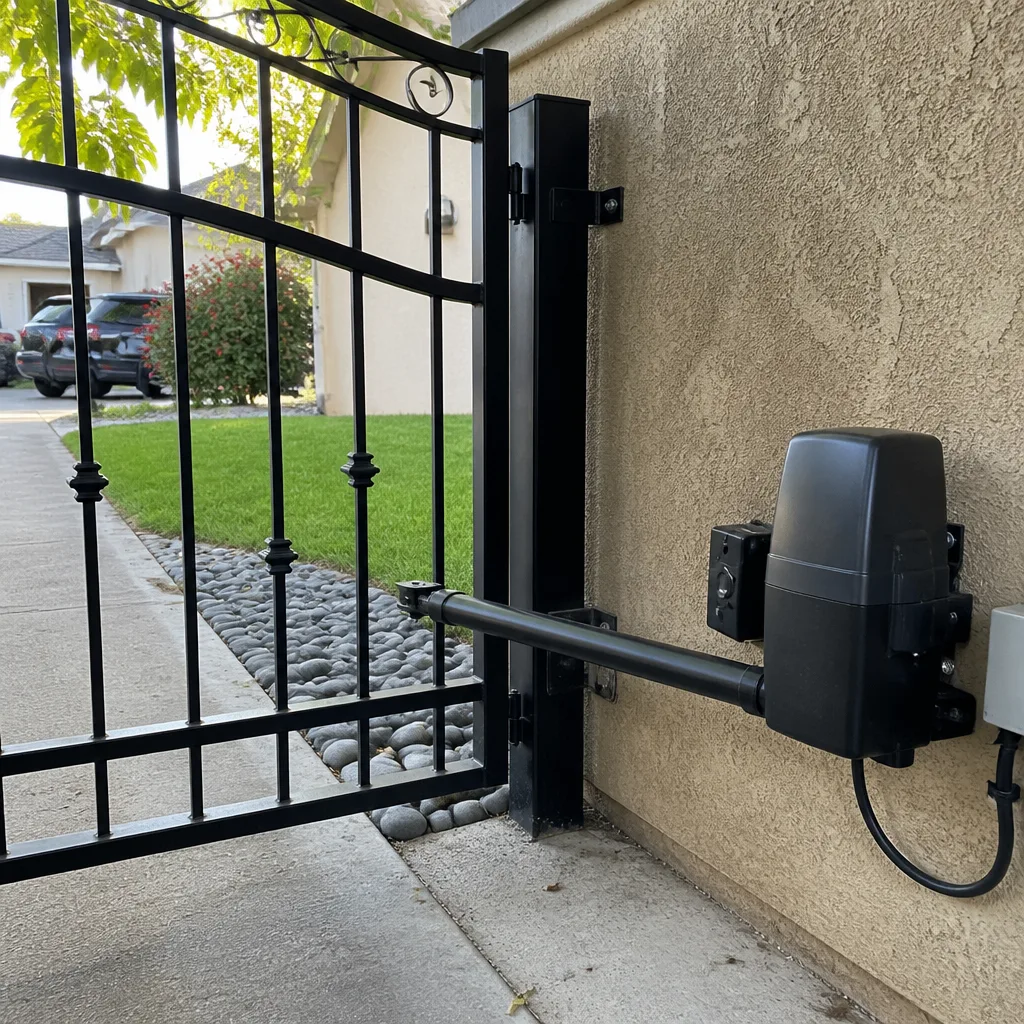 After
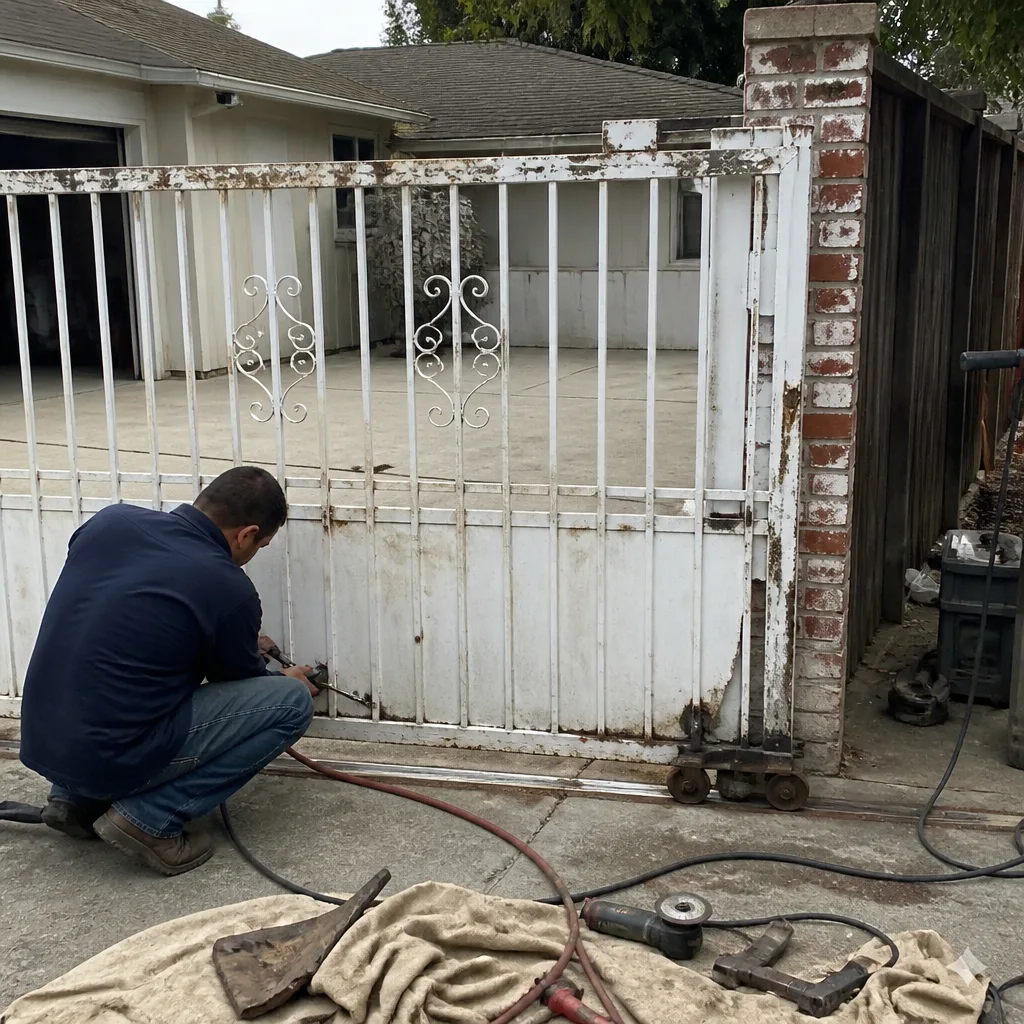 Before
 After
 Before
 After
Frequently Asked Questions
LiftMaster and DoorKing are the most heat-tolerant brands we see in Pocket, with larger enclosures and heat-rated components that hold up through Sacramento summers. FAAC and BFT also perform well but are slightly less common on residential gates. We recommend against Mighty Mule for unshaded gates that take full afternoon sun. Call (833) 620-5971 for a free estimate and a brand recommendation based on your specific gate.
A quality residential swing gate operator from LiftMaster or FAAC typically runs $1,200 to $1,800 installed in the Pocket area, though heavier gates and dual-swing setups can push higher. Consumer-grade units like Mighty Mule start around $300 to $700 but carry higher long-term failure and replacement costs. We quote a firm price before work begins, so you’ll know exactly what you’re paying before we touch the gate.
Mighty Mule operators use consumer-grade control boards and plastic enclosures that aren’t designed for prolonged 100-degree heat and riverside humidity like we get in Pocket. Heat shortens the board’s life, and moisture accelerates corrosion on contacts. It’s not that Mighty Mule is a bad product for mild climates; it’s just underbuilt for Sacramento’s summer conditions. Call (833) 620-5971 to discuss a more durable replacement for your gate.
In most cases, yes, if it’s a repair and we have the parts for your brand. We stock common components for LiftMaster, FAAC, BFT, DoorKing, and Linear operators, which covers the majority of Pocket residential gates. For brands like Mighty Mule or Ghost Controls that require ordered parts, wait time depends on shipping. A same-day repair is always our goal, but we’ll tell you honestly up front whether your part is on the truck.
Repair when the failure is a replaceable part like a control board, capacitor, or limit switch on a unit that’s otherwise in good shape and under ten years old. Replace when the operator has multiple failing components, the model has been discontinued, or the unit was undersized for the gate from the beginning. We diagnose first and recommend replacement only when repair won’t last. For a free assessment in Pocket, call (833) 620-5971.
Yes. We provide complete gate installation in addition to repair and electric gate service, which means you work with one company for the life of the gate instead of switching between a fence contractor for the gate and an automation company for the operator. Visit our Gate Installation in Pocket page for details, or call (833) 620-5971 for a free estimate.
The Bottom Line
Choosing a gate operator brand in Pocket comes down to three things: parts you can actually get, equipment that survives Sacramento summers, and a technician who knows the brand well enough to fix it quickly. LiftMaster, FAAC, BFT, and DoorKing are the brands we recommend most often because they pass all three tests. Mighty Mule and Ghost Controls have their place on light gates and tight budgets, but the five-year math usually catches up. Buy the brand your local gate specialist stocks, not the brand that markets hardest. And when the gate eventually needs service, call a gate specialist, not a generalist, because the fastest repair is the one done by someone who has seen your exact failure before.
Written by the team at Gatehouse Gate Repair, serving Pocket since 2018. Explore more guides & resources on gate maintenance and repair.